
This article's table of contents introduction:
- Breakdown of the Terminology
- Key Design Features for Anti-Abrasion
- Performance Specifications (Typical)
- Common Failure Modes & Maintenance
- Recommendation for Sourcing
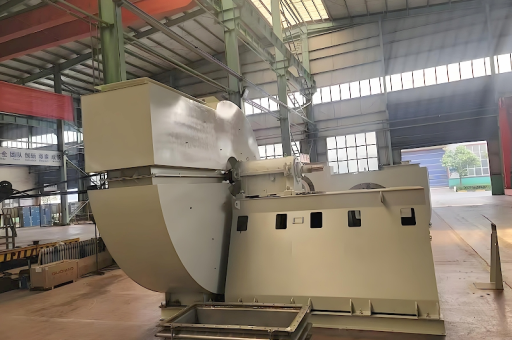
The phrase "Garbage Incinerator Q345 Anti Abrasive Air Circulation Fan" refers to a specific type of industrial fan used in waste-to-energy (WTE) or municipal solid waste (MSW) incineration plants.
Here is a breakdown of what each term means, the design requirements, and why these fans are critical.
Breakdown of the Terminology
- Garbage Incinerator: The primary application. The fan handles air in the combustion process, flue gas treatment, or cooling systems.
- Q345: A Chinese standard (GB/T 1591) for a low-alloy high-strength structural steel. It is approximately equivalent to ASTM A572 Grade 50 or EN S355JR.
- Why Q345? It offers better strength and weldability than standard carbon steel (Q235). However, for anti-abrasive applications in incinerators, Q345 is often used for the housing and structural supports, while the impeller (wheel) is typically made of Hardox (AR400/500) or 16MnCr5 with carbide overlays.
- Anti Abrasive: The fan is designed to resist wear and tear from particulate matter (fly ash, dust, unburned carbon) and corrosive gases.
- Air Circulation Fan: This is a general term. In an incinerator, this specific fan likely serves one of three purposes:
- Forced Draft (FD) Fan: Pushes combustion air into the furnace.
- Induced Draft (ID) Fan: Pulls flue gases through the boiler, scrubbers, and baghouse before sending them to the stack. This is the most common location for severe abrasion.
- Secondary Air Fan: Introduces air above the grate to ensure complete combustion.
Key Design Features for Anti-Abrasion
A standard centrifugal fan would fail quickly in a garbage incinerator. The "Anti Abrasive" specification implies the following engineering modifications:
A. Impeller (Rotor)
- Material: Wear-resistant steel (e.g., Hardox 450/500, NM400, or Q345 with surface cladding).
- Thickness: Significantly thicker blades (often 10mm-20mm) compared to standard fans.
- Blade Profile: Forward-curved or radial blades are common. Radial blades are best for handling heavy dust loads because they are less likely to clog and have a simpler geometry for applying wear liners.
- Wear Protection:
- Weld-on Hardfacing: Tungsten carbide or chromium carbide overlay applied to the leading edges and blade tips.
- Sacrificial Liners: Replaceable wear plates bolted onto the blades and backplate.
- Anti-erosion Shrouds: A protective ring on the inlet side to prevent "funnel erosion."
B. Housing (Volute/Casing)
- Material: Q345 plate (minimum 6mm-10mm thick).
- Liner Plates: The interior of the casing is lined with 8mm-12mm thick wear-resistant plates (e.g., NM400 or ceramic tiles).
- Access Doors: Large, quick-opening doors are required for periodic inspection and replacement of wear liners without removing the fan.
- Flange Connections: Heavy-duty flanges with gaskets to prevent air leakage (which reduces efficiency).
C. Shaft and Bearings
- Shaft Seal: A labyrinth seal or double-acting mechanical seal prevents dust from entering the bearing housing (a common failure point).
- Bearings: Heavy-duty spherical roller bearings with a high L10 life rating (often 50,000+ hours). External cooling fins or water cooling may be required if flue gas temperatures are high.
- Critical Speed: The shaft is designed to operate well below the first critical speed (often below 70%) to avoid vibration.
Performance Specifications (Typical)
- Flow Rate: 50,000 to 500,000 m³/h (dependent on plant size).
- Pressure: 3,000 to 8,000 Pa (for ID fans handling flue gas).
- Temperature: Flue gas can be 150°C to 250°C (after heat exchangers). If handling hot combustion air, it may be 300°C+.
- Speed: Typically 980 RPM to 1,480 RPM (4-pole or 6-pole motors) to keep peripheral speeds low and reduce erosion.
- Noise: Often below 85 dB(A) at 1m, requiring silencers.
Common Failure Modes & Maintenance
- Balancing Corrosion/Erosion: The fan must be dynamically balanced. As wear occurs, imbalance leads to vibration, which accelerates bearing failure.
- Build-up (Ash Fouling): Sticky fly ash or "smut" can build up on the blades, causing imbalance. Some fans have in-place washing systems or shot-cleaning devices.
- Thermal Expansion: The shaft and housing expand at different rates. The fan must have a sliding bearing pedestal or a flexible expansion joint on the inlet/outlet ducts.
Recommendation for Sourcing
If you are looking to purchase or specify this fan:
- Define the duty cycle clearly: Is it clean air (FD) or abrasive flue gas (ID)?
- Request a "Wheel Hardness Spec": Ask for a minimum hardness of 400 HB on the impeller.
- Insist on a "Wear Life Guarantee": Reputable manufacturers (like Howden, Greenheck, or Chinese OEMs like Shandong Tianli / Shenyang Blower Works) will often guarantee a minimum of 8,000-12,000 hours between major impeller rebuilds.
- Check for Vibration Monitoring: Ensure the fan base has ports for accelerometers.
Summary: This is a heavy-duty, slow-speed, thick-walled centrifugal fan built from Q345 housing with wear-resistant steel internals (Hardox or cladded) to survive the harsh environment of a waste incinerator. The "Anti Abrasive" feature is the critical differentiator—without it, the impeller would erode in weeks.





