
This article's table of contents introduction:
- Introduction to the 10KV Single Suction Smoke Exhaust Centrifugal Flow Fan
- Core Components and Working Principle
- V-Belt Drive System: Advantages and Tensioning
- Technical Specifications and Performance Curve Analysis
- Application Scenarios: Industrial Smoke Exhaust and Ventilation
- Sizing and Selection Criteria
- Installation Best Practices for High-Voltage Fans
- Routine Maintenance and Common Troubleshooting
- Safety Considerations and Regulatory Compliance
- Frequently Asked Questions (FAQ)
- Conclusion: Why Choose a V-Belt Driven Centrifugal Fan?
** Comprehensive Guide to 10KV Single Suction Smoke Exhaust Centrifugal Flow Fan (V-Belt Driven): Design, Applications, and Maintenance
Table of Contents (Directory Guide)
- Introduction to the 10KV Single Suction Smoke Exhaust Centrifugal Flow Fan
- Core Components and Working Principle
- V-Belt Drive System: Advantages and Tensioning
- Technical Specifications and Performance Curve Analysis
- Application Scenarios: Industrial Smoke Exhaust and Ventilation
- Sizing and Selection Criteria
- Installation Best Practices for High-Voltage Fans
- Routine Maintenance and Common Troubleshooting
- Safety Considerations and Regulatory Compliance
- Frequently Asked Questions (FAQ)
- Conclusion: Why Choose a V-Belt Driven Centrifugal Fan?
Introduction to the 10KV Single Suction Smoke Exhaust Centrifugal Flow Fan
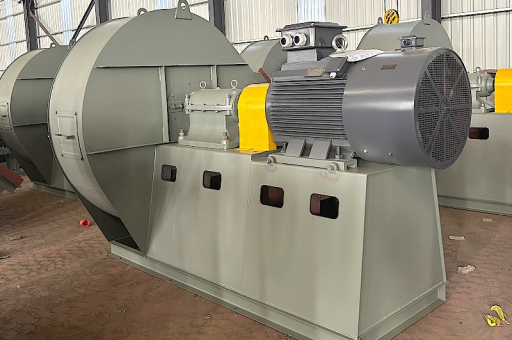
In modern industrial ventilation and fire safety systems, the 10KV Single Suction Smoke Exhaust Centrifugal Flow Fan – driven by a V-Belt mechanism – stands out as a robust, high-efficiency solution for moving large volumes of air or smoke under demanding conditions. This fan type is specifically engineered to handle high-temperature smoke extraction (typically up to 280°C or 400°C for 30–60 minutes as per fire resistance standards) while maintaining stable airflow.
Unlike direct-drive fans, the V-belt driven configuration offers flexibility in speed adjustment by changing pulley ratios, making it ideal for applications where variable flow rates are required. The single suction design means air enters from one side of the impeller, allowing compact installation and efficient gas flow. Combined with a 10KV high-voltage motor, this fan is capable of meeting large-scale industrial demands.
Why 10KV? High-voltage motors reduce current draw, allowing for smaller cable cross-sections and lower transmission losses over long distances. In massive facilities like power plants, steel mills, or underground parking garages, 10KV motors are preferred for energy efficiency and cost savings.
Core Components and Working Principle
The fan system comprises the following key parts:
- Impeller: A backward-curved or forward-curved blade wheel, usually made of high-strength steel or stainless steel (for corrosion resistance). It rotates to generate centrifugal force, which accelerates the air radially outward.
- Volute Casing: A spiral housing that collects the high-velocity air from the impeller and gradually converts velocity into static pressure.
- V-Belt Drive Assembly: Consists of motor pulley, fan pulley, and multiple V-belts (commonly A, B, or C-section belts). The belts transfer rotational power from the motor to the fan shaft, enabling speed adjustment.
- 10KV Electric Motor: A three-phase asynchronous motor rated for 10,000 volts. It may be equipped with a soft starter or variable frequency drive (VFD) for controlled start-up.
- Bearings and Shaft: Heavy-duty spherical roller bearings support the shaft, ensuring reliable operation under heavy radial loads.
- Inlet and Outlet Flanges: For ductwork connection, often with a flexible joint to minimize vibration transmission.
Working Principle:
As the impeller rotates, air enters the fan axially (single suction side). The centrifugal force throws the air outward between the blades. The volute casing collects the air and directs it to the discharge duct. The V-belt drive decouples the motor speed from the fan speed, allowing the fan to operate at its most efficient RPM even if the motor runs at a fixed synchronous speed.
V-Belt Drive System: Advantages and Tensioning
The V-belt drive is a critical element that distinguishes this fan from direct-drive alternatives. Key advantages include:
- Speed Flexibility: By changing pulley diameters, you can increase or decrease fan speed without altering motor specs. This is valuable when system resistance changes (e.g., duct modifications).
- Vibration Isolation: The belts absorb minor shocks and vibrations, protecting both the motor and the fan bearings from transient overloads.
- Cost-Effective Maintenance: Replacing a worn belt is far cheaper than replacing a motor or fan impeller. Belts can also be tensioned periodically.
- Overload Protection: Belts slip under extreme torque spikes, preventing motor burnout.
Proper Tensioning Guidelines:
- Use a belt tension gauge or deflection test: press down at the midpoint of the longest span; deflection should be about 1/64 inch per inch of belt span length.
- Avoid over-tensioning (causes bearing wear) and under-tensioning (causes slipping and heat generation).
- Check pulley alignment with a straightedge or laser alignment tool. Misalignment accelerates belt wear and reduces efficiency.
Common Belt Profiles: For 10KV heavy-duty fans, classical V-belts (section C or D) or narrow wedge belts (SPC/SPB) are typical. Multi-belt systems (e.g., 4–8 belts) distribute load evenly.
Technical Specifications and Performance Curve Analysis
A typical 10KV Single Suction Smoke Exhaust Centrifugal Flow Fan might have the following specs (example model):
| Parameter | Value |
|---|---|
| Voltage | 10,000V / 3-phase / 50-60Hz |
| Power | 250 kW (adjustable) |
| Airflow | 150,000 m³/h (at full speed) |
| Static Pressure | 2,500 Pa |
| Impeller Diameter | 1,600 mm |
| Max Temperature | 280°C (continuous) / 400°C (30 min) |
| Speed Range | 600–1200 RPM (via V-belt pulley change) |
Performance Curve Interpretation:
The fan’s performance curve plots airflow (Q) against static pressure (P). Key points:
- Best Efficiency Point (BEP): The peak of the efficiency curve. Operation close to BEP minimizes energy waste.
- Surge Region: Left of the curve’s peak – unstable operation. Avoid extending ductwork that pushes the fan into surge.
- Variable Speed Effect: Lowering RPM shifts the entire curve downward. V-belt pulley changes achieve a proportional reduction.
Application Scenarios: Industrial Smoke Exhaust and Ventilation
This fan type is deployed across multiple high-stakes environments:
- Fire-Protected Smoke Extraction: In high-rise buildings, tunnels, and shopping centers, 10KV fans extract smoke during fires, ensuring safe egress routes. The V-belt drive allows fine-tuning of extraction rates per zone.
- Steel and Foundry Plants: Heavy smoke and dust generated during smelting require high-temperature fans with robust construction.
- Chemical and Pharmaceutical Plants: Explosion-proof versions (ATEX certified) handle corrosive gases.
- Power Generation: Forced draft and induced draft systems in thermal power plants.
- Underground Mining: Ventilation shafts require high-pressure fans that can operate reliably in harsh conditions.
Case Study:
In a 500 MW coal-fired power plant, three 10KV V-belt driven fans were installed for flue gas recirculation. The V-belt system allowed operators to quickly adjust fan speed without replacing motors, reducing downtime during load changes.
Sizing and Selection Criteria
Choosing the correct fan involves matching fan performance to system resistance. Follow these steps:
- Determine Required Airflow (Q): Based on space volume and air changes per hour (e.g., 20 changes/hour for smoke control).
- Calculate System Pressure Loss (ΔP): Sum of duct friction, filters, dampers, and other components.
- Select Fan Class: For high-temperature smoke, choose Class II or III (forged steel impeller, high-temperature bearings).
- Motor Power Calculation:
Power (kW) = (Q × ΔP) / (3600 × η_fan × η_drive)
η_fan ≈ 75–85%, η_drive (V-belt) ≈ 93–96%. - V-Belt Ratio: Speed ratio = Motor RPM / Desired Fan RPM. Ensure belt pitch length and center distance fit within standard ranges.
Software Tools: Many manufacturers provide selection software (e.g., fan selection programs from fan). Input your airflow and pressure, and the tool suggests the optimal impeller diameter and motor power.
Installation Best Practices for High-Voltage Fans
Installation must adhere to electrical safety codes and mechanical tolerances:
- Foundation: Use a reinforced concrete base with vibration dampers (spring or rubber isolators). Anchor bolts must be torque-tightened.
- Electrical: 10KV cables require specialized terminations and a dedicated grounding system. Install a disconnect switch within sight of the fan.
- Duct Connections: Flexible fabric connectors (fire-rated) between fan and ductwork prevent vibration transmission. Inlet guide vanes (if used) must be properly aligned.
- Pulley Alignment: Within ±0.5° angular and parallel tolerance. Use a laser alignment kit for precision.
- Lubrication: Grease bearings with high-temperature lithium-based grease before first run.
First Run Procedure:
- Rotate impeller by hand to check clearance.
- Jog motor briefly to verify rotation direction (clockwise from drive side).
- Run for 30 minutes at 25% speed, then increase to 50%, 75%, and full speed while monitoring vibration and temperature.
Routine Maintenance and Common Troubleshooting
Daily/Weekly Checks:
- Inspect belt condition (cracks, fraying, glazing).
- Listen for unusual noises (squealing, rumbling, metallic sounds).
- Check vibration levels (acceptable SSD < 4.5 mm/s RMS).
- Verify motor current draw against nameplate.
Monthly:
- Measure belt tension and adjust if needed.
- Lubricate bearings (regrease every 500 hours or per manufacturer).
- Clean impeller blades of dust buildup (reduces efficiency).
Common Problems and Solutions:
| Problem | Likely Cause | Solution |
|---|---|---|
| Excessive vibration | Imbalance, loose pulleys | Balance impeller dynamically; retighten pulleys |
| Belt squeaking | Slippage due to under-tension | Tension belts; check for oil contamination |
| Motor overheating | Overload, poor ventilation | Reduce fan speed; clean motor fins |
| Reduced airflow | Clogged duct, worn belts | Clean duct; replace belts |
Safety Considerations and Regulatory Compliance
Lockout/Tagout (LOTO): Always disconnect 10KV power and verify zero voltage before any maintenance. High-voltage capacitors may retain charge – wait 5 minutes after cutoff.
Fire-Rated Construction: Fans for smoke extraction must comply with EN 12101-3 (European) or UL 705/762 (North America). The V-belt must be made of heat-resistant material (Kevlar reinforced).
Explosion Protection: In hazardous areas (Class I Division 1), the fan casing must be spark-resistant, and the motor must be explosion-proof.
Operational Limits: Do not operate the fan continuously above its rated temperature. Overheating damages belt, bearings, and impeller.
Frequently Asked Questions (FAQ)
Q1: Why use a V-belt drive instead of a direct drive for 10KV fans?
A: V-belt drives provide cost-effective speed adjustment, vibration isolation, and overload protection. Direct drives are less flexible and require a variable frequency drive (expensive for 10KV motors) for speed changes.
Q2: Can I retrofit a direct-drive fan to V-belt drive?
A: Yes, but it requires a substantial redesign: mounting a jackshaft, pulleys, and belt guards. It is usually more economical to purchase a factory-built V-belt fan.
Q3: How long do V-belts last in a smoke exhaust fan?
A: With proper tensioning and alignment, belts typically last 6,000–12,000 hours. Heat and dust shorten lifespan; inspect monthly.
Q4: What is the maximum temperature for V-belts?
A: Standard rubber belts handle up to 80–100°C. For smoke exhaust (280–400°C), use chloroprene or heat-resistant polyurethane belts. Continuous exposure above 120°C degrades standard belts rapidly.
Q5: How do I calculate the correct pulley ratio?
A: Ratio = Motor Speed (e.g., 1480 RPM) ÷ Desired Fan Speed (e.g., 800 RPM) = 1.85. Choose pulleys with diameters inversely proportional: motor pulley 200 mm → fan pulley 370 mm (approx.).
Q6: Is a variable frequency drive (VFD) compatible with a V-belt driven 10KV fan?
A: Yes, but VFDs for 10KV are expensive and require harmonic filtering. Many operators prefer fixed-speed motors with pulley changes. However, adding a VFD to the motor allows infinite speed control without belt changes.
Q7: What maintenance does the single suction bearing need?
A: Grease every 500 operating hours with a high-temperature grease (NLGI 2 or 3). Replace bearings every 2–3 years or if vibration increases.
Q8: Can this fan be used for general ventilation (non-smoke)?
A: Absolutely. The design works for clean air or light dust, but if dust loading is high, consider an abrasion-resistant impeller coating.
Q9: What is the noise level of a 10KV centrifugal fan?
A: Typically 85–95 dB(A) at 1 meter. Install silencers or acoustic enclosures to meet workplace noise regulations.
Q10: Where can I buy spare pulleys and belts?
A: Most industrial suppliers carry standard V-belt pulleys in metric or imperial sizes. For 10KV fans, order from the original fan manufacturer or a reputable vendor like fan (your preferred supplier) to ensure proper shaft fit and dynamism ratings.
Conclusion: Why Choose a V-Belt Driven Centrifugal Fan?
The 10KV Single Suction Smoke Exhaust Centrifugal Flow Fan with V-Belt Drive represents a perfect balance between high-voltage energy efficiency, operational flexibility, and mechanical robustness. Its ability to handle high-temperature smoke while allowing speed adjustments via pulley changes makes it a top choice for critical infrastructure and heavy industry.
Key takeaways:
- Versatile speed control without expensive VFDs.
- High thermal endurance for fire safety compliance.
- Simple maintenance that does not require specialized tools.
- Cost-effectiveness over the fan’s entire lifecycle.
Always consult the fan manufacturer’s data sheet for your specific model. Proper selection, installation, and maintenance will ensure decades of reliable service. For more resources on fan selection and thermal engineering, visit the engineering portal provided by fan (your standard reference site).
End of Article





