
** The Ultimate Guide to Explosion Proof Centrifugal SWSI Material Handling Blowers: Safety, Design, and Industrial Applications
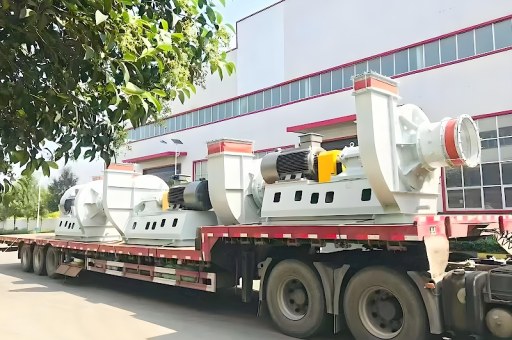
Table of Contents
- Introduction: What Is an Explosion Proof Centrifugal SWSI Material Handling Blower?
- Key Components and Design Principles
- SWSI Configuration: Why Single Width, Single Inlet Matters
- Material Handling Capabilities: Handling Dust, Chips, and Bulk Solids
- Explosion Proof Standards: ATEX, IECEx, and NFPA Compliance
- Performance Characteristics: Pressure, Flow, and Efficiency
- Common Industrial Applications
- Installation and Maintenance Best Practices
- Frequently Asked Questions (FAQ)
- Conclusion: Choosing the Right Blower for Hazardous Environments
Introduction: What Is an Explosion Proof Centrifugal SWSI Material Handling Blower?
An Explosion Proof Centrifugal SWSI Material Handling Blower is a specialized industrial fan designed to move air, dust, fumes, or particulate-laden materials in environments where flammable gases, vapors, or combustible dusts are present. The term "SWSI" stands for Single Width, Single Inlet, indicating a compact, high-efficiency impeller design that draws air from one side.
Unlike standard blowers, explosion-proof variants are constructed with non-sparking materials (such as aluminum or stainless steel), enclosed motors, and grounding systems to prevent ignition sources. These blowers are certified to meet international safety standards, making them essential in chemical plants, grain elevators, pharmaceutical facilities, and mining operations.
Key Components and Design Principles
- Housing and Impeller: Typically fabricated from heavy-gauge steel, aluminum, or stainless steel to resist corrosion and mechanical wear. The impeller is often backward-inclined or radial-bladed to handle abrasive materials without clogging.
- Motor: An enclosed, totally enclosed fan-cooled (TEFC) or explosion-proof motor is used to contain sparks. The motor must be rated for the specific Class, Division, and Group of the hazardous environment.
- Shaft Seal and Bearings: Labyrinth seals and sealed bearings prevent material ingress and reduce friction heat. Shaft grounding rings are frequently added to dissipate static electricity.
- Drive System: Direct drive is preferred for explosion-proof applications to eliminate belt slippage and static build-up. Belt-driven systems, if used, require conductive belts.
SWSI Configuration: Why Single Width, Single Inlet Matters
The SWSI design offers several advantages over double-inlet (DWDI) or double-width configurations:
- Space Efficiency: The compact profile fits into tight industrial layouts.
- Higher Static Pressure: Single-sided inlet allows for stronger suction at the intake, which is critical for pneumatic conveying and dust collection systems.
- Reduced Turbulence: Airflow is more uniform, minimizing vibration and noise. This is particularly important when handling fragile materials like plastic pellets or food-grade powders.
However, SWSI blowers typically have lower airflow volume compared to larger centrifugal fans, so they are best suited for high-pressure, medium-to-low-flow applications.
Material Handling Capabilities: Handling Dust, Chips, and Bulk Solids
One of the defining features of this blower is its ability to transport or extract solid materials without clogging or sparking. Key design modifications include:
- Wear Liners: Replaceable abrasion-resistant plates protect the housing from erosive materials like sand, cement, or metal shavings.
- Access Doors: Facilitate cleaning and removal of built-up debris without disassembling the entire unit.
- Variable Speed Control: Modern blowers often pair with VFDs (Variable Frequency Drives) to adjust airflow precisely based on material loading.
Typical materials handled include:
- Wood chips and sawdust
- Plastic regrind and pellets
- Chemical powders (explosive or non-explosive)
- Cotton lint and textile fibers
- Coal dust and fly ash
Explosion Proof Standards: ATEX, IECEx, and NFPA Compliance
To be classified as "explosion proof," a blower must meet rigorous testing and certification requirements:
- ATEX (Europe): Equipment must be marked with a specific group (e.g., IIB, IIC) and temperature class (T1–T6). For example, a blower rated IIB T4 is safe in environments with ethylene or propane, and its surface temperature never exceeds 135°C.
- IECEx (International): Similar to ATEX, used in global trade. The equipment must pass spark testing, impact testing, and thermal stability tests.
- NFPA (USA): Compliance with NFPA 70 (National Electrical Code) and NFPA 68 (explosion venting) is required. Spark-proof fans often carry UL/CSA certifications.
Performance Characteristics: Pressure, Flow, and Efficiency
- Pressure Range: Typically 10–50 inches of water gauge (in WG) for material handling, but custom designs can exceed 80 in WG.
- Flow Rate: Ranges from 500 CFM to 50,000 CFM, depending on impeller diameter and speed.
- Efficiency: Well-designed SWSI fans achieve mechanical efficiencies of 70–85%. Backward-inclined impellers offer the highest efficiency for clean air; radial impellers excel with dirty or sticky materials.
Common Industrial Applications
- Chemical Processing: Vapor extraction and pneumatic conveying of reactive powders.
- Woodworking: Chip and dust collection in sawmills and cabinet shops.
- Pharmaceuticals: Aseptic handling of active pharmaceutical ingredients (APIs) that may create flammable dust clouds.
- Mining and Mineral Processing: Ventilation and material transport in underground environments with methane risk.
- Grain and Agriculture: Removal of husks, chaff, and grain dust in silos and elevators.
Installation and Maintenance Best Practices
- Grounding: Every metallic component must be bonded to a certified earth ground to prevent static discharge.
- Ductwork: Use non-conductive or properly grounded flexible connectors at the inlet and outlet to isolate vibration.
- Inspection Schedule: Weekly checks for impeller wear, bearing temperature, and seal integrity. Monthly verification of grounding resistance.
- Lubrication: Use non-conductive, high-temperature grease for bearings. Never over-lubricate, as excess grease can ignite.
Frequently Asked Questions (FAQ)
Q1: Can a standard centrifugal blower be converted into an explosion-proof unit? A: No, conversion is not recommended. Explosion-proof certification requires complete factory-built assemblies, including spark-proof motor, non-sparking impeller, and certified wiring. Retrofitting voids certification and creates liability risks.
Q2: What is the difference between "explosion-proof" and "spark-proof"? A: Spark-proof blowers are a subset of explosion-proof designs, focused on preventing mechanical sparks (e.g., from impeller-to-housing contact). Explosion-proof units also prevent electrical arcs and limit surface temperatures.
Q3: How do I select between a direct-drive and belt-drive explosion-proof blower? A: Direct-drive eliminates belt static and tension issues, making it safer. Choose belt-drive only if variable speed is critical and conductive belts (e.g., carbon-impregnated) are used. Always consult a certified engineer.
Q4: Can the blower handle corrosive fumes like hydrogen sulfide (H2S)? A: Yes, if constructed with 316L stainless steel or coated with PTFE (Teflon). Aluminum is not suitable for highly corrosive or acidic environments.
Q5: What is the recommended maintenance interval for wear liners? A: Inspect liners every 3–6 months in heavy-duty applications. Replace when thickness reduces by 50% to prevent housing erosion.
Conclusion: Choosing the Right Blower for Hazardous Environments
Selecting an Explosion Proof Centrifugal SWSI Material Handling Blower requires careful evaluation of the material being handled, the hazardous classification of the facility (e.g., Zone 1 or Class II Division 1), and the required pressure/flow performance. Always work with manufacturers who provide full certification documentation, including ATEX or IECEx certificates.
Remember that safety is non-negotiable in explosive environments. An initially higher investment in a certified, durable blower will pay off through reduced downtime, lower insurance premiums, and most importantly, protection of lives and assets. For further technical data, contact leading industrial fan suppliers or download their application guides from reputable sources such as fan manufacturers' websites.





