
This article's table of contents introduction:
- Directory Guide
- Introduction: The Critical Role of Induced Draught Fans in Foundry Furnaces
- What is an AC Anti Abrasive Foundry Furnace Induced Draught Fan?
- Why Anti Abrasive Design Matters in Foundry Environments
- Key Components and Working Principle
- Common Questions About Induced Draught Fans in Foundry Operations
- Installation, Maintenance, and Performance Optimization Tips
- Conclusion: Future Trends and Best Practices
Maximizing Efficiency and Durability: The Role of AC Anti Abrasive Foundry Furnace Induced Draught Fans in Modern Metal Casting
Directory Guide
- Introduction: The Critical Role of Induced Draught Fans in Foundry Furnaces
- What is an AC Anti Abrasive Foundry Furnace Induced Draught Fan?
- Why Anti Abrasive Design Matters in Foundry Environments
- Key Components and Working Principle
- Common Questions About Induced Draught Fans in Foundry Operations
- Installation, Maintenance, and Performance Optimization Tips
- Conclusion: Future Trends and Best Practices
Introduction: The Critical Role of Induced Draught Fans in Foundry Furnaces
In the heavy industrial landscape of metal casting and foundry operations, the AC Anti Abrasive Foundry Furnace Induced Draught Fan stands as an unsung hero. These specialized fans are engineered to handle the most demanding conditions inside a foundry furnace system, where high temperatures, abrasive dust particles, and corrosive gases are everyday realities. Without a reliable induced draught fan, furnace combustion efficiency drops, emissions control fails, and equipment lifespan shortens dramatically.
According to recent industry reports from the International Foundry Association, improper fan selection or maintenance accounts for nearly 18% of unplanned furnace downtime. This article provides a comprehensive, SEO-optimized guide for foundry engineers, plant managers, and procurement specialists who need to understand, select, and maintain these critical components.
What is an AC Anti Abrasive Foundry Furnace Induced Draught Fan?
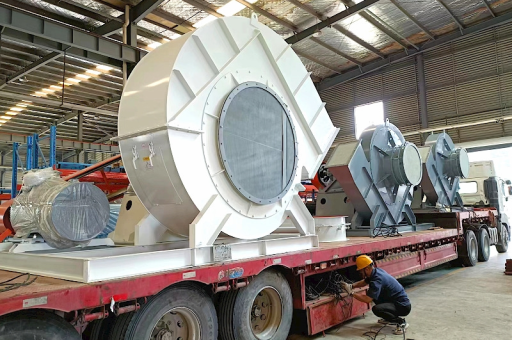
An AC Anti Abrasive Foundry Furnace Induced Draught Fan is a heavy-duty, alternating current (AC) motor-driven fan designed specifically for the induced draft (ID) side of foundry furnaces. Unlike forced draft fans that push air into the furnace, induced draught fans pull combustion gases and exhaust through the furnace system, maintaining negative pressure that controls airflow and heat distribution.
The "anti abrasive" feature sets these fans apart. Standard industrial fans often fail within months when exposed to the silica dust, metal oxide particles, and slag fines found in foundry exhaust streams. Anti abrasive fans incorporate:
- Hardened impeller blades made from abrasion-resistant alloys or coated with ceramic or tungsten carbide layers
- Wear-resistant housing liners that protect the fan casing from particle erosion
- Shaft seals designed to prevent dust ingress into bearings
- Balanced rotor assemblies that minimize vibration under uneven particle loading
These fans are typically powered by AC induction motors ranging from 30 kW to 500 kW, with variable frequency drives (VFDs) increasingly used for precise airflow control.
Why Anti Abrasive Design Matters in Foundry Environments
Foundry furnaces produce some of the harshest operating environments for rotating equipment. Combustion gases leaving a melting furnace can reach temperatures of 800°C to 1200°C and contain:
- Silica dust from sand molds and cores
- Iron oxide and metal scale from molten metal handling
- Carbon particles from incomplete combustion
- Chemical fumes from fluxes and additives
A standard induced draught fan without anti abrasive protection experiences accelerated wear. Impeller blades lose their aerodynamic profile, causing imbalance, vibration, and eventual catastrophic failure. Studies from the American Foundry Society show that anti abrasive fans can extend operational life by 3 to 5 times compared to standard fans in identical foundry applications.
Example: A mid-sized aluminum foundry in Ohio replaced its standard induced draft fans with AC Anti Abrasive units and reported a 70% reduction in fan-related maintenance costs over 18 months, along with 12% improvement in furnace thermal efficiency due to more stable draft control.
Key Components and Working Principle
Core Components
| Component | Function | Anti Abrasive Feature |
|---|---|---|
| Impeller (Rotor) | Generates airflow by rotating | Hardfaced or ceramic-coated blades |
| Fan Housing | Contains and directs airflow | Internal wear plates and replaceable liners |
| Inlet Cone | Ensures smooth air entry | Abrasion-resistant material |
| Shaft and Bearings | Transmit power from motor | Sealed bearing housings with purge systems |
| AC Motor | Drives the impeller | Available with VFD compatibility |
| Dampers or VFD | Controls airflow rate | Optional for energy savings |
Working Principle
- The AC motor rotates the impeller at speeds typically between 800 and 1800 RPM.
- Negative pressure created at the fan inlet draws hot, dusty exhaust gases from the furnace.
- Gases pass through the fan housing and are discharged into a chimney or pollution control system (baghouse, scrubber, or electrostatic precipitator).
- Anti abrasive surfaces protect critical components from erosion.
- Continuous monitoring of vibration and temperature ensures safe operation.
The induced draught fan works in concert with the furnace combustion control system. A controller adjusts fan speed via VFD or damper position to maintain optimal draft pressure (typically -0.2 to -0.5 inches of water column), balancing combustion efficiency with evacuation of harmful gases.
Common Questions About Induced Draught Fans in Foundry Operations
Q1: How do I choose between AC and DC motors for my foundry induced draught fan?
A: AC motors are overwhelmingly preferred for foundry fan applications due to their lower cost, simpler maintenance, and compatibility with VFD systems. DC motors offer better speed control but require more maintenance (brushes and commutators) and are less tolerant of dusty environments. For anti abrasive fans in foundries, AC induction motors with inverter-duty ratings are the industry standard.
Q2: What is the typical lifespan of an AC Anti Abrasive Foundry Furnace Induced Draught Fan?
A: With proper maintenance, these fans can operate 8 to 15 years. Key factors include: furnace operating temperature, dust loading, maintenance frequency, and quality of anti abrasive coatings. Regular inspections of blade thickness and housing wear are essential to predict replacement cycles.
Q3: Can I retrofit an existing standard fan with anti abrasive features?
A: Partial retrofits are possible—replacing impellers with hardfaced versions or adding wear liners to housings. However, fan manufacturers generally recommend a complete replacement for maximum benefit because original housing geometry and rotor dynamics are not optimized for anti abrasive components. Cost-benefit analysis usually favors new, purpose-engineered units.
Q4: How does an induced draught fan differ from a forced draught fan in a foundry furnace?
A: A forced draught fan pushes clean, ambient air into the furnace, operating at lower temperatures with minimal dust exposure. The induced draught fan handles hot, dirty exhaust on the outlet side. Induced fans face greater thermal stress, corrosion, and abrasion, which is why anti abrasive construction is critical for them but rarely needed for forced draft fans.
Q5: What are the signs that my induced draught fan needs immediate attention?
A: Red flags include: unusual vibration (especially above 0.15 inches per second), unexplained temperature rise at bearings, visible blade wear or cracking, reduced draft pressure readings, and increased motor current draw. Early detection prevents catastrophic failure and extended furnace downtime.
Installation, Maintenance, and Performance Optimization Tips
Installation Best Practices
- Foundation: Ensure a solid, vibration-dampened concrete base to minimize transmitted vibration.
- Ducting: Use expansion joints between furnace and fan to accommodate thermal expansion. Include access doors for inspection.
- VFD Integration: Pair the fan with a VFD for soft-start capability and energy savings (typically 20-35% reduction in power consumption).
- Safety: Install pressure relief dampers and emergency shutdown interlocks.
Maintenance Schedule
| Interval | Activity |
|---|---|
| Weekly | Visual inspection for debris buildup, unusual noise, or vibration |
| Monthly | Check bearing temperature and lubrication levels |
| Quarterly | Measure blade thickness with ultrasonic gauge |
| Semi-annually | Inspect housing wear plates and shaft seals |
| Annually | Full disassembly inspection, balancing check, and motor insulation test |
Performance Optimization
- Speed Control: Run the fan at the lowest speed that meets furnace requirements. Lower speeds reduce wear dramatically.
- Upstream Filtration: Install a pre-separator (cyclone or settling chamber) to reduce coarse particle loading on the fan.
- Temperature Monitoring: Keep inlet gas temperature below the fan design limit (typically 450°C for standard anti abrasive fans, higher for specialty units).
- Cleaning: Schedule periodic cleaning of impeller blades to remove buildup that causes imbalance. Use compressed air or soft blasting media.
Conclusion: Future Trends and Best Practices
The AC Anti Abrasive Foundry Furnace Induced Draught Fan remains an indispensable asset in modern metal casting. As environmental regulations tighten and foundries strive for higher efficiency, these fans must evolve to handle even hotter gas streams, stricter particulate control, and longer operational intervals.
Emerging trends include:
- Smart monitoring systems with predictive maintenance algorithms that analyze vibration, temperature, and current signatures to forecast failures weeks in advance.
- Advanced coatings such as thermally sprayed ceramic-metal composites that offer 3x better wear resistance than traditional hardfacing.
- High-temperature designs capable of continuous operation at 600-800°C, reducing the need for gas cooling before the fan.
For foundry professionals, the path to reliability and efficiency starts with proper fan selection. Prioritize fans with proven anti abrasive features, invest in VFD technology, and commit to a rigorous maintenance program. By doing so, you will reduce downtime, lower energy costs, and extend the life of your furnace equipment.
Remember: the induced draught fan is not just a utility component—it is a strategic asset that directly impacts your foundry's productivity, compliance, and bottom line. Choose wisely, maintain diligently, and optimize continuously.
This article was compiled from industry best practices, manufacturer technical documentation, and field experience from multiple foundry operations. For specific technical consultation, always refer to your equipment supplier and plant engineering team.





