
This article's table of contents introduction:
- Table of Contents
- Introduction: The Critical Role of the ID Fan in Industrial Air Systems
- Understanding the "Backward" Design: Aerodynamics and Efficiency
- What is "Anti-Corrosion"? Material Science and Protective Coatings
- The "Induced Draft" (ID) Function: Suction, Pressure, and System Balance
- Comparative Analysis: Backward vs. Forward Curved and Radial Blades
- Key Applications: Where This Fan Excels
- Installation, Maintenance, and Lifecycle Considerations
- Frequently Asked Questions (FAQ)
- Conclusion: The Future of Durable Industrial Ventilation
Table of Contents
- Introduction: The Critical Role of the ID Fan in Industrial Air Systems
- Understanding the "Backward" Design: Aerodynamics and Efficiency
- What is "Anti-Corrosion"? Material Science and Protective Coatings
- The "Induced Draft" (ID) Function: Suction, Pressure, and System Balance
- Comparative Analysis: Backward vs. Forward Curved and Radial Blades
- Key Applications: Where This Fan Excels
- Installation, Maintenance, and Lifecycle Considerations
- Frequently Asked Questions (FAQ)
- Conclusion: The Future of Durable Industrial Ventilation
Introduction: The Critical Role of the ID Fan in Industrial Air Systems
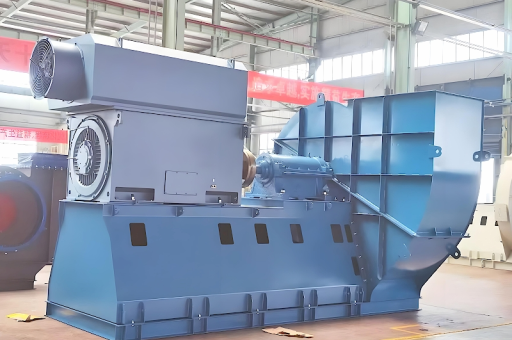
In the demanding landscape of heavy industry—from thermal power plants and steel mills to chemical processing and cement production—the movement of gas is not just a matter of comfort; it is a matter of operational survival. At the heart of these systems lies the Backward Anti-Corrosion Centrifugal Induced Draft (ID) Fan Blower. This is not a generic piece of equipment. It is a specialized, high-performance machine designed to solve a specific, harsh problem: how to safely and efficiently pull hot, corrosive, and particulate-laden gas through a system, creating a negative pressure (vacuum) that ensures safe containment and optimal combustion or process flow.
For SEO professionals and engineers searching for reliable hardware, understanding the distinction between a simple fan and a purpose-built blower is critical. This article provides a deep, technical, and practical dive into the Backward Anti-Corrosion Centrifugal ID Fan Blower. We will dissect its engineering principles, analyze its material advantages, and provide actionable insights for procurement and maintenance.
Understanding the "Backward" Design: Aerodynamics and Efficiency
The term "backward" refers to the orientation of the fan blades relative to the direction of rotation.
How it Works: Unlike a forward-curved blade (which scoops air) or a radial blade (which throws air), a backward-curved blade rotates away from the direction of the airflow. This design means the air is expelled from the impeller at a velocity lower than the tip speed of the wheel.
Why this matters for your fan:
- High Efficiency: Backward curved blades operate on the principle of centrifugal force coupled with aerodynamic lift. They achieve peak efficiencies of 85-90%, significantly reducing energy consumption over long operational periods.
- Non-Overloading Power Curve: This is a critical safety feature. In a forward-curved fan, if system resistance (static pressure) drops, the motor amperage spikes, potentially burning out the motor. The backward curved fan has a "non-overloading" power characteristic—its power consumption peaks at a certain point and then actually decreases as flow increases. This protects the motor and reduces the risk of catastrophic failure.
- Medium to High Pressure: These fans are ideal for ID applications because they generate high static pressure without sacrificing flow, making them perfect for pulling gas through filters, scrubbers, and long ductwork.
What is "Anti-Corrosion"? Material Science and Protective Coatings
A standard fan would corrode within weeks in a flue gas environment containing sulfur dioxide (SOx), nitrogen oxides (NOx), hydrogen chloride (HCl), or moisture. The "Anti-Corrosion" label on this blower implies a multi-layered defense strategy.
Material Selection:
- Housing: Typically constructed from high-grade stainless steel (e.g., SS 316L, Duplex 2205) or Corten steel (weathering steel). For extreme conditions, specialized alloys like Hastelloy or titanium are used.
- Impeller: Often made from aluminum bronze for resistance to specific chemical attacks or stainless steel friction welded to a steel hub.
Protective Coatings:
- Epoxy & Polyurethane Linings: Applied to the interior of the casing and the wheel. These provide a robust barrier against acidic condensation.
- Rubber Lining (Hard Rubber/Soft Rubber): Used where slurry or very abrasive, corrosive ash is present.
- Ceramic Coatings: For extreme abrasion on the impeller surface, a ceramic layer can be plasma-sprayed onto the blade edges.
The Engineering Formula: The anti-corrosion capability is not just about the coating; it is about the design of the gas path. The backward curved design inherently minimizes particle impact on the blades, reducing erosion—a key factor in maintaining corrosive integrity.
The "Induced Draft" (ID) Function: Suction, Pressure, and System Balance
The "ID" in the name is crucial. An ID fan is located at the exit of the process (e.g., after the boiler or scrubber), pulling gas through the system.
The Role of Negative Pressure:
- Safety: By creating a vacuum inside the boiler or furnace, the ID fan prevents hot, toxic gases from leaking out into the plant environment.
- Control: It works in tandem with a Forced Draft (FD) fan. The FD fan pushes air in; the ID fan pulls gas out. The balance between these two controls the combustion efficiency.
- Static Pressure: The Backward Anti-Corrosion Centrifugal ID Fan must overcome the total resistance of the ductwork, the electrostatic precipitator (ESP), the baghouse, and the chimney. Its high static pressure capability is non-negotiable here.
Key Performance Indicator (KPI): For a typical 100 MW thermal plant, an ID fan might handle 500,000 CFM (cubic feet per minute) at a static pressure of 20-30 inches WG (water gauge).
Comparative Analysis: Backward vs. Forward Curved and Radial Blades
Choosing the wrong wheel type is a common and expensive mistake.
| Feature | Backward Curved (This Fan) | Forward Curved | Radial / Paddle Wheel |
|---|---|---|---|
| Efficiency | Highest (85-90%) | Medium (60-75%) | Low (50-65%) |
| Pressure | Medium-High | Low-Medium | High-Very High |
| Power Curve | Non-Overloading | Overloading | Non-Overloading |
| Dust Handling | Fair (Self-cleaning) | Poor (Clogs easily) | Excellent |
| Corrosive Resistance | Excellent (with coatings) | Good (for clean air) | Good (heavy duty) |
Verdict: The Backward Curved blade is the optimal choice for an Anti-Corrosion ID Fan because it balances high efficiency (reducing operating cost) with a non-overloading motor characteristic (reducing downtime risk), while still being compatible with the coatings required for corrosive flue gas.
Key Applications: Where This Fan Excels
The specific configuration of the Backward Anti-Corrosion Centrifugal ID Fan Blower is not for HVAC. It is for mission-critical industrial processes:
- Flue Gas Desulfurization (FGD) Systems: Power plants burning high-sulfur coal.
- Waste-to-Energy Plants: Handling acidic combustion gases from municipal solid waste.
- Chemical Processing: Exhausting vapors from reactors, dryers, and fume hoods containing HCl, H2SO4, or other aggressive compounds.
- Cement & Lime Kilns: Moving hot, dusty, and acidic off-gases.
- Metal Smelting: Extracting fumes from furnaces that contain metal oxides and volatile corrosive agents.
- Paper & Pulp: Black liquor recovery boiler draft systems.
Installation, Maintenance, and Lifecycle Considerations
Proper installation and maintenance are vital to the lifespan of this expensive asset.
Installation Checklist:
- Inlet Box: Ensure a straight duct run (at least 1.5x duct diameter) before the fan inlet to prevent turbulence and vibration.
- Vibration Isolation: Use heavy-duty spring isolators and a seismic base frame.
- Drain Holes: The lowest point of the housing must have a drain plug to remove condensed acidic water. Do not forget this.
- Access Doors: Install large, gasketed access doors for visual inspection of the impeller and coating.
Maintenance Schedule:
- Daily: Check bearing temperature (temp sensors) and vibration levels.
- Monthly: Inspect drain holes for acidic water. Perform a visual scan of the coating via the access door.
- Quarterly: Lubricate bearings per manufacturer spec. Check belt tension (if applicable).
- Annually: Perform a vibration analysis. Dye-penetrant test the impeller weld joints. Inspect the shaft for corrosion at the seal.
Lifecycle Cost: While an Anti-Corrosion ID Fan has a 30-40% higher initial capital cost than a standard fan, its lifecycle cost is significantly lower due to reduced energy bills (high efficiency) and extended repair intervals (anti-corrosion materials).
Frequently Asked Questions (FAQ)
Q1: How do I know if my current fan is failing due to corrosion? A: Look for three signs: (1) Unbalanced vibration rising over time, indicating uneven material loss on the impeller. (2) Reduced flow despite the motor running at full speed, indicating blade erosion. (3) Pitting or rust streaks visible on the outside of the housing near the wheel edge. A simple boroscope inspection through the access door can confirm this.
Q2: Can a backward anti-corrosion fan be used for clean air? A: Yes, technically, but it is over-engineered for the task. For clean air, a standard galvanized backward curved fan would be more cost-effective. However, if you have a future plan to introduce corrosive gases, buying the anti-corrosion version now saves a retrofit later.
Q3: What is the maximum temperature this fan can handle? A: It depends on the material and the seal design.
- Standard carbon steel + epoxy: Max ~80°C (176°F).
- Stainless steel (no coating): Max ~400°C (752°F).
- Ceramic coated + high-temp alloy: Max ~700°C (1292°F). Always check the bearing and motor thermal rating separately, as they are often the limiting factor.
Q4: Why is the "non-overloading" feature critical for an ID fan? A: Because system resistance in a dirty process changes frequently. If a baghouse filter is clean or a scrubber pump fails, resistance drops. With a forward-curved fan, the motor would overload and trip. With this backward fan, the power draw stabilizes, allowing the plant operator time to fix the process upset without shutting down.
Q5: How do I select the correct anti-corrosion material or coating? A: You must provide the fan manufacturer with a complete gas analysis including: Temperature (min/max), Relative Humidity, Dew Point, and specific ppm of H2SO4, HCl, HF, NOx, and particulates. The coating must be matched to the specific chemical dew point.
Conclusion: The Future of Durable Industrial Ventilation
The Backward Anti-Corrosion Centrifugal ID Fan Blower represents the pinnacle of industrial fan engineering. It is a machine built to survive the most hostile atmospheres created by modern industry. Its design philosophy—combining aerodynamic efficiency with robust material science—addresses the two biggest pain points for plant managers: energy cost and unexpected downtime.
When searching for a fan for your next project, remember that the cheapest fan is often the most expensive to run. The specifications of backward curved, anti-corrosion, and ID fan are not just marketing terms; they are a recipe for reliability. By investing in this specific configuration, you are investing in continuous operation, lower maintenance budgets, and safer working conditions. Whether you are retrofitting an aging boiler or designing a new chemical plant, this fan type remains the industry standard for moving corrosive gas safely and efficiently.





