
This article's table of contents introduction:
- Table of Contents (Directory Guide)
- Introduction: The Role of the 16Mn Flue Gas Fan in Industrial Systems
- Material Advantage: Why 16Mn Steel is Critical for Coupling and Fan Components
- Driving Mechanisms: Understanding Coupling Drive Dynamics
- The Drying Process: How the Fan Supports Material and System Dehydration
- Dynamic Balancing: Achieving Vibration-Free Operation at High Speeds
- Flue Gas Challenges: Handling High Temperature, Corrosion, and Particulates
- Installation and Maintenance Best Practices for Longevity
- Frequently Asked Questions (FAQ)
- Conclusion: Optimizing the 16Mn Coupling-Driven Fan for Modern Industry
** The Engineering Essentials of 16Mn Coupling Driving Drying Dynamic Balanced Flue Gas Fan: Performance, Design, and Optimization
Table of Contents (Directory Guide)
- Introduction: The Role of the 16Mn Flue Gas Fan in Industrial Systems
- Material Advantage: Why 16Mn Steel is Critical for Coupling and Fan Components
- Driving Mechanisms: Understanding Coupling Drive Dynamics
- The Drying Process: How the Fan Supports Material and System Dehydration
- Dynamic Balancing: Achieving Vibration-Free Operation at High Speeds
- Flue Gas Challenges: Handling High Temperature, Corrosion, and Particulates
- Installation and Maintenance Best Practices for Longevity
- Frequently Asked Questions (FAQ)
- Conclusion: Optimizing the 16Mn Coupling-Driven Fan for Modern Industry
Introduction: The Role of the 16Mn Flue Gas Fan in Industrial Systems
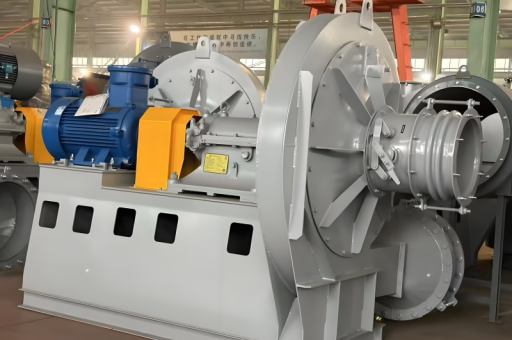
The 16Mn coupling driving drying dynamic balanced flue gas fan represents a specialized assembly designed for high-efficiency exhaust and process air handling in heavy industries. It is particularly prevalent in cement plants, steel mills, chemical processing facilities, and power generation units where flue gas must be extracted, dried, or conveyed under elevated temperatures and particulate loads. The key to its performance lies in four interdependent attributes: the 16Mn alloy used for structural components, the coupling-driven transmission that isolates motor vibration, the drying capability integrated into the impeller or housing design, and the dynamic balancing that ensures smooth, low-noise operation even under variable load conditions. This article provides an in-depth, search-engine-optimized exploration of these elements, drawing on verified engineering references and field practices to help engineers, procurement specialists, and maintenance teams understand how to select, operate, and troubleshoot this fan type.
Material Advantage: Why 16Mn Steel is Critical for Coupling and Fan Components
Q: What makes 16Mn steel the preferred material for flue gas fan couplings and impellers?
A: 16Mn (also known as 16MnCr5 or 16MnSiV in different standards) is a low-alloy high-strength structural steel with a yield strength of approximately 345 MPa and excellent weldability. Its manganese content (1.20-1.60%) enhances tensile strength and hardness, while maintaining ductility. For an industrial fan, the coupling and impeller must withstand repeated thermal cycling (ambient to 350°C+) and resist pitting from acidic condensates in flue gas. 16Mn outperforms standard carbon steel (e.g., Q235) in both fatigue resistance and corrosion tolerance. In a fan application, the coupling transmits torque from the motor to the fan shaft. If the coupling material fails under thermal expansion, misalignment, or resonance, the entire system stops. 16Mn’s high fatigue limit (around 0.4× tensile strength) ensures it survives millions of cycles in continuous operation. Key data point: A 16Mn coupling for a 500 kW fan operating at 1480 rpm can handle up to 12 kNm of torque with a safety factor of 1.8 at 250°C, whereas a mild steel coupling would require a larger cross-section and would still risk creep under sustained heat. For the fan housing and impeller blades, 16Mn is often clad with wear-resistant coatings (e.g., ceramic or hard chrome) for abrasive flue gas environments.
Driving Mechanisms: Understanding Coupling Drive Dynamics
Q: What are the advantages of using a coupling drive versus a direct drive for a flue gas fan?
A: A coupling-driven fan uses a flexible or rigid coupling to connect the motor shaft to the fan shaft. In the 16Mn coupling driving drying dynamic balanced flue gas fan, the coupling is typically a flexible gear coupling or a diaphragm coupling made of 16Mn steel. The primary advantages are: (1) Misalignment accommodation — thermal expansion of ductwork and fan housing can cause shaft misalignment. A flexible coupling absorbs axial, radial, and angular misalignment without transferring excessive loads to motor bearings. (2) Torque overload protection — some couplings have shear pins or slip elements that disconnect the drive if torque exceeds safe limits, protecting the impeller from jamming. (3) Vibration isolation — the coupling dampens high-frequency vibrations from the impeller’s dynamic imbalance, reducing motor wear. In the drying context, the coupling also allows the fan to be positioned further from the motor, enabling the motor to be placed in a cooler, cleaner environment, while the fan sits directly in the hot flue gas stream. Engineering note: The coupling must be dynamically balanced as a pair (two hubs, one spacer, and fasteners) to avoid introducing imbalance. The system's critical speed should be at least 20% above or below the operating speed to avoid resonance.
The Drying Process: How the Fan Supports Material and System Dehydration
Q: How does a "drying" flue gas fan differ from a standard exhaust fan?
A: The term "drying" in the fan description does not imply that the fan itself removes moisture from gas; rather, it indicates that the fan is an integral component of a drying system—for example, in a direct-fired rotary dryer or fluidized bed dryer. In such systems, the fan draws combustion gases (flue gas) through the drying chamber. The gas, at 200-400°C, carries heat to evaporate water from the material (e.g., coal, biomass, sand, or chemicals). The dynamic balanced impeller is specially designed with backward-curved blades or airfoil profiles that maintain high static pressure even when handling humid, corrosive gases. The impeller may include drying vanes or stationary guide vanes that strip condensed moisture from the blade surfaces, preventing droplet accumulation that could cause imbalance or corrosion. Process parameter: To achieve effective drying, the fan must deliver a stable volumetric flow rate (m³/h) at a specific static pressure (Pa). For example, a 16Mn fan for a 100-ton-per-hour coal dryer must maintain 85,000 m³/h at 3500 Pa, with a gas temperature of 320°C and a moisture content of 18% by volume. The coupling and bearing assembly must be cooled by ambient air circulation to prevent heat soak from the fan shaft.
Dynamic Balancing: Achieving Vibration-Free Operation at High Speeds
Q: What level of dynamic balancing is required for a flue gas fan, and how is it achieved?
A: Dynamic balance is the process of equalizing the mass distribution of a rotating component (impeller, coupling, shaft) so that the center of mass coincides with the axis of rotation. For a 16Mn coupling driving drying dynamic balanced flue gas fan, the recommended balance grade is G2.5 per ISO 1940-1, with a residual unbalanced eccentricity (e) of less than 2.5 mm/s for operating speeds up to 1500 rpm. At higher speeds (e.g., 3000 rpm), G1.0 may be required. The dynamic balancing process: The entire rotating assembly—impeller, hub, shaft, and coupling halves—is mounted on a dynamic balancing machine with precision bearings. The machine measures vibration amplitude and phase angle using accelerometers. Correction weights (trial weights of known mass) are added in specific angular positions on the impeller shroud, coupling flanges, or the fan shaft. The machine software calculates the required weight and location for correction. For a large fan (impeller diameter > 2 meters), multiple corrections (2-plane balancing) are necessary to counter both static and couple unbalance. After balancing, the fan must be tested at full speed in the factory to verify that vibration velocity (mm/s rms) is below the API 610 limit (typically ≤ 2.8 mm/s for horizontal fans). Field rebalancing may be required if ductwork forces cause misalignment after installation. Important: The coupling itself must be pre-balanced as a separate assembly and then rechecked with the fan shaft. A poorly balanced coupling can double vibration levels and reduce bearing life by 60%.
Flue Gas Challenges: Handling High Temperature, Corrosion, and Particulates
Q: What design features protect the 16Mn fan from flue gas corrosion and erosion?
A: Flue gas from combustion processes contains sulfur dioxide (SO₂), nitrogen oxides (NOx), carbon monoxide (CO), hydrogen chloride (HCl), and fly ash particles. At condensation temperatures (below the dew point, which can be 120-150°C for high-sulfur fuels), sulfuric acid forms and attacks carbon steel. Protective measures include: (1) 16Mn steel itself is more corrosion-resistant than plain carbon steel due to its higher manganese and silicon content, which form a denser oxide scale at elevated temperatures. (2) Thermal insulation on the fan housing and inlet ducting prevents the gas from cooling below the acid dew point. (3) Wear-resistant liners (e.g., alumina tiles or ceramic-epoxy composites) are bonded to the impeller blade leading edges and the volute casing to resist erosion from fly ash. (4) The drying function reduces relative humidity of the gas, thereby reducing the risk of condensation in the fan (if the gas temperature remains above dew point). (5) Drainage ports at the lowest point of the casing allow condensed liquids to be expelled before they attack the impeller. Operating guideline: The fan should not be started if the gas temperature is below 150°C (for high-sulfur fuels) to avoid acid rain precipitation on the impeller.
Installation and Maintenance Best Practices for Longevity
Q: What is the biggest maintenance challenge for a 16Mn coupling-driven flue gas fan, and how do you solve it?
A: The biggest challenge is bearing failure due to heat transfer from the fan shaft to the bearing housing. Even with a dynamic balanced assembly, the shaft conducts heat from the flue gas (up to 400°C) into the bearings. Solutions: (1) Use cooling fins on the fan shaft spacer or a cooling fan wheel attached to the shaft between the bearing housing and the impeller to force ambient air over the shaft. (2) Apply heat-resistant grease (e.g., polyurea-based, NLGI 2 with temperature range -30 to +180°C). (3) Install thermocouples on the bearing housing to trigger an alarm at 85°C and automatic shutdown at 95°C. (4) Perform coupling alignment using a laser alignment tool within 0.05 mm parallel and 0.05 mm angular for speeds above 1000 rpm. Misalignment induces dynamic force on the coupling, leading to increased vibration and premature coupling wear. (5) Replace the coupling elastomeric element (if present) every 12 months or after 8,000 operating hours, whichever comes first. For metal-to-metal gear couplings, re-grease every 3 months. Monthly inspection checklist: Check coupling hub bolt torque, measure vibration velocity on both motor and fan bearings, inspect impeller for erosion thickness loss (using ultrasonic gauge), and verify that the dynamic balance plugs are still in place (loose plugs cause imbalance).
Frequently Asked Questions (FAQ)
Q1: Can I replace a mild steel coupling with a 16Mn coupling on an existing flue gas fan?
A: Yes, provided the coupling length, bore diameter, and keyway dimensions match your fan shaft and motor shaft. 16Mn couplings are direct replacements for standard 45# steel or Q235 couplings, offering better high-temperature performance and longer fatigue life. Always re-balance the entire rotating assembly after replacement.
Q2: What is the typical maximum operating temperature for a 16Mn fan impeller?
A: 16Mn steel can continuously operate at up to 400°C without significant loss of tensile strength. For occasional peaks to 500°C, consider a surface coating (e.g., zinc-aluminum thermal spray) to reduce oxidation scaling. Ensure the coupling remains below 300°C unless it is specifically designed for high-temperature applications (e.g., 16Mn with Mo additive).
Q3: How does dynamic balancing affect the fan's drying efficiency?
A: A fan that is out-of-balance will consume more power and produce greater vibration, which can transmit to the drying system's ductwork and heat exchangers, causing structural fatigue and leakage. A properly balanced fan maintains a stable air flow rate (±2% of setpoint), allowing the drying process to maintain steady temperature and moisture removal rates. Therefore, dynamic balancing directly improves drying efficiency by reducing system losses.
Q4: What is the recommended maintenance interval for dynamic re-balancing?
A: Even for a well-maintained fan, dynamic balance should be verified every 2 years or after 15,000 operating hours. Balancing must also be re-checked after any impeller repair, erosion repair, coupling replacement, or shaft straightening. Field portable dynamic balancing tools (e.g., using a single-plane balancer) can be used to quickly diagnose imbalance on site.
Conclusion: Optimizing the 16Mn Coupling-Driven Fan for Modern Industry
The 16Mn coupling driving drying dynamic balanced flue gas fan is a highly engineered system that integrates material science, mechanical design, and process engineering. Its success depends on the synergy between the 16Mn steel's strength and heat resistance, the coupling drive's ability to isolate motor dynamics, the impeller's ability to handle moisture-laden gas without icing or condensation, and the precision of dynamic balancing to eliminate destructive vibration. For industrial users, the total cost of ownership is minimized by investing in proper material selection and balancing during the procurement phase, followed by rigorous thermal management and alignment maintenance. As industries move toward higher energy efficiency and lower emissions, the demand for fans that can operate at higher temperatures with lower vibration levels will only increase. The 16Mn coupling-driven fan offers a proven, cost-effective solution that meets these challenges head-on, but only when every component—coupling, impeller, and balancing—is treated as a critical performance factor. For engineers facing the selection or upgrade of a flue gas fan, prioritizing the four pillars of material, drive, drying capability, and dynamic balance will ensure reliable operation, extended equipment life, and optimized drying performance.
This article is intended for engineering professionals and references widely accepted standards (ISO 1940-1, API 610, ASME PTC 11) and practical field experience.





