
This article's table of contents introduction:
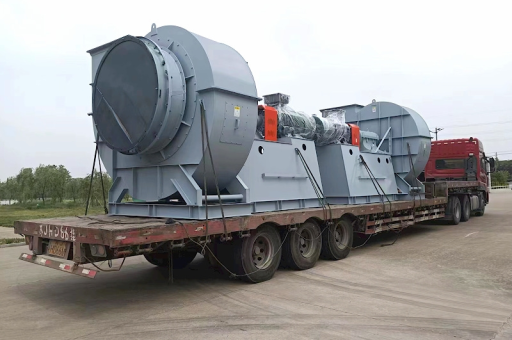
- The Specific Fan: The Pre-Selective Catalytic Reduction (Pre-SCR) / Raw Mill Fan
- Critical Engineering Specifications
- How to Identify the Correct Fan (The "Denitrification" Context)
- Common Failure Modes & Solutions
- Recommendation for Procurement
Based on your query, it appears you are looking for a specific industrial fan used in the cement production process, specifically for High Volume flow, Anti-Fraying properties (resistance to dust erosion), and Forward Curved blade design, installed pre-flue gas denitrification (DeNOx) system.
Here is the breakdown of what this fan is, why it is specified, and the critical engineering details.
The Specific Fan: The Pre-Selective Catalytic Reduction (Pre-SCR) / Raw Mill Fan
In a cement plant, the fan you are describing is most likely the Raw Mill Exhaust Fan or a Preheater Booster Fan located before the SNCR or SCR system.
Why "High Volume Anti-Fraying Forward Flue Gas Denitrification Cement Fan"?
- High Volume: Cement kilns process massive amounts of gas (hundreds of thousands of Nm³/h).
- Anti-Fraying: The gas before denitrification is laden with highly abrasive cement raw meal dust (CaCO3, SiO2, Al2O3). "Fraying" here refers to erosive wear on the blades.
- Forward Curved: Forward curved blades (also known as "Squirrel Cage" or multi-vane) are chosen for high volume at low to medium pressure with compact size.
- Flue Gas Denitrification: The fan must handle NOx reduction process (SNCR or SCR) temperatures (~300°C - 400°C).
Critical Engineering Specifications
To prevent failure (blade erosion, imbalance, bearing failure), this fan must be engineered with specific metallurgy and coatings.
| Parameter | Specification for Cement Pre-DeNOx Service |
|---|---|
| Impeller Type | Forward Curved (Multi-blade) or Radial Tip |
| Gas Temperature | 300°C to 380°C (Critical: Must survive thermal excursions up to 450°C) |
| Dust Load | 50 – 200 g/Nm³ (Extremely abrasive) |
| Typical Flow | 300,000 – 1,200,000 m³/h |
| Pressure | 1500 – 3000 Pa |
| Blade Protection (Anti-Fraying) | Hardfacing (Stellite/Carbide) or Ceramic Tiles applied to leading edges |
| Shaft Seal | High-temperature carbon ring seal to prevent dust ingress to bearings |
| Housing | Abrasion-resistant steel (Hardox 400/500) or with sacrificial liner plates |
| Vibration Monitoring | Mandatory (Dust buildup causes imbalance, leading to rapid bearing failure) |
How to Identify the Correct Fan (The "Denitrification" Context)
In a cement plant layout:
- Kiln Exhaust Gas (Hot, high NOx, dusty).
- Fan Location: This fan pulls gas from the preheater tower or raw mill circuit.
- The Denitrification Reactor (SCR): Is located after this fan.
- Why? The fan creates the necessary pressure to push the gas through the SCR catalyst bed (which has high pressure drop).
- The Anti-Fraying Problem: Without anti-fraying, the blades will erode in 6-12 months. The fine cement powder acts like sandpaper at high velocity.
Common Failure Modes & Solutions
| Failure | Cause | Anti-Fraying Solution |
|---|---|---|
| Leading Edge Wear | Dust impact on the front of the forward curved blade | Weld overlay of Tungsten Carbide or Plasma-transferred arc (PTA) hardfacing. |
| Blade Root Cracking | Vibration from dust buildup | Apply Anti-Stick Coating (e.g., Teflon-based or Boron Nitride) to the blade surfaces to prevent dust accumulation. |
| Shaft Rubbing | Dust leakage through shaft seal | Purge seal with high-pressure compressed air; use labyrinth seal with isolation damper. |
Recommendation for Procurement
If you are ordering this fan, you must specify:
- "Forward Curved" (FC) or "High Volume".
- "Hard-faced blades" (Anti-fraying).
- "High Temperature" (350°C continuous).
- "For Cement Pre-SCR Service".
Key Suppliers that manufacture these specialized fans include:
- TLT-Turbo (Germany)
- Howden (UK)
- ZENITH or Shanghai Electric (China - for cost-effective anti-abrasion designs)
- SACMI / ICF (Italy)
Final Note: If the fan is truly Forward Curved, it will have many small, deep cups (blades). If you need even higher pressure with anti-fraying, the industry often switches to Radial Blade or Radial Tip designs, which are inherently more robust for high dust loads despite lower efficiency. Ensure your selection is based on the specific pressure drop of your SCR system.





