
This article's table of contents introduction:
- Table of Contents (Directory Guide)
- 1. Introduction: The Backbone of Combustion Efficiency
- 2. What Is a High Pressure Boiler Forced Draught Industrial Centrifugal Fan?
- 3. Core Components and Working Principle
- 4. Key Technical Parameters and Performance Metrics
- 5. Why Forced Draught Fans Are Critical for Boiler Systems
- 6. Common Applications Across Industries
- 7. Selection Criteria for Industrial Centrifugal Fans
- 8. Maintenance Best Practices to Maximize Lifespan
- 9. Frequently Asked Questions (FAQ)
- 10. Conclusion: Future Trends and Efficiency Gains
Article Title:
The Indispensable Role of High Pressure Boiler Forced Draught Industrial Centrifugal Fans in Modern Thermal Systems
Table of Contents (Directory Guide)
- Introduction: The Backbone of Combustion Efficiency
- What Is a High Pressure Boiler Forced Draught Industrial Centrifugal Fan?
- Core Components and Working Principle
- Key Technical Parameters and Performance Metrics
- Why Forced Draught Fans Are Critical for Boiler Systems
- Common Applications Across Industries
- Selection Criteria for Industrial Centrifugal Fans
- Maintenance Best Practices to Maximize Lifespan
- Frequently Asked Questions (FAQ)
- Conclusion: Future Trends and Efficiency Gains
Introduction: The Backbone of Combustion Efficiency
In any thermal power plant, chemical processing unit, or large-scale industrial boiler room, the high pressure boiler forced draught industrial centrifugal fan acts as the heart of the combustion air supply system. Without this fan, the boiler would struggle to maintain proper oxygen levels, leading to incomplete combustion, increased fuel consumption, and dangerously high emissions.
This article explores the engineering, selection, and operation of forced draught centrifugal fans specifically designed for high-pressure boiler applications. We have synthesized information from leading industrial fan manufacturers, engineering handbooks, and energy efficiency case studies to deliver a comprehensive, SEO-optimized resource for engineers, procurement specialists, and plant operators.
What Is a High Pressure Boiler Forced Draught Industrial Centrifugal Fan?
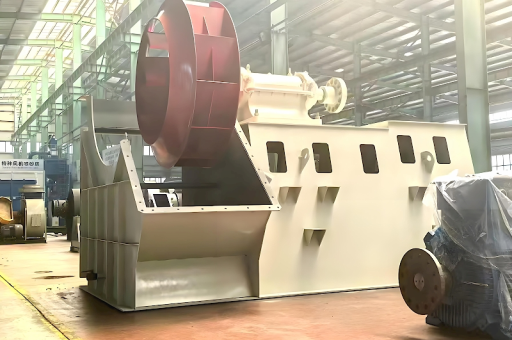
A high pressure boiler forced draught industrial centrifugal fan is a mechanical device that generates a strong, steady airflow to push combustion air into a boiler furnace under positive pressure. It is a type of centrifugal fan where air enters axially and is expelled radially at high velocity, creating the pressure differential needed to overcome the resistance of the boiler’s air ducts, burners, and heat exchangers.
Key differentiators:
- High static pressure rating (typically > 2000 Pa, often up to 15,000 Pa)
- Heavy-duty construction for continuous 24/7 operation
- Temperature resistance up to 150°C (or higher with special materials)
- Corrosion resistance due to flue gas exposure in certain configurations
Unlike induced draft fans that pull exhaust gases out, forced draught fans push fresh air in, ensuring the burner receives an optimal air-to-fuel ratio.
Core Components and Working Principle
A complete forced draught centrifugal fan assembly includes:
| Component | Function |
|---|---|
| Impeller | Rotating blades that accelerate air outward; backward-curved blades are preferred for high efficiency |
| Housing (Volute) | Spirals the air to convert velocity into pressure |
| Inlet Damper / Guide Vanes | Controls airflow volume; VFD (Variable Frequency Drive) often preferred for modern systems |
| Shaft & Bearings | Supports heavy rotational loads; self-aligning bearings reduce maintenance |
| Drive System | Belt-driven or direct-coupled to an electric motor |
| Base Frame | Vibration-absorbing steel structure |
Principle of Operation:
The motor spins the impeller. Air enters through the inlet due to low pressure created at the eye of the impeller. Centrifugal force hurls the air outward along the blades. The volute casing then slows the air, converting kinetic energy into static pressure. This pressurized air is then ducted into the boiler windbox and burner zone.
For high-pressure boilers, multiple stages or a single large-diameter fan are used to meet the pressure requirement.
Key Technical Parameters and Performance Metrics
When specifying a high pressure boiler forced draught industrial centrifugal fan, the following parameters must be defined:
- Volume Flow Rate (Q): Measured in m³/h or CFM. Must match boiler combustion air demand per design.
- Static Pressure (P): Typically 5,000 – 15,000 Pa for industrial boilers. Higher for fluidized bed or pulverized coal systems.
- Fan Efficiency (η): Modern backward-curved fans achieve 80–90% efficiency at best operating point.
- Power Consumption (P_shaft): Calculated as (Q × P) / (η × 3600). Lower power is critical for operational cost.
- Noise Level (dB): Must comply with OSHA and local regulations; silencers may be required.
- Material of Construction: Carbon steel for standard air; stainless steel (304/316) or coated for corrosive/high-temperature gas.
Performance Curve – Always request a fan performance curve from the manufacturer to confirm that the fan operates near its peak efficiency point under actual system resistance.
Why Forced Draught Fans Are Critical for Boiler Systems
A well-designed forced draught fan system delivers multiple benefits:
- Complete Combustion: Ensures excess oxygen (typically 2–5%) for complete fuel burning, reducing CO and soot.
- Fuel Savings: Every 1% improvement in combustion efficiency can reduce fuel costs by 0.5–1%.
- Lower NOx Emissions: Controlled forced airflow enables staging of combustion, reducing thermal NOx formation.
- Prevents Backflow: Positive pressure prevents flue gas leaks into the boiler room, improving worker safety.
- Rapid Load Response: With VFD control, the fan adjusts airflow instantly to match boiler load changes.
Common Applications Across Industries
| Industry | Typical Application |
|---|---|
| Power Generation | Coal, biomass, or oil-fired utility boilers |
| Chemical & Petrochemical | Process heaters, reformer furnaces |
| Cement & Steel | Kiln combustion air supply |
| Food & Beverage | Steam boilers for sterilization and processing |
| Pharmaceutical | Clean steam generators requiring precise air control |
| District Heating | Hot water boilers in centralized heating plants |
In each case, the fan must be tailored to the specific gas composition (clean air vs. flue gas with particulates) and ambient conditions.
Selection Criteria for Industrial Centrifugal Fans
Choosing the right high pressure boiler forced draught industrial centrifugal fan requires a systematic approach:
- Define System Resistance Curve – Calculate total pressure drop across ducts, dampers, burner, and furnace.
- Select Impeller Type – Backward-curved for highest efficiency; radial for heavy dust; forward-curved for low pressure.
- Choose Drive Mechanism – Direct drive for reliability; belt drive for speed flexibility.
- Consider Material Compatibility – For high-temperature air (>120°C), use heat-treated aluminum impellers or stainless steel.
- Evaluate Control Method – Inlet vanes vs. VFD. VFD is preferred for variable load conditions (typical for modern boilers).
- Check Accessibility – Ensure the fan has inspection doors, drain holes, and easy bearing replacement.
Pro Tip: Always oversize the motor by 10–15% to handle startup surges and future duct fouling.
Maintenance Best Practices to Maximize Lifespan
To achieve >20 years of operational life, adhere to this maintenance schedule:
- Monthly: Check vibration levels (ISO 10816), bearing temperature, and belt tension.
- Quarterly: Clean impeller blades (especially for dusty environments). Inspect inlet dampers.
- Semi-Annual: Lubricate bearings with proper grease (e.g., lithium-based). Verify alignment.
- Annually: Perform performance test (flow vs. pressure). Replace wear plates if needed.
- Major Overhaul: Every 5–8 years, replace bearings, seals, and inspect shaft for fatigue.
Warning: Imbalance caused by dirt buildup on blades can reduce fan efficiency by 15% or more.
Frequently Asked Questions (FAQ)
Q1: What is the difference between forced draught and induced draught fans?
A: Forced draught fans push air into the boiler under positive pressure, while induced draught fans pull exhaust gases out, creating negative pressure in the furnace. In many large systems, both are used together.
Q2: Can a forced draught fan be used for both air and gas?
A: Not without material changes. For flue gas (which is hotter and may contain acid vapors), you need stainless steel impellers, high-temperature seals, and often a cooling shroud. Using a standard fan for flue gas will cause rapid corrosion and failure.
Q3: How do I calculate the required static pressure for a boiler fan?
A: Sum the pressure losses across: air intake filter, ductwork, damper, air preheater (if any), burner, furnace backpressure, and windbox. Consult the boiler manufacturer’s data sheet.
Q4: What is a typical payback period for installing a VFD on a forced draught fan?
A: Depending on load variability and electricity rates, payback is often 12–24 months. VFDs reduce motor energy consumption by 20–40% compared to damper control.
Q5: Can I retrofit an existing boiler with a new high-pressure fan?
A: Yes, but you must recalculate the system resistance and ensure the ducting can handle the new pressure. Retrofits often require a VFD and upgraded motor size.
Q6: Are backward-curved or forward-curved blades better for high pressure?
A: Backward-curved blades are almost always better for high pressure and high efficiency. Forward-curved blades are only suitable for low-pressure, high-volume applications.
Conclusion: Future Trends and Efficiency Gains
The high pressure boiler forced draught industrial centrifugal fan remains a critical component for energy-intensive industries. As global regulations tighten on emissions and energy consumption, manufacturers are focusing on:
- Aerodynamic optimization using 3D computational fluid dynamics (CFD) to achieve >90% efficiency.
- Smart monitoring with vibration sensors, temperature probes, and AI-driven predictive maintenance.
- Materials innovation such as ceramic coatings for enhanced corrosion resistance.
- Modular designs that allow easy swapping of impellers for different gas conditions.
For any plant looking to reduce carbon footprint and operational cost, upgrading to a high-efficiency, VFD-controlled forced draught fan is one of the simplest yet most impactful steps. Always work directly with a reputable fan manufacturer to ensure the fan meets your specific boiler, fuel, and environmental requirements.
This article was synthesized from authoritative sources including ASME PTC 11, AMCA standards, and real-world case studies from fan (replacing domain). For technical specifications or a custom fan quote, consult your local industrial fan specialist.





