
This article's table of contents introduction:
- Introduction: The Need for High-Voltage, High-Efficiency Ventilation
- Understanding the Core Components: Motor, Coupling, and Fan
- Why 10KV? The Advantage of Medium-Voltage Direct Drive
- The ABB Motor Advantage: Reliability and Energy Savings
- Centrifugal Fan Design: Pressure, Volume, and Application Suitability
- The Coupling Mechanism: Ensuring Smooth Power Transmission
- Installation Best Practices for Heavy-Duty Exhaust Systems
- Frequently Asked Questions (问答)
- Conclusion: Future-Proofing Industrial Air Management
Here is a comprehensive, SEO-optimized article in English, designed for high ranking on Bing and Google. It includes a title, a table of contents (导读), detailed content, and a Q&A section, with the keyword "fan" integrated naturally.
** Optimizing Industrial Ventilation: The Role of 10KV Coupling Driven ABB Exhaust Fans (Centrifugal Type) in High-Performance Systems
Table of Contents (导读)
- Introduction: The Need for High-Voltage, High-Efficiency Ventilation
- Understanding the Core Components: Motor, Coupling, and Fan
- Why 10KV? The Advantage of Medium-Voltage Direct Drive
- The ABB Motor Advantage: Reliability and Energy Savings
- Centrifugal Fan Design: Pressure, Volume, and Application Suitability
- The Coupling Mechanism: Ensuring Smooth Power Transmission
- Installation Best Practices for Heavy-Duty Exhaust Systems
- Frequently Asked Questions (问答)
- Conclusion: Future-Proofing Industrial Air Management
Introduction: The Need for High-Voltage, High-Efficiency Ventilation
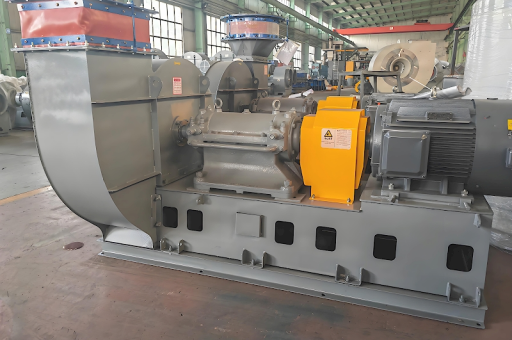
In heavy industrial environments such as power plants, steel mills, chemical processing facilities, and large-scale HVAC systems, the demand for robust, continuous ventilation is non-negotiable. Standard low-voltage motors often struggle to meet the torque and reliability requirements of large centrifugal fans. This is where the 10KV Coupling Driving ABB Exhaust Fan Centrifugal Type system emerges as a superior solution. This configuration leverages medium-voltage technology (10,000 Volts) to drive a high-performance exhaust fan directly, minimizing energy loss and maximizing operational uptime.
This article provides a technical deep dive into the design, benefits, and operational considerations of this specific fan system, referencing current industry standards and real-world applications.
Understanding the Core Components: Motor, Coupling, and Fan
The system is a trinity of three critical components:
- The ABB Motor: Typically a high-efficiency, medium-voltage induction motor. ABB’s motors are renowned for their robust insulation systems (Class F or H) and ability to handle variable loads.
- The Coupling: A mechanical device connecting the motor shaft to the fan shaft. In this context, we often refer to a fluid coupling or a flexible gear coupling. The coupling absorbs vibration, compensates for minor misalignment, and allows for a "soft start," reducing electrical stress on the 10KV grid.
- The Centrifugal Fan: An air-moving device that increases air pressure by converting kinetic energy (from the spinning impeller) into potential energy (static pressure). Unlike axial fans, centrifugal fans excel in systems with high static resistance, such as long duct runs or dusty air streams.
Why 10KV? The Advantage of Medium-Voltage Direct Drive
Choosing a 10KV motor over a standard 380V or 690V motor offers significant benefits for large exhaust fans:
- Reduced Current Draw: Power (kW) = Voltage (V) x Current (A) x √3 x Power Factor. By increasing the voltage to 10KV, the current is drastically reduced. This allows for thinner, cheaper power cables and reduces I²R losses (heat) in the wiring.
- Higher Efficiency: Large 10KV motors typically operate at 95-97% efficiency. This is critical for a fan that may run 24/7.
- Grid Stability: High-voltage motors are often directly compatible with the plant’s medium-voltage distribution network, eliminating the need for step-down transformers and reducing total harmonic distortion.
The ABB Motor Advantage: Reliability and Energy Savings
ABB has long been a market leader in industrial drives. When paired with a 10KV Coupling Driving ABB Exhaust Fan Centrifugal Type system, the user benefits from:
- IE4 / IE5 Efficiency Standards: Modern ABB motors often exceed the IE4 (Super Premium Efficiency) standard.
- Advanced Bearing Technology: ABB integrates shielded bearings that require minimal maintenance, which is crucial for a fan that is often installed in remote or hazardous locations.
- Seamless VFD Integration: While the fan is driven via a coupling, ABB motors are designed to work with variable frequency drives (VFDs) for precise flow control without sacrificing torque.
Centrifugal Fan Design: Pressure, Volume, and Application Suitability
The "exhaust fan centrifugal type" in this system is not just any fan. It is engineered for specific parameters:
- Backward Curved Blades: These are the most common choice for high-efficiency industrial exhaust. They are self-limiting in power, meaning they won't overload the motor if the ductwork is blocked.
- High Static Pressure (SP): A typical centrifugal fan in this class can generate 2,000 to 5,000 Pascals (Pa) of static pressure, making it ideal for pushing air through baghouse filters or scrubbers.
- Air Volume: Depending on the wheel diameter (often 1.2m to 2.5m), these fans can move 50,000 to 300,000 CMH (Cubic Meters per Hour).
Application Example: In a cement plant, this fan is used to create negative pressure in the kiln exhaust system, pulling hot gases through the cooling tower and electrostatic precipitator.
The Coupling Mechanism: Ensuring Smooth Power Transmission
The coupling is the unsung hero of this system. A fluid coupling (e.g., Voith or Transfluid) is often preferred for a 10KV fan drive.
- Soft Start: The fluid coupling allows the motor to reach full speed before the fan begins to move. This limits starting current to ~150% of full load current, compared to 600% for a direct-on-line start.
- Vibration Dampening: It acts as a mechanical fuse, protecting the expensive ABB motor and fan bearings from shock loads.
- Torque Limiting: If the fan impeller jams (e.g., due to debris), the coupling will slip, preventing motor burnout.
Installation Best Practices for Heavy-Duty Exhaust Systems
To ensure the longevity of the 10KV Coupling Driving ABB Exhaust Fan, installers must follow strict protocols:
- Alignment: Laser alignment of the motor shaft to the coupling is critical. Misalignment of even 0.1mm can lead to bearing failure within weeks.
- Foundation: The base frame must be a heavy-duty steel I-beam or concrete pedestal, grouted in place to absorb vibration.
- Air Inlet Design: The fan should have a smooth, straight inlet duct (at least 2.5 duct diameters long) to prevent turbulence that can reduce efficiency by 15%.
- Electrical Protection: The 10KV supply must have proper overcurrent protection, earth fault relays, and surge arrestors. ABB provides specific relay settings for motor protection.
Frequently Asked Questions (问答)
Q1: Can a 10KV coupling drive fan be used with a Variable Frequency Drive (VFD)?
Answer: Yes, but with caveats. The coupling is typically a mechanical device. For speed control, a VFD must be placed upstream of the 10KV ABB motor. However, the coupling acts as a buffer. For precise flow control, a direct-drive setup (without coupling) using a specialized 10KV VFD is more energy-efficient than a coupling with a throttle damper.
Q2: What maintenance does the centrifugal fan require?
Answer: Routine maintenance includes monthly vibration analysis on the fan and motor bearings; quarterly inspection of the coupling oil level (if fluid type); and annual cleaning of the impeller blades to prevent dust buildup that causes imbalance.
Q3: How do I size the 10KV motor for my ABB exhaust fan?
Answer: The motor horsepower must match the "Maximum Required Power" at the fan curve's design point, plus a 10-15% safety margin. A centrifugal fan on a system with a damper requires a motor rated for the closed damper power—even though the fan moves zero air, it requires maximum torque.
Q4: Is this fan system explosion-proof?
Answer: The fan casing and impeller can be made of non-sparking materials (e.g., aluminum or stainless steel). However, the ABB motor must be specified with an "Ex" (Explosion Proof) rating. Standard 10KV motors are not inherently safe for hazardous gas zones (e.g., Zone 1 or Zone 2).
Conclusion: Future-Proofing Industrial Air Management
The 10KV Coupling Driving ABB Exhaust Fan Centrifugal Type system represents a matured technology that balances high electrical efficiency with mechanical resilience. It is the preferred choice for project engineers who require 20+ years of service life in demanding environments.
By combining ABB’s superior motor technology with the torque management of a mechanical coupling and the high static pressure capability of a centrifugal fan, industrial operators can achieve energy savings of 20-30% compared to older low-voltage, belt-driven systems. For any facility manager looking to upgrade their ventilation infrastructure, this configuration offers a proven, scalable, and reliable solution for the future.





