
This article's table of contents introduction:
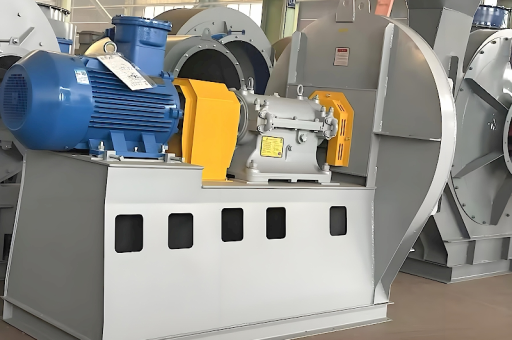
- What is this equipment?
- Key Features of a Cement Dust Collector Fan
- Common Applications in a Cement Plant
- How to Specify or Identify the Right Fan
- Top Manufacturers (Cement Grade)
- Potential Issues to Watch For
It sounds like you are looking for information or a specific type of Centrifugal Fan used for Dust Collection and Forced Ventilation in a Cement Plant.
Here is a breakdown of what that equipment is, its key features, and why it is critical in the cement industry.
What is this equipment?
This is a Heavy-Duty Centrifugal Fan (Blower) , typically with backward-curved or radial blades, designed to move large volumes of air or gas against moderate to high static pressure. In a cement plant, it is used for:
- Dust Collection: Sucking dust-laden air from crushers, mills, conveyors, and packing plants through bag filters or electrostatic precipitators.
- Forced Ventilation: Pushing fresh air into the kiln, cooler, or mill system for combustion or cooling.
- Material Handling: Pneumatically conveying cement or raw meal through pipes.
Key Features of a Cement Dust Collector Fan
Cement dust is highly abrasive and often hot. Therefore, these fans are built differently than standard HVAC fans.
| Feature | Specification / Requirement |
|---|---|
| Wheel Design | Backward Inclined (BI) or Radial Tip. BI is most common for high efficiency. |
| Material | High Tensile Steel (e.g., Corten / Weathering Steel) or Abrasion-Resistant Steel (AR 400/500) . Impeller is often reinforced. |
| Coating | Hardfacing (Weld overlay) on leading edges of blades. Epoxy or Ceramic Lining on the housing. |
| Bearings | Heavy-duty, self-aligning, spherical roller bearings with temperature sensors (RTDs/TCs) . |
| Shaft Seal | Labyrinth seals or purge air seals to prevent dust from entering bearings. |
| Drive | Direct drive (via coupling) or V-belt drive. Variable Frequency Drive (VFD) is standard for energy savings. |
| Temperature | Designed for 100°C - 400°C depending on location (e.g., cooler fan vs. raw mill fan). |
Common Applications in a Cement Plant
- Baghouse Fan (Dust Collector Fan): The main workhorse. It pulls dirty air through the filter bags.
- Raw Mill Fan: Recirculates air through the vertical roller mill.
- Kiln Induced Draft (ID) Fan: Pulls hot gases from the kiln through the preheater tower.
- Clinker Cooler Fan: Forces ambient air through the hot clinker to cool it down (Forced Ventilation).
- Cement Mill Fan: Vents the ball mill and separator.
How to Specify or Identify the Right Fan
If you are looking to purchase or replace one, you need the following Technical Specifications:
- Flow Rate (CFM or m³/hr): How much air needs to be moved.
- Static Pressure (Inches w.g. or Pa): The resistance the fan must overcome (from filter bags, ducts, etc.).
- Air/Gas Temperature: Critical for shaft cooling and material expansion.
- Dust Load (g/Nm³): How much abrasive cement dust is in the airstream.
- Gas Composition: Is it air, hot gas with sulfur/NOx, or something else?
- Required Power (kW/hp): Calculated from flow and pressure.
Top Manufacturers (Cement Grade)
If you need to source this equipment, look for these industrial fan manufacturers:
- Howden
- FLSmidth
- TLT-Turbo
- Robinson Fans
- New York Blower
- Chicago Blower
- Cincinnati Fan
- Airpro (India)
- Soni (India)
Potential Issues to Watch For
- Erosion: The biggest killer. High-velocity cement dust acts like sandpaper.
- Solution: Hardfacing, replaceable wear liners, lower tip speeds.
- Imbalance: Dust builds up on the impeller (unevenly).
- Solution: Self-cleaning blade designs or regular water/air cleaning cycles.
- High Temperature: Can warp the wheel or cause shaft failure.
- Solution: A radial cooling fan on the shaft or a heat slinger.
Are you looking to:
- Specify a fan for a new project? (I can help with the sizing logic).
- Troubleshoot a problem (vibration, high amp draw, low airflow)?
- Find a specific manufacturer or supplier?
Let me know, and I can provide more targeted information.





