
This article's table of contents introduction:
- The Core Components Explained
- Putting It All Together: The Complete Picture
- Typical Applications
- Comparison Table
- Summary
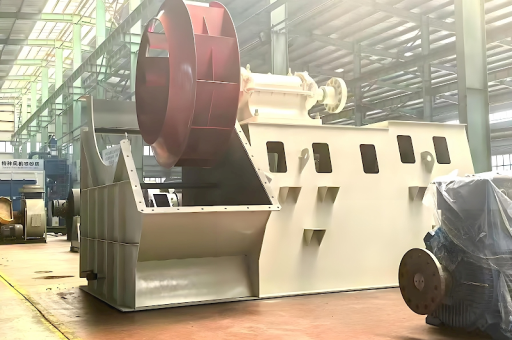
This phrase describes a very specific, high-performance industrial fan designed for demanding environments. Let's break down what each part of the name means.
This is a custom-engineered fan, not a standard, off-the-shelf model.
The Core Components Explained
"Double Suction" (Also known as Double Inlet)
- What it means: Air is drawn into the fan wheel (impeller) from both sides.
- Why use it: It essentially balances the axial thrust forces on the shaft, leading to smoother operation and longer bearing life. It also allows for a wider impeller, which can handle higher airflow volumes without increasing the fan's rotational speed as much as a single-suction fan.
- Typical Use: Large-volume air handling systems.
"High Pressure"
- What it means: The fan is designed to generate a significant pressure differential (static pressure) to overcome resistance in a system.
- Why use it: To push air through long duct runs, dense filters, or against the resistance of a process (like in pneumatic conveying).
- Typical Use: Industrial processes, dust collection systems, forced draft for boilers.
"Backward" (Refers to the Impeller Blade Design)
- What it means: The blades on the impeller curve away from the direction of rotation.
- Why it's important:
- High Efficiency: This is the most efficient blade design for industrial fans.
- Self-Limiting Power: If the system resistance drops, the motor won't overload (over-amp). This is a critical safety feature.
- Lower Noise: Generally quieter than forward-curved blades.
- Typical Use: High-efficiency, high-pressure applications.
"Metallurgy" (Material and Construction)
- What it means: The fan is constructed using high-grade, specialized metals with a focus on material science.
- Why it's important: This fan is intended for extreme conditions where standard carbon steel would fail. Materials might include:
- Stainless Steel (304/316/316L): For corrosion resistance (acids, caustics, humid environments).
- Hastelloy: For extreme chemical resistance.
- Duplex Stainless Steel: For high strength and corrosion resistance.
- Heat-Resistant Alloys (e.g., Inconel): For high-temperature gases.
- Typical Use: Chemical processing, steel mills, semiconductor fabs, waste-to-energy plants.
"Stainless Steel"
- What it means: The primary material for the fan housing, impeller, and shaft is stainless steel.
- Why it's used:
- Corrosion Resistance: Protects against moisture, chemicals, and acidic fumes.
- Hygiene: Easy to clean, non-porous surface.
- High-Temperature Strength: Maintains integrity at elevated temperatures better than carbon steel.
- Typical Use: Food processing, pharmaceutical cleanrooms, chemical exhaust, marine environments.
"Blower Fan"
- What it means: A general term for a device that moves air or gas. In this context, "blower" implies a higher pressure rise compared to a standard "fan." It's less about airflow volume and more about overcoming pressure resistance.
Putting It All Together: The Complete Picture
This fan is a heavy-duty, specialized industrial blower designed for the toughest applications. It is expensive, large, and custom-built to meet precise performance specifications.
Key Characteristics:
- High Airflow: Due to the double-suction design.
- High Static Pressure: To overcome significant system resistance.
- High Efficiency: Thanks to the backward-curved blades.
- Extreme Durability: Constructed from corrosion-resistant stainless steel with metallurgical expertise.
- Long Service Life: Designed for continuous, 24/7 operation.
Typical Applications
You will find this fan used in places where failure is not an option and the environment is harsh:
- Chemical Processing: Moving corrosive vapors (HCl, H₂SO₄, chlorine) in scrubbers and exhaust systems.
- Steel Mills: For forced draft in furnaces or fume extraction.
- Wastewater Treatment: Aeration blowers for biological treatment (though these are often more specialized).
- Cement Plants: Conveying abrasive materials (though this would likely require specialized wear-resistant liners in addition to SS).
- Power Generation (Waste-to-Energy): Handling hot, corrosive flue gases.
- Pharmaceutical & Food Processing: Cleanroom ventilation and material conveying where hygiene and corrosion resistance are critical.
Comparison Table
| Feature | Standard Industrial Fan | This Fan (Double Suction High Pressure Backward SS) |
|---|---|---|
| Air Intake | Single side | Double side (higher volume, balanced thrust) |
| Pressure | Low to Medium | High |
| Efficiency | Low-Medium | High (Backward blades) |
| Material | Carbon Steel or Aluminized Steel | Stainless Steel (Metallurgy-focused) |
| Cost | Low-Medium | Very High |
| Application | General ventilation, HVAC | Harsh, corrosive, high-temp, or critical processes |
Summary
If you are looking at a quote or specification for this fan, you are dealing with a premium, engineered solution for a demanding industrial process. It's not a low-cost commodity fan. The "Metallurgy" aspect is key—it suggests a supplier with deep expertise in material selection to ensure the fan survives and performs reliably in its specific chemical, thermal, or abrasive environment.





