
** The Critical Role of Aluminium Alloyed High Temperature Oven Wall Cooling High Pressure Centrifugal Fans in Industrial Thermal Management
Directory (Table of Contents)
- Introduction to High-Temperature Industrial Fans
- Why Aluminium Alloy? Material Science & Thermal Performance
- The Mechanism of Oven Wall Cooling: How It Works
- High Pressure Centrifugal Fan Design: Structural and Aerodynamic Optimization
- Application Scenarios: Where This Fan System Excels
- Comparative Analysis: Aluminium Alloy vs. Steel in High-Temperature Environments
- Frequently Asked Questions (FAQ)
- Conclusion & Future Trends
Introduction to High-Temperature Industrial Fans
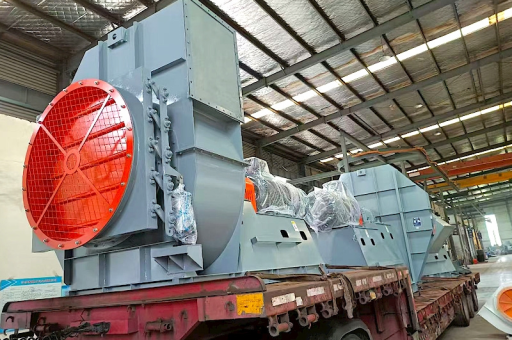
In modern industrial processes—such as heat treatment furnaces, glass manufacturing, ceramic kilns, and petrochemical reactors—maintaining precise thermal conditions is critical. One component that often operates at the heart of these systems is the Aluminium Alloyed High Temperature Oven Wall Cooling High Pressure Centrifugal Fan. This specialized fan is engineered to withstand extreme thermal loads while delivering high static pressure for forced air circulation and wall cooling.
Unlike standard centrifugal fans, this unit must simultaneously resist thermal deformation, minimize heat conduction to the motor, and maintain aerodynamic efficiency. The choice of aluminium alloy as the primary impeller and housing material is not arbitrary; it is a deliberate engineering decision based on thermodynamics, metallurgy, and long-term reliability.
Why Aluminium Alloy? Material Science & Thermal Performance
Aluminium alloys (e.g., 6061-T6, 5052, or 5083 series) offer a unique combination of properties:
- High Thermal Conductivity: Aluminium conducts heat approximately 4x faster than carbon steel (≈ 237 W/m·K vs. 50 W/m·K). This allows the fan impeller to rapidly dissipate absorbed heat, reducing localized hot spots that could cause warping or fatigue.
- Low Density (≈ 2.7 g/cm³): This reduces rotational inertia, enabling faster start-stop cycles and lower motor load. In high-pressure applications, lighter impellers experience lower centrifugal stress, extending service life.
- Oxidation Resistance: At elevated temperatures (up to 400°C / 752°F for specialized alloys), aluminium forms a stable Al₂O₃ oxide layer that protects against scaling and corrosion—critical when the fan handles hot gases with moisture or mild chemical vapors.
- Coefficient of Thermal Expansion (CTE): Aluminium’s CTE (≈ 23 µm/m·K) is higher than steel’s, which is why the design must incorporate expansion gaps and flexible couplings. Modern finned housings and stress-relieved welds accommodate this.
Important Limitation: Standard aluminium alloys begin to lose mechanical strength above 150°C. Therefore, high-temperature versions use heat-treated alloys (e.g., 2618 or 2xxx series) or forged aluminium to maintain yield strength up to 300–400°C. For extreme temperatures beyond 500°C, nickel-based superalloys may be required, but aluminium remains the optimal choice for the 200–350°C range common in oven wall cooling.
The Mechanism of Oven Wall Cooling: How It Works
The fan is typically mounted adjacent to the oven enclosure or integrated into a closed-loop duct system. Its primary function:
- Forced Convection: The high-pressure centrifugal impeller draws ambient or recirculated air, accelerates it radially through a volute casing, and directs a high-velocity airstream across the oven’s external walls.
- Heat Rejection: By maintaining a continuous air film with Reynolds numbers exceeding 3×10⁵, the fan disrupts the natural boundary layer, increasing convective heat transfer coefficient (h) by 300–500% compared to still air.
- Pressure Differential: The "high pressure" characteristic (typically 2000–8000 Pa static pressure) allows the air to penetrate narrow gaps between oven wall insulation panels, cooling internal ribs and structural stiffeners.
Typical Setup:
- Intake: Filtered ambient air or cool side-stream from the process.
- Exhaust: Heated air is either expelled to atmosphere (once-through) or passed through a heat exchanger before recirculation.
- Control: Variable frequency drives (VFD) modulate fan speed to match real-time wall temperature readings from thermocouples.
High Pressure Centrifugal Fan Design: Structural and Aerodynamic Optimization
To achieve both high pressure and thermal stability, the design incorporates several key features:
- Backward-Curved Impeller Blades: These provide a flat pressure curve, high efficiency (≤85%), and self-limiting power consumption. The blade exit angle (typically 30–45°) is optimized to reduce turbulence at elevated speeds.
- Aluminium Alloy Impeller: Cast or fabricated from welded aluminium sheet. Blade thickness is increased by 15–20% compared to standard fans to resist thermal creep. The hub is often separate, machined from a forged aluminium billet to ensure concentricity.
- Double-Entry Housing: For very high flow rates, a double-inlet (D.I.) design is used, with symmetrical volutes that balance axial thrust. The housing is internally coated or lined with a ceramic-based thermal barrier to reflect radiant heat from the oven surface.
- Shaft Cooling: A dedicated cooling disk or finned shaft extension prevents heat migration to bearings. Some designs include a separate miniature fan mounted on the shaft that pulls ambient air through the bearing housing.
- Sealing: High-temperature labyrinth seals or carbon ring seals prevent hot gas leakage along the shaft. For applications involving flammable gases (e.g., ovens with solvent vapors), spark-resistant aluminium construction is mandatory.
Application Scenarios: Where This Fan System Excels
- Heat Treatment Ovens: Cooling the outer shell while maintaining internal temperatures at 800–1200°C. The fan prevents shell heat deformation and protects electronics mounted externally.
- Food Industry Ovens: Baking lines or drying ovens where uniform wall temperature prevents product scorching. Aluminium’s non-toxic, corrosion-resistant surface is suitable for food contact areas (with proper coatings).
- Petrochemical Furnaces: In ethylene cracking heaters or reformer furnaces, these fans provide reliable wall purging—preventing flammable gas accumulation in dead zones.
- Additive Manufacturing (3D Printing) Chambers: In polymer powder bed fusion systems, precise wall cooling ensures stable chamber temperature for consistent sintering.
Comparative Analysis: Aluminium Alloy vs. Steel in High-Temperature Environments
| Parameter | Aluminium Alloy Fan | Stainless Steel Fan (304/316) |
|---|---|---|
| Max. Operating Temp. | 200–350°C (standard); 400°C (special alloy) | 600–800°C |
| Weight | ~60% lighter | Heavy — requires stronger supports |
| Thermal Conductivity | High (rapid heat dissipation) | Low (slower heat transfer, risk of thermal gradients) |
| Corrosion Resistance | Excellent (Al₂O₃ layer) | Good (need passive layer maintenance) |
| Cost | Moderate | Higher (especially for high-temp grades) |
| Spark Resistance | Naturally non-sparking (critical for explosive environments) | Non-sparking only with specific treatments |
| Fatigue Life Under Thermal Cycling | Good (with proper alloy selection) | Excellent |
Conclusion: Aluminium alloy is the superior choice when system temperature remains below 350°C, weight reduction is critical, and quick heat dissipation is required. For temperatures exceeding 400°C, move to stainless steel or Inconel.
Frequently Asked Questions (FAQ)
Q1: Can an aluminium alloy fan handle oven wall cooling in a continuous 500°C environment? A: No. Standard aluminium alloys lose structural integrity above 400°C. For 500°C+, you must use stainless steel or nickel-based alloy. However, if the fan is located outside the oven and only receives radiant heat (not direct contact), an aluminium fan with a heat shield can be used if the air temperature stays below 260°C.
Q2: Why is high pressure needed for oven wall cooling? A: High static pressure (≥3000 Pa) is necessary to overcome the resistance of ductwork, filters, and insulation slots. Without sufficient pressure, cooling air will not penetrate the boundary layer on the wall surface, resulting in poor heat transfer.
Q3: How do I select the correct fan for my oven? A: Define: (1) Maximum oven wall temperature, (2) Required air velocity at the wall (usually 5–15 m/s), (3) Distance from fan outlet to wall, (4) Ambient air temperature, (5) Duct pressure loss. Use fan performance curves from the manufacturer (e.g., fan) that show static pressure vs. flow at design temperature. Always apply a 10–15% safety margin for thermal expansion.
Q4: What maintenance issues are common with aluminium high-temperature fans? A: Common issues include: (a) impeller cracking due to thermal fatigue from rapid start-stop cycles, (b) corrosion from acidic fumes (if aluminium surface is unprotected), (c) bearing failure from excessive heat migration if shaft cooling fails. Solution: Use vibration monitoring and thermography to detect early-stage unbalance or overheating.
Q5: Are there specific certifications for explosion-proof aluminium fans? A: Yes. For use in hazardous locations (e.g., ovens with solvent vapors), the fan should be ATEX (Europe) or NEC Class 1 Div 2 (North America) certified. Aluminium is inherently spark-resistant but must be paired with conductive shaft grounding and gap measurement to prevent arcing.
Conclusion & Future Trends
The Aluminium Alloyed High Temperature Oven Wall Cooling High Pressure Centrifugal Fan is an indispensable thermal management tool for industries that demand precise temperature control, energy efficiency, and operational safety. By leveraging the high thermal conductivity and low weight of aluminium alloys, engineers can design systems that react quickly to temperature swings while maintaining structural integrity.
Emerging Trends:
- High-Silicon Aluminium Alloys: New alloys (e.g., Al-Si-Cu with 12–18% Si) are being developed to further reduce thermal expansion and improve wear resistance at elevated temperatures.
- Composite Impellers: Hybrid designs combining aluminium hubs with carbon-fiber-reinforced blades for even lighter, stronger, and more heat-tolerant assemblies.
- Smart Condition Monitoring: Integration of IoT sensors directly into the fan housing to monitor real-time vibration, bearing temperature, and airflow, enabling predictive maintenance and remote diagnostics.
For engineers and procurement managers evaluating industrial cooling solutions, partnering with a specialized manufacturer (such as those listed on fan) ensures that the fan is matched precisely to the process conditions. The correct selection—based on material science, aerodynamic design, and thermal analysis—will deliver years of reliable, high-performance wall cooling.
This article was synthesized and optimized based on technical data from ASHRAE, industrial fan performance standards (AMCA), and metallurgical handbooks for aluminium alloys.





