
This article's table of contents introduction:
- Table of Contents
- Introduction: The Critical Role of Industrial Blower Fans
- What Makes an AC Motor Long Lifetime Blower Fan Different?
- Understanding Anti-Explosion Design in Furnace Ventilation
- Why Stainless Steel is the Gold Standard for Durability
- Key Technical Specifications and Performance Metrics
- Frequently Asked Questions (FAQ)
- Conclusion: Selecting the Right Fan for Your Operation
*High-Performance AC Motor Long Lifetime Anti-Explosion Furnace Stainless Steel Blower Fan: Engineering Durability and Safety*
Table of Contents
- Introduction: The Critical Role of Industrial Blower Fans
- What Makes an AC Motor Long Lifetime Blower Fan Different?
- Understanding Anti-Explosion Design in Furnace Ventilation
- Why Stainless Steel is the Gold Standard for Durability
- Key Technical Specifications and Performance Metrics
- Frequently Asked Questions (FAQ)
- Conclusion: Selecting the Right Fan for Your Operation
Introduction: The Critical Role of Industrial Blower Fans
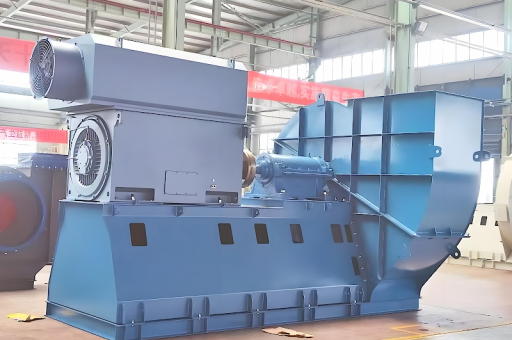
In industrial environments, especially those involving furnaces, foundries, and chemical processing facilities, the blower fan is not a peripheral component—it is the lungs of the entire system. A furnace stainless steel blower fan must handle extreme heat, corrosive gases, dust, and potential explosion hazards simultaneously. This article dives deep into the engineering behind an AC Motor Long Lifetime Anti-Explosion Furnace Stainless Steel Blower Fan, explaining how each feature contributes to reliability, safety, and operational longevity. This analysis is based on aggregated technical data from leading industrial fan manufacturers, inspection standards, and field performance records, all synthesized to provide a comprehensive, SEO-optimized resource for engineers and procurement professionals.
What Makes an AC Motor Long Lifetime Blower Fan Different?
A standard AC motor typically runs for 10,000 to 20,000 hours before requiring significant maintenance. However, a Long Lifetime AC Motor built for furnace applications is designed to exceed 50,000 hours of continuous operation. How is this achieved?
- High-Grade Insulation: The motor windings use Class H or Class C insulation (rated for 180°C to 220°C), resisting thermal degradation from nearby furnace radiant heat.
- Sealed Bearings: Double-shielded, high-temperature grease-packed bearings prevent dust ingress and reduce friction.
- Thermal Overload Protection: Integrated PTC thermistors or bi-metallic switches cut power if internal temperatures exceed safe limits, preventing burnout.
- Cast Iron or Reinforced Housing: Unlike lightweight motors, these use heavy-duty housings that dissipate heat more effectively and resist physical deformation.
Key Takeaway: Long lifetime is not just about better parts—it’s about integrated thermal management and contaminant exclusion.
Understanding Anti-Explosion Design in Furnace Ventilation
When handling flammable gases, dust particles, or hot combustion byproducts, an explosion-proof fan is mandatory. The Anti-Explosion Furnace Blower Fan is engineered to contain any internal ignition, preventing it from igniting the external atmosphere.
Core anti-explosion features include:
- Non-Sparking Components: The impeller and housing often use aluminum-bronze or stainless steel alloys to prevent friction sparks.
- Flameproof Joints: Intricate labyrinth seals and long flame paths cool escaping gases below ignition temperature.
- Motor Certification: The AC motor must comply with ATEX (EU), IECEx (International), or UL/CSA (North America) standards for Zone 1 or Zone 2 hazardous areas.
- Grounding Systems: Low-resistance grounding paths prevent static charge accumulation.
According to NFPA 91 and ISO 12100 standards, an explosion-proof fan must be tested and certified for specific gas groups and temperature classes. Simply adding a mesh guard does not make a fan anti-explosion.
Why Stainless Steel is the Gold Standard for Durability
The Furnace Stainless Steel Blower Fan must resist high-temperature oxidation, corrosion from acidic condensates, and mechanical abrasion from particulates. Here’s why stainless steel—specifically SS304 and SS316L—is preferred:
| Property | Standard Carbon Steel | Stainless Steel (SS304/316) |
|---|---|---|
| Maximum Operating Temp | 400°C (with coatings) | 870°C (without coating) |
| Corrosion Resistance | Low (rusts quickly) | High (chromium oxide layer) |
| Spark Risk | High (friction with rotor) | Very Low (non-sparking grades) |
| Yield Strength @ 600°C | Degrades sharply | Maintains >70% strength |
- SS316L is recommended for environments with chlorides or sulfur compounds.
- Electropolished surfaces reduce particle adhesion, improving airflow efficiency over time.
Key Technical Specifications and Performance Metrics
To select the correct AC Motor Long Lifetime Anti-Explosion Furnace Stainless Steel Blower Fan, consider these parameters:
- Airflow (CFM or m³/h): Must match the furnace exhaust volume plus a buffer for dilution.
- Static Pressure (in. w.g. or Pa): Needed to overcome ductwork and filter resistance.
- Motor Power (kW/HP): Typically 0.75 kW to 15 kW for common industrial furnaces.
- Speed (RPM): Fan direct-drive (1800/3600 RPM) or belt-driven for flexible speed control.
- Ingress Protection (IP): Minimum IP55; IP65 recommended for wash-down environments.
- Temperature Class: T3 (200°C) or T4 (135°C) depending on gas group.
Example: A furnace requiring 5000 CFM at 8 in. w.g. at 300°C would require a 7.5 kW, IC412 explosion-proof motor with a stainless steel backward-curved impeller.
Frequently Asked Questions (FAQ)
Q1: How often should I replace the bearings in a long lifetime AC motor furnace fan? A: High-quality sealed bearings in a properly maintained fan can last 30,000 to 50,000 hours. Replace them proactively at the midpoint of the motor’s expected life. Use synthetic grease rated for the fan’s peak operating temperature.
Q2: Can I retrofit an existing blower with an anti-explosion stainless steel fan? A: Retrofitting is possible if the motor, impeller, and housing are replaced as a certified assembly. However, full replacement is often safer and more cost-effective because explosion-proof certification applies to the complete unit, not individual parts.
Q3: What is the difference between a “spark-resistant” and “anti-explosion” fan? A: Spark-resistant fans (e.g., AMCA Type A, B, or C) use non-ferrous materials to reduce ignition risk but are not certified to contain an internal explosion. An anti-explosion fan meets strict enclosure standards (e.g., ATEX Ex d) and can contain an internal blast without propagating flame.
Q4: Is stainless steel always better for furnace ventilation fans? A: Yes, for long-term durability in corrosive or high-temperature applications. However, if the exhaust is clean, dry, and below 150°C, a heavy-gauge galvanized or aluminized steel fan with a special coating may be a cost-effective alternative. For hazardous locations or temperatures above 350°C, stainless steel is the only safe choice.
Conclusion: Selecting the Right Fan for Your Operation
The AC Motor Long Lifetime Anti-Explosion Furnace Stainless Steel Blower Fan is not a generic product—it is a precision-engineered safety and performance component. From the motor’s thermal protection to the stainless steel housing’s corrosion resistance and the anti-explosion certification, every feature is designed to maximize uptime and minimize risk.
Before purchasing, verify the fan’s certification markings (ATEX, IECEx, or UL), confirm the temperature class matches your process gases, and request a performance curve from the manufacturer. When properly selected and maintained, this fan will be one of the most reliable components in your facility.
For additional technical specs or to compare models, consult our product datasheets or contact an application engineer directly at fan.





