
This article's table of contents introduction:
- Introduction: The Intersection of Pressure Range and Material Integrity
- Technical Deep Dive: Understanding the 2783Pa - 9828Pa Operating Window
- Material Science: Why Q345 Steel is the Backbone of Explosion Proof Design
- Explosion Proof Mechanism: Standards, Seals, and Spark Prevention
- Application Scenarios: Where This Medium Pressure Exhaust Blower Excels
- Installation, Maintenance, and Compliance Checklist
- Frequently Asked Questions (FAQ)
- Conclusion: Future-Proofing Industrial Ventilation
*The Critical Role of Q345 2783Pa - 9828Pa Medium Pressure Fan Explosion Proof Exhaust Blower in Industrial Safety and Efficiency*
Table of Contents
- Introduction: The Intersection of Pressure Range and Material Integrity
- Technical Deep Dive: Understanding the 2783Pa - 9828Pa Operating Window
- Material Science: Why Q345 Steel is the Backbone of Explosion Proof Design
- Explosion Proof Mechanism: Standards, Seals, and Spark Prevention
- Application Scenarios: Where This Medium Pressure Exhaust Blower Excels
- Installation, Maintenance, and Compliance Checklist
- Frequently Asked Questions (FAQ)
- Conclusion: Future-Proofing Industrial Ventilation
Introduction: The Intersection of Pressure Range and Material Integrity
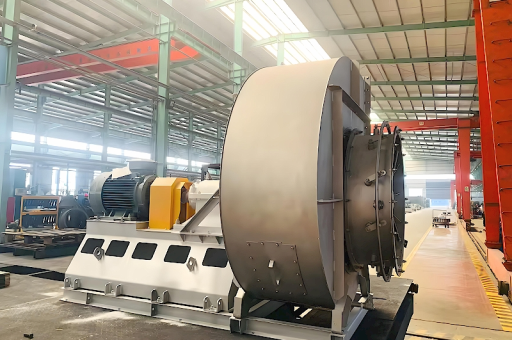
In the world of industrial ventilation, few pieces of equipment carry as much responsibility as the Q345 2783Pa - 9828Pa Medium Pressure Fan Explosion Proof Exhaust Blower. This is not a generic fan; it is a precision-engineered safety device. Designed to handle a medium pressure spectrum between 2,783 Pascals (Pa) and 9,828 Pa, it operates in environments where the air itself can be a hazard—chemical fumes, combustible dust, volatile organic compounds (VOCs), or flammable gas mixtures.
The "Q345" designation refers to a specific Chinese standard low-alloy high-strength structural steel. While many industrial fans use carbon steel or stainless steel, Q345 offers a unique balance: higher tensile strength than standard Q235 steel, excellent weldability, and superior impact toughness at low temperatures. This makes it ideal for explosion-proof enclosures where structural failure is not an option.
Why does this specific pressure range matter? A standard low-pressure fan (below 2,000 Pa) struggles to push air through long duct runs or filter banks. A high-pressure fan (above 15,000 Pa) may be overkill and generate excessive heat and noise. The 2,783–9,828 Pa sweet spot is perfect for exhaust systems in paint spray booths, chemical storage rooms, battery charging stations, and grain processing facilities—areas where medium resistance must be overcome safely.
Technical Deep Dive: Understanding the 2783Pa - 9828Pa Operating Window
To engineers, the numbers 2,783 Pa and 9,828 Pa are not arbitrary. They define the fan’s total pressure rise capability. In simpler terms, this is the force the fan impeller exerts to overcome system resistance. Let us break down what this means in real-world terms:
- 2,783 Pa (≈ 11.2 inches of water gauge): This is the lower operational threshold. At this pressure, the fan can efficiently move large volumes of air through a moderately restricted system. For example, a dust collection hood with a short duct run.
- 9,828 Pa (≈ 39.4 inches of water gauge): The upper limit. At this level, the exhaust blower can force air through a HEPA filter bank, a wet scrubber, or a long horizontal duct with multiple elbows.
A key performance feature of this blower is the pressure-volume curve. Unlike a standard centrifugal fan which may stall or surge if backpressure is too high, the Q345 explosion-proof design ensures the impeller and housing maintain structural rigidity under maximum load. The medium pressure rating also reduces wear on bearings and belts compared to high-pressure units, extending service intervals.
Furthermore, the aerodynamic design of the impeller blades—often backward-curved or radial—ensures that the fan operates at peak efficiency within this specific range. Many models are equipped with adjustable motor pulleys (variable drive) to fine-tune pressure output on-site.
Material Science: Why Q345 Steel is the Backbone of Explosion Proof Design
The choice of Q345 (equivalent to ASTM A572 Grade 50 or EN S355JR) is deliberate. For an explosion-proof fan, the housing must contain an internal explosion without rupturing. Q345 offers:
- Yield Strength: Minimum 345 MPa. This high yield point means the fan housing does not deform under sudden pressure spikes caused by an ignition inside the duct.
- Low-Temperature Toughness: At -20°C, Q345 retains impact resistance. For external exhaust systems in cold climates, this prevents brittle fracture.
- Corrosion Resistance with Coating: While not stainless, Q345 can be treated with epoxy or zinc-rich primers. In chemical exhaust applications, a specialized lining (e.g., PTFE or rubber) is bonded to the Q345 housing.
Explosion-proof construction goes beyond the steel. The fan uses:
- Non-sparking impeller: Made from aluminum-bronze or stainless steel (if Q345 is used for the housing only) to prevent frictional sparks.
- Grounding straps: To dissipate static electricity built up by dust or dry air.
- Motor in explosion-proof enclosure (Ex d or Ex e): The motor is isolated from the airflow path. In the Q345 2783Pa - 9828Pa Medium Pressure Fan, the motor is typically mounted on a separate pedestal or uses a shaft seal to prevent flammable gases from reaching the motor windings.
Explosion Proof Mechanism: Standards, Seals, and Spark Prevention
This specific fan model is certified to international explosion-proof standards, such as ATEX (Europe), IECEx (International), or NEC Class I Division 1 (USA). For the medium pressure exhaust blower, the critical design features include:
- Flame Path (Flange Gap): The housing joints have precisely machined gaps. If an internal explosion ignites, hot gases escape through this gap but cool before igniting the external atmosphere.
- Shaft Seal: A labyrinth seal or double mechanical seal prevents flammable gas from traveling along the shaft into the motor compartment.
- Maximum Surface Temperature: The fan is rated (e.g., T3 or T4) meaning its hottest external surface will not ignite surrounding gases. For example, T4 (135°C) is suitable for hydrogen environments.
User Warning: Do not operate a standard fan in a hazardous location. The Q345 2783Pa - 9828pa Medium Pressure Fan Explosion Proof Exhaust Blower is specifically built for Zone 1 (gas) and Zone 21 (dust) areas.
Application Scenarios: Where This Medium Pressure Exhaust Blower Excels
| Industry | Application | Why This Fan Fits |
|---|---|---|
| Chemical Processing | Exhaust of acid vapors (HCl, H2SO4) | Q345 with rubber lining + medium pressure for scrubbers |
| Oil & Gas | Ventilation of flammable gas storage rooms | ATEX certified, spark-proof, pressure range for long shafts |
| Pharmaceutical | Dust extraction for API powders | Non-sparking impeller, medium pressure for HEPA filters |
| Mining | Underground tunnel exhaust | Rugged Q345 housing, reliable at peak 9,828 Pa |
| Paint Booth | Solvent vapor exhaust | Explosion-proof motor, continuous duty at 2,783 Pa |
Installation, Maintenance, and Compliance Checklist
To maximize safety and longevity of the Q345 2783Pa - 9828Pa Medium Pressure Fan Explosion Proof Exhaust Blower:
- Foundation: Mount on a concrete pad with vibration isolators. The fan is heavy; Q345 adds weight but ensures rigidity.
- Ductwork: Use spiral lock-seam duct with grounding straps. Connect with flexible non-sparking connectors.
- Electrical Wiring: All conduit must be explosion-proof (e.g., rigid metal with seal-offs). The motor starter must be located outside the hazardous zone.
- Maintenance Schedule:
- Weekly: Check belt tension (if belt-driven) and listen for bearing noise.
- Monthly: Inspect flame path gaps; verify grounding continuity.
- Annually: Replace shaft seals; test explosion-proof enclosure integrity.
Frequently Asked Questions (FAQ)
Q1: Can I use this fan for continuous duty at 9,828 Pa?
Yes, but ensure the motor is oversized (e.g., 15–20% margin) and the ambient temperature does not exceed the motor’s rated class (typically 40°C for T3). Continuous operation at peak pressure generates heat, but the medium pressure design reduces thermal stress compared to a high-pressure fan.
Q2: What is the noise level of this fan?
At 2,783 Pa, typical sound pressure is 75–85 dB(A). At 9,828 Pa, it may reach 90–95 dB(A). Install a silencer or acoustical lagging in the duct for personnel comfort.
Q3: Is Q345 steel suitable for marine or offshore environments?
Only if coated. Q345 is not inherently corrosion-resistant against saltwater. For offshore use, specify stainless steel 316L or a high-grade paint system (e.g., epoxy with zinc).
Q4: How do I differentiate between a medium pressure fan and a high pressure fan?
General industry guideline:
- Low pressure: < 2,000 Pa
- Medium pressure: 2,000 – 10,000 Pa (this fan fits here)
- High pressure: > 10,000 Pa
This fan is specifically rated from 2783 to 9828 Pa.
Q5: What certifications should I look for?
Always request a copy of the ATEX or IECEx certificate showing Zone 1 for gas (II 2G) and temperature class (T3/T4). For dust, confirm it meets Zone 21 (II 2D). The fan should also carry a CE or UL mark.
Conclusion: Future-Proofing Industrial Ventilation
The Q345 2783Pa - 9828Pa Medium Pressure Fan Explosion Proof Exhaust Blower is not a commodity product—it is a safety-critical component. Its specific material composition (Q345), pressure range, and explosion-proof construction make it the default choice for engineers who need certainty in hazardous environments. As regulations around volatile organic compound emissions and combustible dust become stricter, selecting a fan with verified performance and robust certifications is not just good practice—it is legal compliance.
Whether you are designing a new battery manufacturing line or retrofitting a chemical plant, this blower offers reliability. Remember: the cost of a non-certified fan failure is measured in lives, not only dollars. Choose the Q345 medium pressure explosion-proof exhaust blower for peace of mind.
Need further specification help? Check the product datasheet from the manufacturer or consult a licensed mechanical engineer with hazardous area experience.





