
This article's table of contents introduction:
- Table of Contents
- Introduction to Flue Gas Desulfurization (FGD) and Air Circulation
- Technical Breakdown of the 75552m³/h Pressurized Fan Blower
- How the Fan Blower Integrates into the FGD System
- Performance Optimization and Energy Management
- Maintenance Best Practices for Longevity
- Frequently Asked Questions
- Conclusion
** Maximizing FGD Efficiency: The Critical Role of the Desulfurization Pressurized 75552m³/h Air Circulation Fan Blower in Industrial Emission Control
Table of Contents
- Introduction to Flue Gas Desulfurization (FGD) and Air Circulation
- Technical Breakdown of the 75552m³/h Pressurized Fan Blower
- 1 Flow Rate and Pressure Requirements
- 2 Design Features and Materials
- How the Fan Blower Integrates into the FGD System
- 1 Pressurized Air Supply Mechanism
- 2 Impact on Sulfur Removal Efficiency
- Performance Optimization and Energy Management
- Maintenance Best Practices for Longevity
- Frequently Asked Questions
- Conclusion
Introduction to Flue Gas Desulfurization (FGD) and Air Circulation
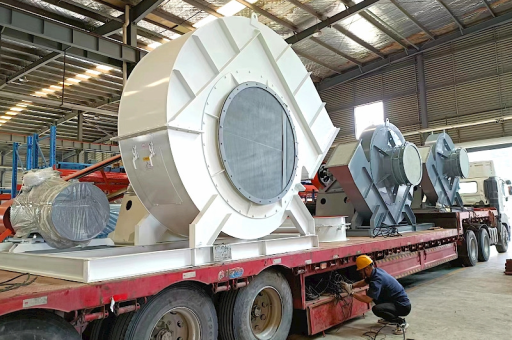
In modern industrial power generation and chemical processing, Flue Gas Desulfurization (FGD) is the most widely adopted technology for removing sulfur dioxide (SO₂) from exhaust gases. A critical, yet often overlooked, component within this system is the Desulfurization Pressurized 75552m³/h Air Circulation Fan Blower. This equipment is not merely a fan; it is a high-capacity, precision-engineered machine that ensures the entire scrubbing process operates at peak efficiency.
The primary function of this blower is to deliver a massive, consistent volume of pressurized air—specifically 75,552 cubic meters per hour (m³/h) —into the oxidation zone of the absorber tower. This forced air circulation is essential for converting the liquid slurry (typically limestone or lime-based) into gypsum, a stable and marketable byproduct. Without this continuous air supply, the chemical reaction would slow, resulting in poor SO₂ capture and potential system fouling.
Technical Breakdown of the 75552m³/h Pressurized Fan Blower
1 Flow Rate and Pressure Requirements
The specification 75552 m³/h (approximately 44,500 CFM) places this fan in the high-capacity industrial category. The "Pressurized" designation indicates that the blower is designed to overcome significant system resistance, typically delivering a static pressure in the range of 7,000 to 12,000 Pa (Pascals) . This pressure is necessary to force air through deep slurry pools and against the upward flow of flue gas.
The relationship between flow and pressure is governed by the fan's aerodynamic design. A typical centrifugal air circulation fan is preferred for this application because it can maintain stable flow rates even when system backpressure fluctuates—a common occurrence in FGD due to varying limestone feed rates or slurry density.
2 Design Features and Materials
Given the harsh operating environment (high humidity, acidic gases, and abrasive slurry particles), the construction of this blower is specialized:
- Material Selection: The impeller and casing are often made of 304L or 316L stainless steel or coated with a high-performance epoxy for corrosion resistance.
- Impeller Type: A backward-curved or radial-tipped impeller is standard, as it offers high efficiency and self-cleaning properties.
- Shaft Sealing: Mechanical seals or advanced labyrinth seals are used to prevent air leakage and protect bearings from moisture.
How the Fan Blower Integrates into the FGD System
1 Pressurized Air Supply Mechanism
The 75552m³/h air circulation fan is typically located downstream of the booster fans, directly feeding air into the oxidation grid at the bottom of the absorber tower. The pressurized air is distributed through a network of stainless steel pipes with submerged nozzles. This ensures that every cubic meter of slurry receives oxygen equally.
2 Impact on Sulfur Removal Efficiency
Let’s look at a practical calculation. In a typical wet FGD process:
- The chemical reaction: CaCO₃ + SO₂ + ½O₂ + H₂O → CaSO₄·2H₂O (Gypsum)
- The oxygen required comes directly from the pressurized circulation blower.
If the blower delivers less than 75,552 m³/h, the oxidation rate drops. This leads to a build-up of undesirable calcium sulfite hemihydrate, which can scale the absorber internals. Conversely, proper air volume ensures 100% conversion to gypsum, improving dewatering efficiency and reducing waste volume. Industry data suggests that optimizing the air circulation fan can improve SO₂ removal efficiency from 95% to 99%+.
Performance Optimization and Energy Management
A 75552 m³/h blower consumes significant power—often in the range of 200 to 350 kW. Therefore, energy management is vital.
- Variable Frequency Drives (VFDs): Installing a VFD on the fan motor allows operators to throttle the air volume based on real-time SO₂ load. For example, during periods of low sulfur coal burning, the fan speed can be reduced, saving up to 30% electricity.
- Pressure Monitoring: Static pressure sensors at the fan outlet and inside the absorber provide feedback to a PLC. This prevents the fan from operating in a surge condition, which can cause mechanical damage.
- Air Preheating: In cold climates, the incoming air can be slightly preheated using waste heat to avoid thermal shock to the slurry.
Maintenance Best Practices for Longevity
To ensure the Desulfurization Pressurized 75552m³/h Air Circulation Fan Blower achieves a service life of 15–20 years, adhere to these protocols:
- Bearing Inspection: Check for vibration and temperature spikes monthly. Grease or oil changes should follow the OEM schedule.
- Impeller Cleaning: Over time, gypsum deposits can build on the impeller blades, causing imbalance. Scheduled water washing or offline cleaning prevents this.
- Seal Integrity: Inspect the shaft seals every quarter. A leaking seal not only wastes energy but can cause corrosion of the bearing housing.
- Ductwork Check: Ensure the inlet duct is free of debris and that the silencer packs (if used) are not clogged with dust.
Frequently Asked Questions
Q1: Why is the airflow rate exactly 75,552 m³/h for this fan? The flow rate is calculated based on the stoichiometric oxygen demand for the specific SO₂ load, plus a 10–15% safety factor. For a typical 300 MW coal-fired unit burning 1.0% sulfur coal, this volume provides enough oxygen to fully oxidize the resulting calcium sulfite.
Q2: What happens if I undersize the air circulation fan? Undersizing leads to incomplete oxidation (white gypsum with sulfite content), reduced dewatering efficiency, and increased scaling in the absorber. Eventually, the FGD system will fail to meet emission limits.
Q3: Can this fan handle corrosive gases other than SO₂? Yes, the materials are chosen to resist SO₂, SO₃, HCl, and HF typically found in flue gas. However, the fan is designed for clean, filtered air intake—not raw flue gas. If the intake air contains dust, a filtering system should be installed upstream.
Q4: How do I calculate the power consumption of this fan? Power (kW) = (Flow rate in m³/s × Pressure in Pa) ÷ (Fan efficiency × Mechanical efficiency). For a 75,552 m³/h (21 m³/s) fan at 10,000 Pa with 85% efficiency, the power draw is approximately 247 kW.
Q5: What is the typical noise level, and how is it controlled? Noise levels are often between 85–95 dB(A) at 1 meter. Use intake silencers, acoustic enclosures, and vibration isolators to meet workplace noise regulations (below 85 dB(A)).
Conclusion
The Desulfurization Pressurized 75552m³/h Air Circulation Fan Blower is the heartbeat of any high-efficiency wet FGD system. By delivering a precise, pressurized volume of air for oxidation, it directly influences emission compliance, gypsum quality, and operational costs. For engineers and plant managers, understanding its design parameters, integration, and maintenance is not optional—it is essential for achieving sustainable, cost-effective desulfurization.
When selecting or specifing a replacement fan, always verify the actual system resistance curve against the fan's performance curve. Investing in a correctly sized, quality-engineered air circulation fan leads to years of reliable emission control and lower total ownership cost.





