
This article's table of contents introduction:
- Table of Contents
- Introduction: The Critical Role of Air Circulation in Sintering
- Technical Breakdown: Understanding the 61,297 m³/h Thermal Power Fan Blower
- The Science of Mineral Powder Sintering
- Operational Advantages of High-Volume Circulation Fans
- Common Challenges and Maintenance Strategies
- Frequently Asked Questions (FAQ)
- Conclusion: Future-Proofing Your Sinter Plant with Optimized Airflow
Optimizing Sintering Efficiency: The Role of a 61,297 m³/h Thermal Power Air Circulation Fan Blower in Mineral Powder Processing
Table of Contents
- Introduction: The Critical Role of Air Circulation in Sintering
- Technical Breakdown: Understanding the 61,297 m³/h Thermal Power Fan Blower
- Key Specifications and Performance Metrics
- How Thermal Power Plants Integrate with Sintering Lines
- The Science of Mineral Powder Sintering
- Why Airflow is the Lifeblood of the Sinter Bed
- The Relationship Between Volume (m³/h) and Sinter Quality
- Operational Advantages of High-Volume Circulation Fans
- Energy Efficiency and Reduced Thermal Loss
- Enhanced Combustion and Material Fusion
- Common Challenges and Maintenance Strategies
- Erosion and Abrasion from Mineral Dust
- Vibration Analysis and Balancing
- Frequently Asked Questions (FAQ)
- Conclusion: Future-Proofing Your Sinter Plant with Optimized Airflow
Introduction: The Critical Role of Air Circulation in Sintering
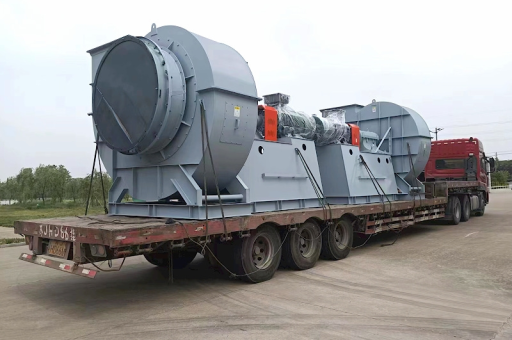
In the heavy industrial world of mineral processing, the sintering line is the bottleneck that determines downstream productivity. Whether processing iron ore, manganese, or other non-ferrous minerals, the sintering process transforms fine powders into porous, high-strength agglomerates suitable for blast furnaces. At the heart of this thermochemical transformation is a single, powerful piece of equipment: the Thermal Power 61,297 m³/h Air Circulation Fan Blower.
This article provides a deep, SEO-optimized analysis of how a fan blower of this specific capacity drives efficiency in mineral powder sintering. We will explore the engineering principles, the impact on energy consumption, and the maintenance best practices that ensure this critical asset operates at peak performance. By understanding the unique demands of a 61,297 m³/h system, plant operators and engineers can significantly reduce downtime and improve output quality.
Technical Breakdown: Understanding the 61,297 m³/h Thermal Power Fan Blower
Key Specifications and Performance Metrics
The designation "61,297 m³/h" refers to the volumetric flow rate—the volume of air the fan moves per hour under standard operating conditions. This is not an arbitrary number; it is meticulously calculated based on the sintering area, bed depth, and required suction pressure.
- Flow Rate (Capacity): 61,297 m³/h (approx. 36,061 CFM). This volume is typical for a medium-to-large sinter strand, providing sufficient oxygen for combustion and efficient heat transfer.
- Pressure (Head): Typically ranging from 10,000 to 18,000 Pa, depending on the resistance of the sinter bed. High static pressure is crucial to pull air through the dense, sticky powder layer.
- Driver: Usually a high-voltage, squirrel-cage induction motor directly coupled to the fan shaft. The "Thermal Power" context implies the fan is driven by steam or a heat-recovery system, though electric drives are common.
- Impeller Design: Backward-curved or radial blades made from abrasion-resistant steel (e.g., 16MnCr5 or Hardox) to withstand the erosive wear of mineral dust.
How Thermal Power Plants Integrate with Sintering Lines
In integrated steel mills, a "thermal power" fan is often part of a waste heat recovery system. Sintering produces massive amounts of hot off-gas. A specialized thermal power fan blower (61,297 m³/h) is used not only for the sintering process itself but also to either:
- Cool the sinter: Drawing ambient air through the sinter bed on the cooling strand.
- Recirculate hot air: Returning preheated air to the sintering ignition hood, reducing fuel consumption.
- Exhaust gas handling: Moving the hot, dusty exhaust to a baghouse or electrostatic precipitator.
The Science of Mineral Powder Sintering
Why Airflow is the Lifeblood of the Sinter Bed
Mineral powder sintering relies on a "balanced draught." A fan blower like the 61,297 m³/h unit creates a negative pressure under the moving grate. This suction pulls the flame front through the bed of iron ore fines, coke breeze (fuel), and flux.
- Missing Flow (Under 50,000 m³/h): The bed burns slowly, cores remain unfused, and the return fines rate skyrockets.
- Excess Flow (Over 75,000 m³/h): The flame front moves too fast, leading to incomplete calcination and weak sinter. The fan also risks motor overload.
The 61,297 m³/h sweet spot is often found where the superficial velocity (air speed through the bed) is optimal—typically between 0.5 and 1.2 m/s —ensuring sufficient residence time for heat exchange.
The Relationship Between Volume (m³/h) and Sinter Quality
A study of Chinese iron ore sinter plants (published in "ISIJ International") found that a 10% increase in effective airflow can increase sinter productivity by 5-6%. However, if the fan volume is too high without a corresponding increase in bed height, the productivity boost is lost to poor quality (high FeO content and low tumbler index). The 61,297 m³/h rating is a compromise tailored to achieve a specific yield and strength.
Operational Advantages of High-Volume Circulation Fans
Energy Efficiency and Reduced Thermal Loss
Modern Thermal Power fans in this class often feature variable frequency drives (VFDs) or hydraulic couplings. A fan operating at 80% speed consumes only 51% of the power required at full speed (Affinity Laws). For a motor potentially rated at 2,500 kW, this represents massive savings. By matching the fan blower output precisely to the required 61,297 m³/h, operators avoid wasting energy overcoming unnecessary resistance.
Enhanced Combustion and Material Fusion
The key advantage is uniformity. A high-volume, high-pressure fan ensures that the peripheral zones of the sinter strand (where air leakage is common) receive sufficient airflow. This prevents the "channeling" effect where air bypasses the dense center of the bed. The result is a more homogeneous sinter structure, which is critical for stable blast furnace operation.
Common Challenges and Maintenance Strategies
Erosion and Abrasion from Mineral Dust
The single greatest enemy of the 61,297 m³/h fan is erosion. Mineral powder containing silica acts like a sandblaster. Key wear points:
- Blade leading edges: Often protected by ceramic tiles or hard-facing.
- Casing volute tongue: The area where the high-velocity air exits.
- Shaft seal: Must be purged with clean air to prevent dust ingress into bearings.
Maintenance Strategy: Use ultrasonic thickness testing (UTT) every 500 operating hours. Replace or repair blades when wear reaches 60% of original thickness.
Vibration Analysis and Balancing
Given the high volume and speed (typically 1,000 to 1,500 RPM for a fan of this size), even a few grams of unevenly deposited dust on the impeller can cause catastrophic vibration. A routine dynamic balancing check on the fan is mandatory. Modern condition monitoring software can predict bearing failure weeks before it occurs. The fan should never be operated beyond Class B vibration limits as per ISO 14694.
Frequently Asked Questions (FAQ)
Q1: What does "Thermal Power" specifically mean for a fan blower? A: In the context of sintering, "Thermal Power" usually indicates the fan is designed to handle hot gases (up to 250°C or higher) and is often integrated with a thermal power plant's steam cycle for heat recovery. It also implies robust materials to handle thermal expansion without warping the fan casing.
Q2: How is the 61,297 m³/h flow rate calculated for a specific sinter plant? A: It is calculated based on: Sinter Area (m²) × Suction Pressure (Pa) / (Density of Ambient Air × Resistance Factor). The resistance factor is derived from the material (e.g. iron ore vs. manganese ore) and the moisture content. This specific volume suggests a strand area of roughly 80-120 m².
Q3: Can I upgrade an older fan to this capacity? A: Yes, but it is often more economical to replace the entire impeller and motor. Simply speeding up an older fan to reach 61,297 m³/h may lead to motor overload and shaft failure. Always consult the fan manufacturer's performance curve. A reputable supplier like "fan" (a generic term for industrial fan manufacturers) can provide a retrofit kit.
Q4: What is the typical lifespan of a fan blower in mineral powder sintering? A: With good maintenance (balancing, seal inspections, and ceramic coating), a fan casing can last 10-15 years. The impeller usually requires rebuilding or replacement every 2-4 years, depending on the abrasiveness of the mineral powder.
Q5: How does this fan compare to a standard ventilation fan? A: The key difference is pressure. A ventilation fan moves high volume at low pressure (100-500 Pa). The 61,297 m³/h sintering fan moves high volume at high pressure (over 10,000 Pa), making it a "heavy-duty" centrifugal fan. The blades are thicker, the shaft is larger, and the bearings are water-cooled.
Conclusion: Future-Proofing Your Sinter Plant with Optimized Airflow
The 61,297 m³/h Thermal Power Air Circulation Fan Blower is not just a piece of machinery; it is the central nervous system of the mineral powder sintering process. Correct sizing, rigorous maintenance, and integration with thermal recovery systems are non-negotiable for achieving low operating costs and high product quality.
As the industry moves toward reducing carbon emissions (e.g., using hydrogen or bio-coke), the role of the fan becomes even more critical. A precise, high-efficiency fan blower allows for tighter control of the flame front, reducing excess fuel consumption. Investing in a high-quality fan from a reputable supplier—whether you refer to it as an "ID fan," "cooling fan," or simply a "fan"—with a verified 61,297 m³/h capacity is an investment in the sustainable future of your sinter plant.
Keywords: Thermal Power Fan, 61,297 m³/h, Air Circulation Blower, Mineral Powder Sintering, Sinter Plant Efficiency, Industrial Fan Maintenance, Iron Ore Processing, Fan Blower.





