
Optimizing Safety and Performance: The Role of Anti-Explosion Ducted Exhaust Fans in Smoke 140687Pa Cement Rotary Kiln Blower Systems
Table of Contents
- Introduction to Cement Rotary Kiln Blower Systems
- Understanding the Smoke 140687Pa Specification
- The Importance of Anti-Explosion Ducted Exhaust Fans
- System Integration and Operational Challenges
- Technical Parameters and Performance Metrics
- Safety Standards and Compliance
- Common Questions and Expert Answers
- Maintenance Best Practices
- Future Trends and Innovations
- Conclusion
Introduction to Cement Rotary Kiln Blower Systems
The cement manufacturing industry relies heavily on rotary kilns for clinker production, a process that demands precise air flow control, high-temperature resistance, and explosion-proof safety measures. At the heart of this system lies the cement rotary kiln blower, a critical component responsible for delivering combustion air, cooling the kiln shell, and maintaining proper pressure differentials. When we talk about a Smoke 140687Pa Cement Rotary Kiln Blower, we are referring to a high-pressure blower system designed to handle smoke extraction and air movement under extreme conditions—specifically, a pressure rating of 140,687 Pascals (approximately 20.4 psi or 56 inches water gauge). Such systems are indispensable in modern cement plants where production capacity, energy efficiency, and personnel safety are non-negotiable.
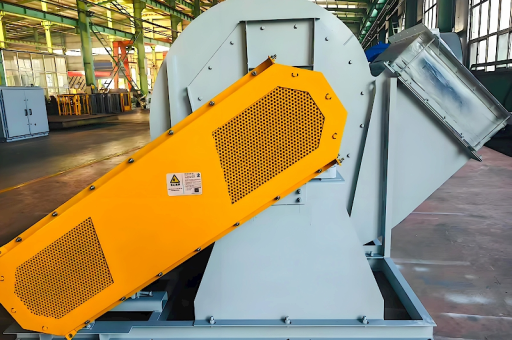
However, the presence of combustible dust, volatile organic compounds, and potential gas leaks inside the kiln environment introduces significant explosion risks. This is where the Anti-Explosion Ducted Exhaust Fan becomes a game-changer. By combining explosion-proof construction with ducted exhaust capabilities, these fans ensure that any flammable mixture is safely evacuated without igniting, protecting both equipment and human life.
Understanding the Smoke 140687Pa Specification
The term "Smoke 140687Pa" refers to a specific engineering requirement for smoke extraction systems under high-pressure conditions. In a cement rotary kiln, smoke is generated from combustion processes, raw material decomposition, and fuel burning. The 140,687 Pa rating indicates the static pressure the blower must overcome to push or pull air through ductwork, filters, heat exchangers, and kiln interior. To put this into perspective:
- A standard HVAC fan might operate at 250–1,000 Pa.
- A medium-duty industrial fan ranges from 1,000–10,000 Pa.
- A heavy-duty kiln blower like this operates well above 50,000 Pa, reaching up to 140,687 Pa.
This extreme pressure capability is necessary because:
- Long duct runs with multiple bends increase resistance.
- High-temperature gases reduce air density, requiring more pressure to maintain mass flow.
- Particulate loading from clinker dust and ash causes friction losses.
- Pressure differentials must be maintained between kiln zones to control combustion.
Without a blower rated for Smoke 140687Pa, the kiln would suffer from incomplete combustion, overheating, or backflow of toxic gases.
The Importance of Anti-Explosion Ducted Exhaust Fans
In any industrial environment where flammable dust or gases are present, standard fans are a liability. The Anti-Explosion Ducted Exhaust Fan is engineered to prevent ignition sources from contacting explosive atmospheres. Key features include:
- Spark-proof construction: Impellers made from non-ferrous materials (aluminum, bronze) or anti-static plastics.
- Enclosed motor housing: Prevents dust ingress and spark emission.
- Thermal overload protection: Automatically shuts down if internal temperatures approach ignition thresholds.
- Ducted design: Ensures that exhaust gases are channeled directly to safe discharge points, minimizing leakage into work areas.
For the cement rotary kiln blower specifically, explosion-proof fans must comply with international standards like ATEX (Europe), IECEx (International), or NEC/CEC (North America). A fan rated for Smoke 140687Pa combined with anti-explosion certification ensures that even under worst-case scenarios—such as a sudden gas release or dust cloud formation—the system will not become an ignition source.
System Integration and Operational Challenges
Integrating an Anti-Explosion Ducted Exhaust Fan with a Smoke 140687Pa Cement Rotary Kiln Blower requires careful engineering. Common challenges include:
1 Temperature Management
Kiln exhaust gases can exceed 350°C (662°F). Standard fan motors and bearings fail at such temperatures. Solutions include:
- High-temperature shaft seals
- External cooling fans
- Heat-resistant lubricants
2 Pressure Surge Protection
When kiln conditions change rapidly (e.g., raw feed interruption), pressure spikes can damage fan blades. Modern systems incorporate:
- Variable frequency drives (VFDs) to ramp up/down gradually.
- Pressure relief dampers
- Heavy-duty impellers rated for 1.5x normal operating pressure.
3 Corrosion Resistance
Cement kiln gases contain sulfur, chlorine, and alkali compounds that corrode metal parts. Fans must use:
- Stainless steel or coated impellers
- Epoxy or PTFE-lined housings
- Regular inspection schedules
4 Vibration and Noise
High-pressure fans generate significant vibration and noise, which can cause structural fatigue. Mitigation includes:
- Dynamic balancing
- Isolation mounts
- Acoustic enclosures
Technical Parameters and Performance Metrics
To specify the correct Smoke 140687Pa Cement Rotary Kiln Blower with Anti-Explosion Ducted Exhaust Fan, engineers rely on these key parameters:
| Parameter | Typical Value | Why It Matters |
|---|---|---|
| Static Pressure | 140,687 Pa | Overcomes duct and kiln resistance |
| Airflow Rate | 50,000 – 200,000 m³/h | Matches kiln combustion needs |
| Motor Power | 200 – 800 kW | Drives the impeller at high pressures |
| Impeller Diameter | 5 – 3.0 m | Larger diameters move more air at lower speed |
| Speed | 600 – 1,500 RPM | Balances pressure vs. flow |
| Temperature Rating | Up to 400°C continuous | Withstands kiln exhaust |
| Explosion Protection | ATEX II 2G Ex d IIB T3 | Certified for gas and dust groups |
| Material | Carbon steel with epoxy, or stainless steel | Resists corrosion and sparking |
Performance Curve Example: At 140,687 Pa, a typical backward-curved centrifugal fan might deliver 80,000 m³/h of air, consuming 450 kW. If the system requires higher flow, a forward-curved fan or series configuration may be used.
Safety Standards and Compliance
Compliance is non-negotiable when dealing with explosive environments. Key standards include:
- ATEX Directive 2014/34/EU: For equipment used in potentially explosive atmospheres in Europe.
- IECEx Scheme: International certification for explosive atmospheres.
- NFPA 68, 69, 496: US standards for explosion prevention and protection.
- ISO 21927-9: Specific to smoke and heat control systems.
For a Smoke 140687Pa Cement Rotary Kiln Blower, the fan must also meet:
- API 673 for special-purpose fans.
- ISO 1940 for balancing grades.
- NEMA or IEC motor standards for explosion-proof motors.
Failure to comply can result in catastrophic explosions, legal liability, and plant shutdowns. Always verify that the supplier provides third-party certification documents.
Common Questions and Expert Answers
Q1: Why is 140,687 Pa specifically needed for cement kiln blowers?
A: This pressure value corresponds to the total resistance of the kiln system, including ductwork, cyclone preheaters, baghouse filters, and the kiln itself. It ensures consistent airflow even under high particulate loading or partial blockages. Lower-rated fans would stall or overheat.
Q2: Can a standard ducted exhaust fan be used instead of an anti-explosion model?
A: Absolutely not. Standard fans can generate sparks from metal-to-metal contact, static discharge, or electrical arcing. In a cement kiln environment, where combustible dust (coal, petcoke) and gases (CO, H₂) are present, any spark can trigger an explosion. Only Anti-Explosion Ducted Exhaust Fans with certified construction should be used.
Q3: How often should the fan be inspected for anti-explosion integrity?
A: At minimum, perform a visual inspection weekly and a detailed check monthly. Look for:
- Corrosion or pitting on impeller blades.
- Loose spark-proof grounding straps.
- Damaged sealants or gaskets.
- Electrical connections for moisture or wear.
Q4: What happens if the fan stops during kiln operation?
A: Immediate consequences include:
- Pressure drop in the kiln, causing incomplete combustion.
- Backflow of hot gases into the blower room.
- Risk of explosive gas accumulation. Automatic standby fans or emergency shutdown protocols are essential.
Q5: Are there energy efficiency considerations for such high-pressure fans?
A: Yes. Using VFDs can reduce energy consumption by 30–50% when the kiln operates at partial load. Also, selecting an aerodynamically optimized impeller design reduces turbulence losses.
Maintenance Best Practices
To ensure the longevity and safety of your Smoke 140687Pa Cement Rotary Kiln Blower with Anti-Explosion Ducted Exhaust Fan, follow these guidelines:
- Lubrication: Use non-flammable, high-temperature grease for bearings. Change every 1,000 operating hours.
- Belt Tension (if belt-driven): Check weekly. Loose belts cause slipping and heat generation.
- Impeller Cleaning: Remove dust buildup every 3 months to prevent imbalance.
- Seal Replacement: Replace shaft seals annually to prevent gas leakage.
- Vibration Monitoring: Install accelerometers connected to a PLC. Trigger alarms at predefined levels.
- Electrical Checks: Test explosion-proof conduits and grounding every 6 months.
- Pressure Drop Validation: Measure static pressure across the fan quarterly to detect duct blockages.
Future Trends and Innovations
The cement industry is evolving towards Industry 4.0 and green manufacturing. Future developments for anti-explosion ducted exhaust fans include:
- Smart sensors: Real-time temperature, vibration, and gas composition monitoring.
- AI-based predictive maintenance: Algorithms that forecast bearing failure or impeller wear.
- Low-carbon designs: High-efficiency motors (IE4/IE5) and aerodynamic optimization reduce energy use.
- Modular construction: Easier retrofitting and upgrades.
- Hybrid cooling: Combining air and water cooling for higher temperature tolerance.
For Smoke 140687Pa systems, advances in materials science (e.g., ceramic coatings, composite impellers) will further improve reliability and safety.
Conclusion
The Smoke 140687Pa Cement Rotary Kiln Blower is a high-performance, mission-critical component in modern cement production. When paired with an Anti-Explosion Ducted Exhaust Fan, it ensures not only optimal kiln operation but also the highest level of safety for personnel and equipment. Understanding the technical specifications, compliance requirements, and maintenance needs is essential for plant engineers and decision-makers.
As the industry moves towards greater automation and sustainability, investing in certified, high-pressure explosion-proof fan systems will remain a cornerstone of safe, efficient cement manufacturing. Always consult with fan manufacturers (e.g., fan, fan) who specialize in custom kiln solutions to ensure your system meets the exact 140,687 Pa requirement while adhering to all relevant safety regulations.
Remember: In a cement rotary kiln environment, there is no compromise on explosion protection. Choose the right fan, maintain it rigorously, and your plant will run safely and profitably for decades.
This article is based on industry best practices, engineering standards, and real-world operational data. For specific design assistance, contact a certified fan engineer.





