
This article's table of contents introduction:
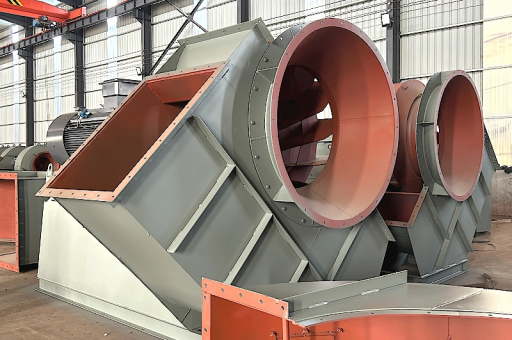
- What is a Primary Air (PA) Fan?
- Why a Centrifugal Fan? (The Design)
- Types of Centrifugal Impellers Used
- Key Parameters for a Primary Air Centrifugal Fan
- Common Problems & Maintenance
- In Summary
This is a specific industrial equipment query. It sounds like you are asking about the role of a Primary Air Fan (often abbreviated as PA Fan) in a boiler system, specifically how it relates to a Centrifugal Fan design.
Here is a breakdown of the Primary Air Fan in a boiler, focusing on its function and why a Centrifugal design is typically used.
What is a Primary Air (PA) Fan?
In a coal-fired or biomass boiler (common in power plants and heavy industry), the Primary Air Fan is one of the most critical auxiliary systems. Its main job is to supply heated air to the mills (pulverizers) that grind the coal into a fine dust.
Two Key Functions:
- Drying: Hot primary air (typically 150°C - 350°C / 300°F - 660°F) is blown into the mill. This dries the surface moisture and inherent moisture in the coal.
- Transporting: After the coal is ground into a powder (pulverized), the same primary air acts as a pneumatic carrier. It picks up the fine coal particles and carries them through the "coal pipes" to the burners in the furnace.
Why a Centrifugal Fan? (The Design)
While axial fans exist, Centrifugal fans are the dominant choice for Primary Air fans due to the specific demands of the application:
- High Pressure Requirement: The PA fan must overcome resistance (pressure drop) from the air heater, the mill (which is a high-resistance device), and long coal pipe runs. Centrifugal fans are inherently better at generating high static pressure than most axial fans.
- Abrasion Resistance (Crucial): Primary air carries dust, fine coal particles, and fly ash. If the air heater leaks or the mill operates poorly, the fan blades can erode quickly. Centrifugal fans (specifically Radial or Backward-Inclined blade designs) can be built with:
- Thick, replaceable blade liners.
- Hard-facing (tungsten carbide coatings) on leading edges.
- Slow rotational speeds to minimize impact velocity.
- Reliability in Hot Air: The air is often pre-heated. Centrifugal fan housings and impellers can be built with expansion joints and high-temperature alloys (like Corten steel or stainless steel) to handle thermal stress without warping.
- Stable Performance Curve: Centrifugal fans have a "shallow" pressure curve, meaning they can handle minor system resistance changes (e.g., a slight choke in a mill) without dramatically dropping airflow (stalling).
Types of Centrifugal Impellers Used
Different power plants use different impeller designs based on their specific coal type and mill requirement:
| Impeller Type | Characteristics | Why for PA Fans? |
|---|---|---|
| Backward-Inclined (BI) | High efficiency, non-overloading power curve (power draw peaks at a certain point). | Very common. Best for energy savings. Blades are less prone to dust buildup. |
| Radial Tip / Paddle Wheel | Rugged, simple design. | Used where coal is very abrasive (petcoke, high ash coal). Lower efficiency but maximum wear life. |
| Airfoil (AF) | Highest efficiency, quiet. | Used in modern, high-efficiency power plants. More sensitive to erosion; may need coatings. |
Key Parameters for a Primary Air Centrifugal Fan
If you are selecting or analyzing one, look for these specifications:
- Flow: Measured in m³/s or CFM (cubic feet per minute). Often very high (e.g., 100+ m³/s for a large 600MW unit).
- Pressure (Head): Measured in mmWG (millimeters of water gauge), kPa, or inches WG. Typically 800 - 1500 mmWG (8 - 15 kPa).
- Temperature: Usually between 70°C (cold start) and 350°C (with hot air heater bypass).
- Speed: Often 980 - 1500 RPM (low-medium speed).
- Motor Power: Can be several Megawatts (e.g., 1.5 MW to 5 MW).
Common Problems & Maintenance
- Erosion: The #1 killer. Worn blades reduce pressure and flow. Inspection intervals are critical.
- Vibration: Caused by erosion (imbalance), bearing wear, or thermal distortion of the casing.
- Surging: If the fan is oversized for the actual system resistance, it can oscillate in flow. This is dangerous mechanically.
- Hot Air Leakage: Seals between the shaft and the housing (shaft seals) wear out, leaking hot pressurized air into the bearing house, destroying the lubrication.
In Summary
The Primary Air Fan in a boiler is a high-pressure, abrasion-resistant centrifugal fan used to dry and transport pulverized coal from the mill to the furnace. Its reliability directly impacts the boiler's ability to maintain flame stability and load.
Would you like more detail on a specific aspect?
- How to calculate the required head for a PA fan?
- Differences between Primary Air (PA) and Forced Draft (FD) fans?
- Material specifications for abrasive coal service?





