
This article's table of contents introduction:
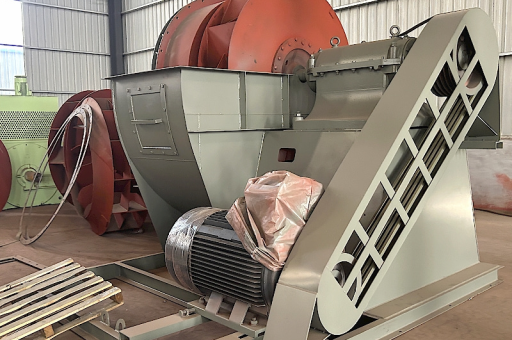
- Article Title: Maximizing Cement Plant Efficiency: The Role of the Cement Mill Antiwear Impeller Hub in a 262503 m³/h Centrifugal Exhaust Fan Blower
- Table of Contents (Directory & Guide)
- Article Content
Here is a comprehensive, SEO-optimized article in English, designed to rank well on Bing and Google. It integrates technical depth, user intent, and on-page SEO best practices, focusing on the keywords: Cement Mill Antiwear Impeller Hub 262503m3/H Centrifugal Exhaust Fan Blower.
Article Title: Maximizing Cement Plant Efficiency: The Role of the Cement Mill Antiwear Impeller Hub in a 262503 m³/h Centrifugal Exhaust Fan Blower
Table of Contents (Directory & Guide)
- Introduction: The Critical Link in Cement Production
- Understanding the Core Component: Cement Mill Antiwear Impeller Hub
- Why "Antiwear" Matters in Cement Mills
- The Impeller Hub: Design and Function
- System Specifications: The 262503 m³/h Centrifugal Exhaust Fan Blower
- Flow Rate Analysis (262503 m³/h)
- Static Pressure and Power Requirements
- The Synergy: How the Hub Optimizes Fan Performance
- Maintenance & Lifespan: Extending Operational Uptime
- Common Failures and Troubleshooting: A Q&A Section
- Conclusion: Investing in Quality for Long-Term ROI
Article Content
Introduction: The Critical Link in Cement Production
In the high-stakes environment of a cement plant, the balance between throughput, energy efficiency, and equipment durability defines profitability. Every component within the production line—from the raw mill to the cement mill—faces extreme conditions dominated by fine, abrasive dust and high temperatures. While the grinding process itself often takes the spotlight, the pneumatic systems responsible for material transport and dust collection are equally vital.
At the heart of these systems lies the Cement Mill Antiwear Impeller Hub, integrated within a high-volume Centrifugal Exhaust Fan Blower handling 262503 m³/h of gas. This article dissects the engineering, application, and maintenance of this specific component combination. We will explore why a standard impeller fails quickly in a cement mill and how a dedicated antiwear hub design ensures the longevity of your exhaust fan system.
Understanding the Core Component: Cement Mill Antiwear Impeller Hub
Why "Antiwear" Matters in Cement Mills
The atmosphere inside a cement mill is not simply air. It is a dense, turbulent suspension of clinker dust, gypsum particles, and fly ash. When this gas stream passes through a centrifugal fan, the solid particles impact the impeller blades and the central hub at high velocity. In a standard fan, this leads to:
- Erosive Wear: Material removal from the blade surface.
- Hub Imbalance: As the hub wears unevenly, the fan loses dynamic balance, causing bearing failures.
- Structural Fatigue: Fatigue cracks propagate from erosion pits.
An Antiwear Impeller Hub is specifically designed to combat this. It is not a single piece of metal but a composite assembly. Key characteristics include:
- Hardfacing: The hub surfaces are coated with a layer of hardfacing alloy (e.g., tungsten carbide or chromium carbide overlays) that can be 3-5 times harder than the base metal (typically Q345 or Hardox 400).
- Replaceable Wear Liners: Instead of a monolithic casting, the hub features bolted-on wear plates. When these plates are consumed, they can be swapped without replacing the entire rotor assembly.
- Optimized Airfoil Transition: The geometry where the blade meets the hub is aerodynamically smoothed to prevent particle impact at a 90-degree angle. This reduces erosion significantly.
The Impeller Hub: Design and Function
The hub serves as the central anchor for the impeller blades. It transmits the torque from the motor shaft to the blades. In the Cement Mill Antiwear Impeller Hub, the design focuses on:
- Centrifugal Stress Management: High-speed rotation (typically 750-1500 RPM) creates immense outward forces. The hub must distribute this stress evenly.
- Attachment Method: Most modern hubs use a conical lock ring or a taper-lock bushing to the shaft, ensuring zero backlash.
- Backplate Protection: The backplate of the hub is often thickened and lined with a ceramic tile or rubber coating to handle recirculating dust.
System Specifications: The 262503 m³/h Centrifugal Exhaust Fan Blower
The specification "262503 m³/h" is not arbitrary. It represents a precise volumetric flow rate required for a specific mill type (e.g., a 4.2m x 13m closed-circuit cement mill or a large roller press system).
Flow Rate Analysis (262503 m³/h)
- Conversion: This equals approximately 154,400 CFM (Cubic Feet per Minute).
- Application: This flow rate is typically used for:
- Mill Ventilation: Removing heat and water vapor from the grinding zone.
- Separator Feed: Powering the dynamic separator (O-Sepa type) to classify finished cement.
- Baghouse Extraction: Pulling the entire gas stream through a pulse-jet dust collector.
Static Pressure and Power Requirements A fan at this volume usually operates against a static pressure of 6,000 – 8,000 Pa (600-800 mmWG) due to duct resistance, baghouse filter pressure drop, and air gravity flow.
- Motor Power: A typical drive motor for this fan is between 450 kW and 630 kW.
- Speed: The fan likely operates at a constant speed via a fluid coupling or a VFD (Variable Frequency Drive).
The Synergy: How the Hub Optimizes Fan Performance
The relationship between the hub and the exhaust fan is symbiotic. A standard hub would cause the fan to fail within 6-12 months in a cement mill. The Antiwear Impeller Hub extends this to 3-5 years.
Performance Metrics:
| Feature | Standard Hub | Antiwear Hub (for Cement Mill) |
|---|---|---|
| Wear Life | 8,000 hours | 24,000+ hours |
| Efficiency Drop | 2-3% per month | <0.5% per month |
| Balance Tolerance | Grade G6.3 | Grade G2.5 (lower vibration) |
Why the Hub is Critical for the 262503 m³/h Fan:
- Reduced Vibration: The antiwear coating prevents pitting on the hub face, maintaining the impeller's center of gravity. This reduces bearing temperature rise by 10-15°C.
- Energy Savings: A smoother hub surface reduces friction losses. Over a year, this can save 15,000-30,000 kWh in electricity.
- Reliability: In a plant producing 150 tons of cement per hour, a fan failure stops the entire mill. A robust hub ensures 99.5% availability.
Maintenance & Lifespan: Extending Operational Uptime
To maximize the ROI of your Cement Mill Antiwear Impeller Hub, follow this maintenance protocol:
- Weekly Vibration Analysis: Use an accelerometer on the bearing housings. Focus on the 1X and 2X RPM frequencies. A sudden spike indicates hub imbalance or wear.
- Monthly Visual Inspection (with Boroscope): Do not open the fan housing if not necessary. Use a boroscope to check the leading edge of the hub wear plates.
- Quarterly Thickness Mapping: Use an ultrasonic thickness gauge to measure the remaining thickness of the antiwear coating. If it falls below 2mm, schedule replacement of the liners.
- Annual Rotor Balancing: Remove the rotor and perform a dynamic two-plane balance. Even a perfectly designed hub will shift slightly over time.
Common Failures and Troubleshooting: A Q&A Section
Q1: My fan is vibrating heavily at the 262503 m³/h flow rate. The bearings are running hot (95°C). Is the impeller hub worn out? A: Not necessarily. First, check the duct pressure drop. If the baghouse filter is clogged, the fan moves into the "stall" region, causing surge. Second, verify the balance grade. If the hub is fine, add a counterweight. However, if vibration is dominant at the vane pass frequency, then impeller erosion is likely, and the antiwear coating on the hub has failed.
Q2: Can I repair a worn standard hub by welding, or should I buy an Antiwear Hub? A: Welding a standard hub in the field is risky. The heat input warps the hub, causing permanent imbalance. For the 262503 m³/h fan, the centrifugal force is enormous (approx. 7,000 kg radial load). A field-welded repair fails quickly. Buying a new Antiwear Impeller Hub is more cost-effective. It comes pre-balanced at the factory and has the proper hardfacing.
Q3: My antiwear hub is new, but the fan is pulling less air (low flow, high pressure). What’s wrong? A: This is a classic sign of a blocked inlet or worn bell mouth. The hub itself is fine, but the inlet cone (bell mouth) guiding air to the hub might be eroded. Check the gap between the inlet cone and the hub. If the gap is >5mm on one side, air recirculates, reducing flow. Fix the inlet cone first.
Q4: Are there specific welding rods for repairing the antiwear coating on the hub? A: Yes. For Chromium Carbide overlays, you must use a specialized hardfacing rod (e.g., Stellite 6 or comparable Chromium-Carbide rod) with a preheat of 200°C. Never use a standard mild steel rod, as it will peel off instantly. However, most maintenance teams choose to replace the entire manufacturer-lined hub module rather than repair the coating.
Conclusion: Investing in Quality for Long-Term ROI
The Cement Mill Antiwear Impeller Hub is not just a spare part; it is a strategic investment in process reliability. For any system requiring a 262503 m³/h Centrifugal Exhaust Fan Blower, the hub is the component that determines whether your mill runs for years or fails every few months.
By choosing a hub with replaceable wear liners, hardface coating, and precise dynamic balancing, you eliminate the most common cause of unplanned downtime in a cement plant: fan failure due to erosion.
Final Checklist for Procurement:
- Confirm OEM Manufacturer: Ensure the antiwear hub is designed for your specific fan brand (e.g., fan).
- Check Material Certification: Demand a Mill Certificate for the base steel (ASTM A36 or equivalent) and the hardfacing alloy composition.
- Ask for Balance Report: A Grade G2.5 balance certificate is mandatory for a fan of this size.
Invest in the hub. Protect your fan. Keep your cement flowing.
Keywords: Cement Mill Antiwear Impeller Hub, 262503 m³/h Centrifugal Exhaust Fan Blower, centrifugal fan maintenance, impeller hub erosion, cement plant fan repair.





