
This article's table of contents introduction:
- The Core System: Pneumatic Conveying
- Types of Fans Used for Material Delivery
- Materials Delivered to Industrial Kilns
- System Components for Kiln Material Delivery
- Critical Engineering Considerations
- Summary: How a Fan Delivers Material to a Kiln
This request combines several distinct industrial engineering systems. To provide a clear and accurate answer, I will break down the material handling fan components, the materials they deliver, and their role in feeding industrial kilns.
Here is a structured overview of Industrial Ventilation and Material Handling Fans for the Delivery of Materials to Industrial Kilns.
The Core System: Pneumatic Conveying
The most common method for delivering materials (like powdered coal, cement raw meal, or minerals) to a kiln using a fan is pneumatic conveying. A fan creates a high-velocity airstream that suspends and transports solid particles through a pipeline.
There are two main types relevant to kiln feed:
- Dilute Phase (Suspension Flow): High velocity, low pressure. Used for lighter materials (e.g., cement dust, sawdust, fly ash).
- Dense Phase (Plug Flow): Low velocity, high pressure. Used for abrasive or fragile materials (e.g., coal, sand, plastic pellets) to reduce wear and degradation.
Types of Fans Used for Material Delivery
Not all fans can handle abrasive solids. The fan must be specifically designed for material handling.
| Fan Type | Typical Use Case | Key Characteristics |
|---|---|---|
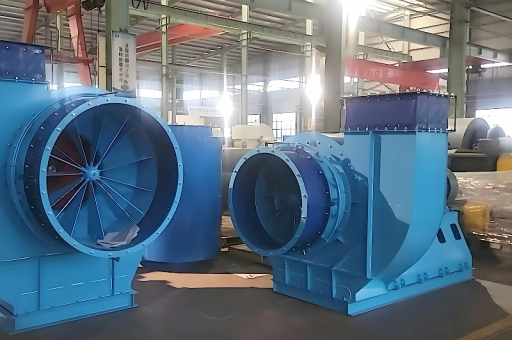
| Centrifugal Fan (Radial Blade/Paddle Wheel) | Most common for heavy/abrasive materials (coal dust, limestone). | - Paddle/Radial Blades: Flat blades are self-cleaning and resist material buildup. - Direct Drive: Belt slippage is less common but direct drive is preferred for constant speed. - Heavy-Duty Housing: Thicker steel (AR steel) for abrasion resistance. |
| High Pressure Blower (Roots Blower / Screw Compressor) | Dense phase conveying for long distances or high back-pressure (e.g., feeding a kiln burner). | - Positive Displacement: Provides constant airflow regardless of system pressure changes. - Oil-Free Air: Critical for some chemical processes. |
| Exhauster Fan | Used on the outlet of a cyclone separator to pull material into the kiln. | - Handles dust-laden air. - Usually located downstream of the material separation point. |
| Induced Draft Fan (ID Fan) | Used at the kiln outlet (not for feed, but for combustion air). | - Handles hot, corrosive, abrasive gas from the kiln. - Critical for maintaining negative pressure inside the kiln. |
Materials Delivered to Industrial Kilns
The fan system must be compatible with the material's physical and chemical properties.
| Material | Fan System Consideration | Purpose in Kiln |
|---|---|---|
| Pulverized Coal | Explosion-proof fan (ATEX/NFPA). Spark-resistant construction (non-ferrous impeller). | Fuel for the kiln burner. |
| Cement Raw Meal (limestone, clay, sand) | High abrasion resistance. Wear liners in fan housing and pipeline curves. | Material being calcined into clinker. |
| Petroleum Coke | High temperature tolerance. Abrasion resistant. | Alternative fuel for cement or lime kilns. |
| Biomass / Wood Pellets | Filtration required to prevent clogging. Low speed to avoid particle degradation. | Renewable fuel source. |
| Minerals (Limestone, Dolomite) | High pressure blower for dense phase. | Feedstock for lime or dolomite kilns. |
System Components for Kiln Material Delivery
A typical Material Handling Fan System for a kiln includes:
- Material Source: Hopper, silo, or crusher.
- Rotary Airlock (Rotary Valve): Feeds material from the hopper into the airstream without losing pressure.
- Fan/Blower: Generates the motive air.
- Conveying Pipe: Routes the suspended material to the kiln.
- Injector (Venturi) or Cyclone: Separates the material from the air at the kiln entry point. The material drops into the kiln, and the air (now clean) is vented or recirculated.
Critical Engineering Considerations
- Abrasion: Material handling fans wear out faster. Use wear-resistant liners (e.g., ceramic tiles or hard-facing on the impeller and housing).
- Explosion Risk: For coal or organic dust, use explosion-proof motors, spark-resistant construction, and install explosion vents in the system.
- Temperature: Kilns are hot. The fan and piping near the kiln must be rated for high temperatures (often >200°C / 400°F). Use heat-sink shafts and cooling wheels for the fan bearing.
- Pressure: Dense phase systems require high pressure (up to 1 bar / 15 psi). The fan and seals must be rated for this.
- Variable Speed Control: VFDs (Variable Frequency Drives) are essential for controlling the feed rate of material to match the kiln's production needs.
Summary: How a Fan Delivers Material to a Kiln
- Start: A rotary valve drops solid material (e.g., pulverized coal) from a hopper into a high-speed airstream produced by a Radial Blade Centrifugal Fan.
- Transport: The fan's airstream (often at 20-30 m/s or 4000-6000 FPM) suspends the material and pushes it through a steel pipe.
- Separation: The pipe terminates at a burner nozzle or cyclone at the kiln intake.
- Delivery: The material is injected into the kiln's flame or hot zone. The conveying air either becomes combustion air (for fuel) or is exhausted through a baghouse (for raw meal).
In short: The fan is the engine of a pneumatic conveyor that moves bulk solids from storage to the kiln reliably and at a controlled rate.





