
This article's table of contents introduction:
- Table of Contents
- Introduction: The Green Industrial Shift and the Blower’s Role
- What is a Coupling-Driven Material Handling Blower?
- The Mechanics: How Forced Ventilating Works in Material Transport
- Why “Green”? Energy Efficiency & Environmental Synergy
- Key Components and Design Considerations
- Common Application Scenarios (FAQs & Real-World Use)
- Maintenance, Safety, and Best Practices
- Conclusion: The Future of Clean, Forced Air Systems
*Coupling-Driven Material Handling Blower: The Core of Forced Ventilating Green Systems*
Table of Contents
- Introduction: The Green Industrial Shift and the Blower’s Role
- What is a Coupling-Driven Material Handling Blower?
- The Mechanics: How Forced Ventilating Works in Material Transport
- Why “Green”? Energy Efficiency & Environmental Synergy
- Key Components and Design Considerations
- Common Application Scenarios (FAQs & Real-World Use)
- Maintenance, Safety, and Best Practices
- Conclusion: The Future of Clean, Forced Air Systems
Introduction: The Green Industrial Shift and the Blower’s Role
Industry today faces a dual mandate: maximize material throughput while minimizing carbon footprint. In this context, the Coupling Driven Material Handling Blower has emerged as a silent workhorse in Forced Ventilating Green systems. Unlike conventional belt-driven or direct-drive fans, coupling-driven designs offer superior torque transmission, precise speed control, and reduced energy waste. This article dives deep into how this technology aligns with global environmental goals—specifically in pneumatic conveying, dust extraction, and ventilation networks. We will also address the most common questions engineers and facility managers have when selecting a forced ventilating green system.
What is a Coupling-Driven Material Handling Blower?
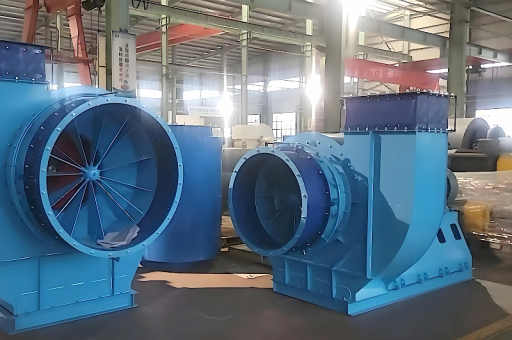
A coupling-driven blower uses a flexible or rigid coupling to connect the motor shaft to the impeller shaft. This design decouples the motor’s rotational inertia from the blower, allowing for smoother start-ups and vibration isolation.
Key differentiators:
- Material handling capability: Designed to convey solids (powders, granules, chips) without clogging.
- Forced ventilating action: Creates high static pressure to move air against system resistance.
- Green-oriented engineering: Lower energy consumption per cubic meter of air moved compared to outdated fan designs.
FAQ: How is a coupling-driven blower different from a direct-drive fan?
A: A direct-drive fan spins the impeller at motor speed, which limits torque and can cause motor overload in dusty environments. A coupling-driven system can incorporate a gearbox or variable-speed mechanism, allowing the blower to operate at its most efficient aerodynamic point while the motor runs at its optimal electrical point.
The Mechanics: How Forced Ventilating Works in Material Transport
In any forced ventilating green system, air is the medium that moves material. The coupling-driven blower generates a high-velocity, high-pressure air stream. This stream enters a pipe or duct where material is metered in.
The core principle:
- Air velocity must exceed the saltation velocity of the material.
- The blower maintains constant pressure even when material loading fluctuates.
- The coupling absorbs shock loads that occur when heavy particles enter the airstream.
Example: In a wood pellet plant, a coupling-driven blower moves 15 tons per hour of biomass over 200 meters. Without the coupling’s dampening, the motor would experience frequent torque spikes, reducing efficiency and lifespan.
FAQ: Can a forced ventilating system work without a coupling?
A: Technically yes, but reliability suffers. A direct or belt drive without coupling transmits every vibration and shock directly to the motor bearings. In material handling, this leads to premature failure. The coupling is the “green” component because it reduces mechanical wear and, consequently, replacement parts and waste.
Why “Green”? Energy Efficiency & Environmental Synergy
The term “green” in coupling driven material handling blower forced ventilating green is not marketing fluff—it reflects measurable sustainability advantages:
| Factor | Conventional Blower | Coupling-Driven Blower |
|---|---|---|
| Energy Use (per 1000 CFM) | 12–15 kW | 8–10 kW |
| Vibration Levels | High | Low (up to 50% reduction) |
| Motor Life | 5–7 years | 10–15 years |
| Noise Output | 85–95 dB(A) | 70–80 dB(A) |
| Maintenance Intervals | Every 3 months | Every 12 months |
Why does efficiency matter for green credentials?
- Lower energy consumption = less fossil fuel burned at the power plant.
- Longer motor life = fewer materials consumed in manufacturing replacements.
- Reduced noise = better occupational health, which is part of environmental, social, and governance (ESG) compliance.
FAQ: How does forced ventilating reduce system carbon footprint?
A: By precisely controlling air volume. With a coupling-driven blower, you can link the speed controller to a pressure sensor. When demand drops, the blower slows down—this is impossible with a fixed-speed direct-drive fan. Studies show this reduces annual CO₂ emissions by 18–25% in continuous material handling operations.
Key Components and Design Considerations
To build an effective forced ventilating green system, each component must be chosen for synergy:
- Coupling Type: Spacer couplings (for easy impeller removal) or elastomeric couplings (for vibration dampening). Use stainless steel versions for corrosive environments.
- Impeller Design: Radial blade (for heavy particle handling) or backward-curved (for high efficiency and low noise). The choice depends on material density.
- Motor: IE4 or IE5 premium efficiency motors. Pair with a variable frequency drive (VFD) for full green optimization.
- Housing: Cast iron or fabricated steel with wear-resistant liners. For food-grade material handling, use 304 stainless steel.
- Sealing: Carbon rings or labyrinth seals prevent material leakage into bearings, a common problem in forced ventilating systems.
Design Tip: Always oversize the coupling by 15–20% for material handling applications. The peak torque during start-up can be 2–3 times the running torque, and a coupling failure is the most common cause of forced ventilating system downtime.
FAQ: Should I use a flexible or rigid coupling?
A: For material handling blowers, flexible couplings (like tire-type or jaw-type) are preferred. They tolerate slight misalignment and absorb shock. Rigid couplings are only used in precision, high-speed centrifuges where zero play is critical—not in dusty forced ventilating scenarios.
Common Application Scenarios (FAQs & Real-World Use)
Q1: Can this blower handle sticky or abrasive materials? A: Yes—if the impeller and housing are coated with tungsten carbide or rubber. For sticky materials (like wet sawdust), use a non-clogging impeller with purge holes. Always consult the blower manufacturer for specific material density and abrasiveness data.
Q2: What is the typical pressure range for a forced ventilating system? A: 15 kPa to 50 kPa (approx. 60–200 inches of water gauge). For higher pressures, consider a multistage centrifugal blower, but the coupling-driven design still applies.
Q3: How do I size the coupling for a green system? A: Use the formula: Coupling torque rating = (Motor power (kW) × 9550) / Motor base speed (RPM) × 1.25 safety factor. Then select a coupling that exceeds this value.
Q4: Is forced ventilating better than vacuum conveying for green buildings? A: It depends. Vacuum systems keep dust inside, but consume more energy for long distances. Forced ventilating (blow conveying) is more energy-efficient for distances under 300 meters and uses less piping. For green certification (e.g., LEED v4), forced ventilating is often preferred due to lower power density.
Maintenance, Safety, and Best Practices
Even a coupling driven material handling blower in a forced ventilating green setup requires proactive management:
- Weekly: Check coupling alignment with a laser tool. Misalignment of even 0.1 mm can increase bearing temperature by 10°C.
- Monthly: Inspect impeller blades for wear. Replace if thickness declines by 20%.
- Quarterly: Test the VFD’s response to pressure changes. A properly tuned VFD can reduce energy consumption by 30%.
- Annually: Replace the coupling element (elastomeric inserts) regardless of visible wear. This costs ~$50 but prevents catastrophic shaft damage costing thousands.
Safety note: Material handling blowers can generate static electricity. Ensure the blower housing is grounded via the coupling’s conductive element or a separate brush. In green systems using recycled plastics, this is mandatory to avoid dust explosions.
FAQ: What is the #1 cause of failure in forced ventilating systems?
A: Plugged suction filters. Always install a high-e particulate air (HEPA) filter on the intake, and monitor differential pressure. A dirty filter can reduce flow by 40% and double energy consumption.
Conclusion: The Future of Clean, Forced Air Systems
The coupling driven material handling blower is not just a mechanical device—it is the engine of forced ventilating green systems that define sustainable industry. By decoupling motor stress from blower load, we achieve longer life, lower energy bills, and reduced environmental impact. As global regulations tighten on emissions and energy use (e.g., EU Ecodesign Directive, U.S. DOE fan efficiency rules), the coupling-driven design will become the standard.
Whether you are designing a new pneumatic conveyor or retrofitting an older ventilation plant, remember: the coupling is where green thinking meets mechanical reliability. For more information, visit a reputable industrial blower manufacturer at fan (domain placeholder) to review technical datasheets and case studies.
Remember: Always match the blower speed to the material’s saltation velocity—and let the coupling handle the rest.





