
This article's table of contents introduction:
- Article Content
- Introduction: Why Material and Capacity Matter in Industrial Drying
- What Defines a "Large Capacity" Centrifugal Fan?
- The Aluminium Alloy Advantage: Lightweight, Corrosion-Resistant, and Efficient
- Key Design Features of Modern Aluminium Alloyed Drying Fans
- Applications Across Industries: From Food Processing to Chemical Drying
- FAQ: Common Questions Answered
- Conclusion: Selecting the Right Fan for Your Operation
*Optimizing Industrial Drying Processes: The Ultimate Guide to Large Capacity Aluminium Alloyed Centrifugal Fans*
Article Content
Table of Contents
- Introduction: Why Material and Capacity Matter in Industrial Drying
- What Defines a "Large Capacity" Centrifugal Fan?
- The Aluminium Alloy Advantage: Lightweight, Corrosion-Resistant, and Efficient
- Key Design Features of Modern Aluminium Alloyed Drying Fans
- Applications Across Industries: From Food Processing to Chemical Drying
- FAQ: Common Questions Answered
- Conclusion: Selecting the Right Fan for Your Operation
Introduction: Why Material and Capacity Matter in Industrial Drying
In the realm of industrial drying, airflow is the invisible engine that dictates productivity, energy consumption, and product quality. Whether you are dehydrating grains, curing textiles, or drying chemical powders, the performance of your centrifugal fan directly influences the bottom line.
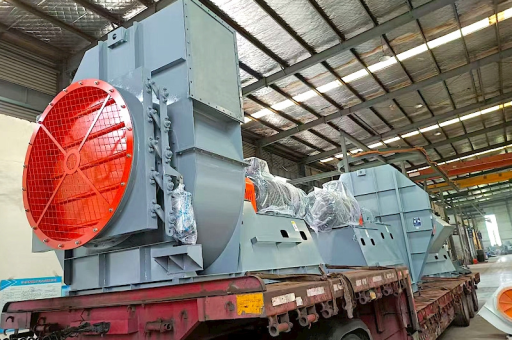
Large capacity aluminium alloyed drying industrial centrifugal fans represent a specialized evolution in fan technology. They are engineered to move massive volumes of air—often exceeding 100,000 cubic meters per hour—while withstanding the corrosive, humid, and high-temperature environments typical of drying processes. By combining a high-strength, lightweight aluminium alloy construction with aerodynamic impeller design, these fans deliver superior efficiency and longevity compared to traditional steel or composite alternatives.
This article explores the technical advantages, design innovations, and practical applications of these fans, based on current industry standards and engineering best practices. We will also address frequently asked questions to help you make an informed purchasing or specification decision.
What Defines a "Large Capacity" Centrifugal Fan?
A large capacity centrifugal fan is not merely a larger version of a standard unit. It is defined by specific performance and structural parameters:
- Airflow Rate: Typically above 50,000 CFM (cubic feet per minute) or 85,000 m³/h. Some industrial models reach 200,000 CFM.
- Static Pressure Capability: High static pressure (e.g., 2,000 to 6,000 Pa) to overcome duct resistance, filter loading, and drying chamber backpressure.
- Impeller Diameter: Often exceeds 1,200 mm, with multi-blade backward-curved or airfoil designs optimized for low turbulence and high efficiency.
- Motor Power: In the range of 50 kW to 350 kW, frequently coupled with variable frequency drives (VFDs) for precise airflow control.
These specifications ensure that the fan can sustain continuous high-volume airflow even under demanding thermal and particulate loads.
The Aluminium Alloy Advantage: Lightweight, Corrosion-Resistant, and Efficient
Why choose aluminium alloy over steel or stainless steel for a drying fan? The answer lies in the material's unique combination of properties:
1 Corrosion Resistance Drying environments often involve high humidity, steam, and acidic or alkaline vapors. Aluminium alloy (e.g., 6061-T6 or 5083) naturally forms a protective oxide layer that resists corrosion from moisture, organic acids, and mild chemicals. This dramatically extends the service life of the impeller and housing, reducing replacement cycles.
2 Weight Reduction Aluminium alloys are approximately 60% lighter than steel. A lighter impeller reduces the moment of inertia, allowing the fan to accelerate and decelerate faster. This translates to lower energy consumption during start-stop cycles and less stress on bearings and shafts. In large capacity fans, the weight difference can be hundreds of kilograms, simplifying installation and structural support requirements.
3 Spark Resistance In drying processes involving combustible dust (e.g., grain, wood, or certain chemicals), spark prevention is critical. Aluminium alloys are non-sparking when struck against non-ferrous materials, reducing ignition risks. This is a key advantage over carbon steel, which can generate dangerous sparks.
4 Thermal Conductivity Aluminium conducts heat approximately 5 times better than steel. In drying applications, this helps dissipate heat from the motor and bearings more effectively, preventing premature failure due to thermal accumulation.
Key Design Features of Modern Aluminium Alloyed Drying Fans
Leading manufacturers incorporate several advanced design features to maximize performance and reliability:
- Backward-Curved or Airfoil Impellers: These blade profiles minimize air turbulence and energy loss, achieving static efficiencies of 80–85%.
- Welded and Heat-Treated Housings: Full penetration welding with post-weld stress relief prevents cracking in high-pressure applications.
- Sealed Bearings with Temperature Monitoring: Pre-lubricated, sealed spherical roller bearings with integrated thermal sensors send alerts when temperatures exceed safe limits (e.g., 90°C).
- Flanged Inlet and Outlet Connections: Precision-machined flanges ensure leak-proof duct attachment, vital for maintaining stable drying chamber conditions.
- Dynamic Balancing: Every impeller undergoes ISO 1940 G2.5 or better balancing to reduce vibration, noise, and wear.
- VFD Compatibility: Many models are designed for direct integration with variable frequency drives, allowing operators to fine-tune airflow to match drying curves.
Applications Across Industries: From Food Processing to Chemical Drying
These fans are deployed across a wide spectrum of drying operations:
| Industry | Typical Application | Specific Requirement |
|---|---|---|
| Food Processing | Spray drying of milk powder, drying of grains, pasta, and snacks | Hygienic design, easy cleaning, resistance to organic acids |
| Textiles | Tumble drying of fabrics, curing of coated textiles | High temperature (>120°C), moisture-laden air handling |
| Mining & Minerals | Drying of ore concentrates, washed sand, clay | Abrasive dust resistance, heavy-duty construction |
| Chemical & Pharmaceutical | Drying of powders, granules, and APIs (Active Pharmaceutical Ingredients) | Explosion-proof design, corrosion resistance from solvents |
| Wastewater Treatment | Sludge drying, bio-drying of municipal waste | High humidity, odorous air handling, continuous operation |
In each case, the aluminium alloy construction provides the necessary durability while keeping weight manageable for overhead or suspended installation.
FAQ: Common Questions Answered
Q1: How do aluminium alloy fans compare to stainless steel fans for corrosive environments? A: For environments with high chloride levels (e.g., marine or brine drying), 316 stainless steel is superior. However, for general industrial drying with steam, organic acids, and mild chemicals, aluminium alloy offers better weight efficiency, lower cost, and adequate corrosion resistance. Always verify the specific chemical compatibility with the manufacturer.
Q2: What is the typical lifespan of a large capacity aluminium alloyed centrifugal fan? A: With proper maintenance (regular bearing lubrication, vibration monitoring, and cleaning), these fans can operate for 15–20 years in continuous service. Impellers may require recoating or replacement after 8–12 years depending on abrasive particle exposure.
Q3: Can these fans be used in explosive environments? A: Yes, but only if designed to ATEX or IECEx standards. Aluminium alloy construction is inherently non-sparking, which reduces ignition risk. Additional features like anti-static belts, explosion-proof motors, and spark-resistant housing liners are necessary for full compliance.
Q4: What is the maximum temperature these fans can handle? A: Standard aluminium alloy fans can withstand continuous operating temperatures up to 180°C (356°F). For higher temperatures (up to 300°C), special heat-treated alloys or insulated bearing systems are required. Always consult the manufacturer for high-temperature specifications.
Q5: How does the efficiency of an aluminium alloy fan compare to a composite fan? A: Aluminium alloy fans generally achieve higher static efficiency (80–85%) than composite fans (typically 70–75%) due to smoother surface finishes and more precise blade profiles. However, composites are lighter and resistant to a wider range of chemicals. The choice depends on the specific trade-offs between efficiency, chemical resistance, and cost.
Q6: Do these fans require special installation considerations? A: Yes. Due to the high rotational speeds and large masses, installation must include a rigid foundation or properly designed support structure, vibration isolation pads, and alignment checks. It is also critical to ensure the fan is not subjected to excessive axial or radial loads from ductwork.
Conclusion: Selecting the Right Fan for Your Operation
Large capacity aluminium alloyed drying industrial centrifugal fans are not a one-size-fits-all solution. They are a precisely engineered blend of aerodynamics, material science, and rugged design. When specifying a fan for your drying process, consider these key factors:
- Airflow and Pressure Requirements: Calculate your actual system resistance, not just the fan's nominal rating.
- Environmental Conditions: Identify all chemical, thermal, and particulate hazards.
- Maintenance Access: Ensure the design allows for easy cleaning and bearing replacement.
- Energy Cost: A higher-efficiency fan may have a higher upfront cost but can pay back the difference within 2–3 years through reduced power bills.
By partnering with a reputable manufacturer that offers custom engineering and on-site support, you can deploy a fan system that delivers consistent, reliable drying performance for decades. For further technical details or to request a specification sheet, contact a qualified fan specialist.





