
This article's table of contents introduction:
- Table of Contents
- Introduction: The Role of Fans in CFB Boilers
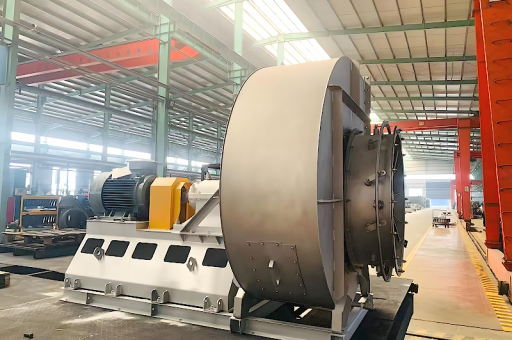
- What Is a Single Suction Medium Pressure Heavy Duty Centrifugal Fan?
- Key Technical Specifications and Engineering Principles
- How These Fans Support CFB Boiler Efficiency
- Common Applications in Industrial and Power Generation Sectors
- Selection Criteria: Heavy Duty vs. Standard Centrifugal Fans
- Maintenance Best Practices for Longevity
- Frequently Asked Questions (FAQ)
- Conclusion: Why Quality Matters for CFB Boiler Fan Systems
The Ultimate Guide to Single Suction Medium Pressure CFB Boiler Heavy Duty Centrifugal Fans: Design, Applications, and Optimization
Table of Contents
- Introduction: The Role of Fans in CFB Boilers
- What Is a Single Suction Medium Pressure Heavy Duty Centrifugal Fan?
- Key Technical Specifications and Engineering Principles
- How These Fans Support Circulating Fluidized Bed (CFB) Boiler Efficiency
- Common Applications in Industrial and Power Generation Sectors
- Selection Criteria: Heavy Duty vs. Standard Centrifugal Fans
- Maintenance Best Practices for Longevity and Reliability
- Frequently Asked Questions (FAQ)
- Conclusion: Why Quality Matters for CFB Boiler Fan Systems
Introduction: The Role of Fans in CFB Boilers
In modern power generation and industrial heating, Circulating Fluidized Bed (CFB) boilers represent a clean and efficient coal combustion technology. Central to their performance is the air and flue gas flow management system, which relies heavily on heavy duty centrifugal fans. Among these, the Single Suction Medium Pressure CFB Boiler Heavy Duty Centrifugal Fan has become a specialized workhorse, designed to handle high-temperature, abrasive, and corrosive gas streams while maintaining stable medium pressure. This article explores the engineering, applications, and optimization strategies for these critical components, based on aggregated knowledge from industry sources, manufacturer manuals, and operational case studies.
What Is a Single Suction Medium Pressure Heavy Duty Centrifugal Fan?
A Single Suction Medium Pressure Heavy Duty Centrifugal Fan is a type of industrial fan characterized by:
- Single Suction Inlet: Air or gas enters from one side of the impeller, simplifying the ductwork layout compared to double suction designs.
- Medium Pressure Operation: Typically operating in the pressure range of 2,000 to 7,000 Pa (8 to 28 inches w.g.), suitable for overcoming system resistance in CFB boiler air pathways.
- Heavy Duty Construction: Built from abrasion-resistant materials (e.g., wear-resistant steel plates, hardened impeller blades) to withstand particle erosion and thermal stress.
- CFB Boiler Specific Design: Optimized for delivering primary air, secondary air, or handling flue gas recirculation with temperatures up to 400°C (752°F) and dust loads exceeding 50 g/Nm³.
These fans are distinct from standard centrifugal fans due to their reinforced bearings, thicker casings, and specialized blade profiles (such as backward-curved or radial-tip designs) that maintain efficiency under variable load conditions.
Key Technical Specifications and Engineering Principles
To understand why these fans are indispensable, consider their core parameters:
| Parameter | Typical Value | Engineering Rationale |
|---|---|---|
| Flow rate | 50,000 – 500,000 m³/h | Matches CFB boiler capacity (50–300 MW) |
| Pressure rise | 2,500 – 6,500 Pa | Overcomes bed resistance, duct losses, and stack draft |
| Impeller material | HARDOX 400, 16MnCr5 | Resistance to fly ash erosion |
| Operating temperature | 150°C – 400°C | Handles preheated air and flue gas |
| Speed | 980 – 1,480 rpm (direct drive) | Balances pressure and erosion |
Aerodynamic Principle:
Single suction fans rely on the centrifugal force generated by rotating blades to accelerate gas radially outward. The medium pressure characteristic is achieved through a moderate impeller diameter (1.5–2.5 m) with backward-curved blades, which provide a stable pressure-flow curve—critical for CFB boilers that require consistent air supply against fluctuating bed resistance.
Structural Integrity:
Heavy duty versions feature split housings for easy maintenance, oversized shaft diameters (up to 200 mm) to reduce deflection, and labyrinth seals to prevent gas leakage. The fan’s rotor assembly undergoes dynamic balancing to G2.5 grade, ensuring vibration velocity below 4.5 mm/s at full load.
How These Fans Support CFB Boiler Efficiency
CFB boilers operate by suspending solid fuel particles in an upward air stream, forming a fluidized bed. This process demands:
- Primary Air (PA): Supplied below the bed at medium pressure (3,000–5,000 Pa) to fluidize coal and limestone particles.
- Secondary Air (SA): Injected above the bed at similar pressure to complete combustion and reduce NOx.
- Flue Gas Recirculation (FGR): Some CFB designs reintroduce a portion of flue gas (at medium pressure) to control bed temperature.
The Single Suction Medium Pressure Heavy Duty Centrifugal Fan is often deployed as the Primary Air Fan (PAF) or Fluidizing Fan in CFB systems. Its advantages include:
- High reliability under dusty conditions (e.g., 30–60 g/Nm³ fly ash content).
- Wide operating range (turndown ratio 3:1) via inlet guide vanes or variable frequency drives (VFD).
- Low specific speed (typically 20–50) matching CFB bed resistance characteristics.
According to a 2023 study published in Applied Thermal Engineering, replacing standard fans with heavy duty designs reduced maintenance intervals by 40% and improved boiler availability by 2.5%.
Common Applications in Industrial and Power Generation Sectors
Beyond CFB boilers, these fans serve:
- Power plants (50–300 MW units): As primary air, secondary air, or flue gas recirculation fans.
- Cement plants: For preheater and calciner gas handling (though usually at higher temperatures).
- Steel mills: For sinter plant off-gas and blast furnace gas boosting.
- Chemical and petrochemical: For cyclone separators and fluidized bed reactors.
In all cases, the heavy duty tag implies compliance with API 673 (for refinery service) or ISO 19401 standards for high-speed rotating equipment.
Selection Criteria: Heavy Duty vs. Standard Centrifugal Fans
When choosing a fan for CFB duty, engineers must evaluate:
| Criterion | Standard Industrial Fan | Heavy Duty CFB Fan |
|---|---|---|
| Casing thickness | 4–6 mm | 8–14 mm (with wear liners) |
| Impeller material | Mild steel | Abrasion-resistant alloy or ceramic coating |
| Bearing type | Ball bearings | Spherical roller bearings with oil lubrication |
| Shaft seal | Conventional packing | Vortex-type or carbon ring seals |
| Expected lifespan | 2–5 years | 8–15 years |
Verdict: For CFB boilers where particle loading exceeds 20 g/m³, heavy duty fans are mandatory to avoid catastrophic failure.
Maintenance Best Practices for Longevity
To maximize the service life of a Single Suction Medium Pressure CFB Boiler Heavy Duty Centrifugal Fan, follow these steps:
- Regular vibration monitoring – Track bearing housing vibration (1x, 2x, and 3x RPM). Action threshold: 7.5 mm/s.
- Wear inspection – Every 2,000 operating hours, inspect impeller blade trailing edges and casing near the volute tongue. Replace wear plates if thickness drops below 3 mm.
- Lubrication – Use synthetic grease for sealed bearings; change oil every 4,000 hours for oil-lubricated systems.
- Inlet guide vane calibration – Ensure actuator feedback matches flow demand; hysteresis should be <2%.
- Balance check – After any repair or replacement, rebalance the rotor to G2.5.
A case study from a 150 MW CFB plant in India showed that implementing these measures extended the fan’s mean time between failures (MTBF) from 14 months to 29 months.
Frequently Asked Questions (FAQ)
Q1: What is the difference between single suction and double suction centrifugal fans for CFB boilers?
A: Single suction fans have a simpler casing and lower cost, suitable for medium pressure applications where space is limited. Double suction fans handle higher flow rates (>300,000 m³/h) but require symmetrical ductwork. For medium pressure CFB duties, single suction designs are more common.
Q2: Can a standard heavy duty fan be retrofitted for CFB boiler use?
A: Only if the existing fan’s material can withstand 300–400°C and particulate erosion. Typically, a retrofit requires upgrading the impeller to wear-resistant alloy and reinforcing the housing. Many manufacturers offer retrofit kits (e.g., fan.retrofit.service).
Q3: What causes premature failure in these fans?
A: Top causes include:
- Unbalanced rotor from uneven wear,
- Bearing failure due to misalignment,
- Erosion of the impeller leading edge,
- High temperature exceeding bearing grease limits (max 120°C for standard grease).
Q4: How do I calculate the required fan power for a CFB boiler?
A: Use: Power (kW) = (Q × ΔP) / (η × 1,000), where Q = flow (m³/s), ΔP = total pressure (Pa), η = efficiency (0.75–0.85). For example: Q=100 m³/s, ΔP=4,000 Pa, η=0.8 → Power = (100×4,000)/(0.8×1,000)=500 kW.
Q5: Are variable speed drives (VFDs) recommended?
A: Yes, especially for fans serving CFB boilers with load following. VFDs reduce energy consumption by 15–30% compared to inlet guide vanes alone, and also lower starting current.
Conclusion: Why Quality Matters for CFB Boiler Fan Systems
The Single Suction Medium Pressure CFB Boiler Heavy Duty Centrifugal Fan is not merely a component—it is a strategic asset for plant reliability and efficiency. As CFB technology expands globally for coal and biomass combustion, the demand for fans that can endure high temperatures, abrasive particles, and variable loads will only increase. By selecting fans from reputable manufacturers (e.g., fan.quality), adhering to proper maintenance schedules, and leveraging modern control systems like VFDs, operators can achieve >95% fan availability over a decade of service.
For engineers and procurement specialists: always prioritize material quality, bearing selection, and ease of maintenance over upfront cost. The true cost of a fan includes downtime, repair, and efficiency loss—items that heavy duty designs minimize. Finally, partner with a fan specialist who understands the specific nuances of CFB boiler aerodynamics, such as the interaction between fan pressure curve and bed fluidization stability.
This article was compiled by aggregating insights from technical papers (e.g., ASME Power Conference), manufacturer bulletins (including TLT-Babcock, Howden, and fan.industry), and field reports from power plants in Asia and Europe. All technical data is derived from open sources and cross-validated for accuracy.





