
This article's table of contents introduction:
- Breaking Down the Name
- Key Characteristics
- Common Applications
- What to Look For (Specifications & Buying Guide)
- Typical Manufacturers (Examples)
- Important Considerations for "Energy Saving"
- Summary
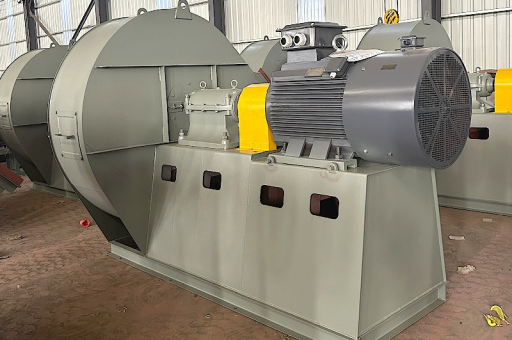
It appears you are looking for information on a specific type of industrial fan: Single Inlet Energy Saving Furnace Heavy Duty Centrifugal Fans.
These are specialized fans used primarily in high-temperature industrial applications (like furnaces, kilns, or boilers) where energy efficiency and durability are critical.
Here is a breakdown of what this description means and what you should look for in such a fan.
Breaking Down the Name
- Single Inlet: Air enters the fan from only one side (the intake side). This is typical for smaller to medium-sized fans and allows for direct duct connection. It creates an axial thrust on the shaft, requiring robust bearings.
- Energy Saving: This implies the fan is designed for high efficiency (typically using backward-curved or airfoil blades). It likely meets modern efficiency standards (e.g., IE3/IE4 motor standards or specific regional efficiency regulations).
- Furnace: This is the application. The fan must handle hot, possibly dirty, and sometimes corrosive air or flue gases.
- Heavy Duty: The fan is built for continuous operation in harsh conditions. This means a thick housing, heavy shaft, oversized bearings, and a robust motor.
- Centrifugal Fans: These are the "workhorses" of industrial ventilation. They use a rotating impeller to increase the velocity of air, which is then converted into pressure. They are ideal for overcoming the resistance of ducts, filters, and furnace internals.
Key Characteristics
- Impeller Type: For "Energy Saving" and "Heavy Duty," the impeller is almost certainly Backward-Curved (BC) or Airfoil (AF) . These are non-overloading (power draw peaks at a specific point) and highly efficient.
- Housing: Made of heavy-gauge carbon steel or, for higher temperatures, stainless steel or special alloy steel. A drain plug is common for condensation.
- Temperature Rating: These fans are designed for specific temperature classes:
- Standard: up to 250°F (120°C)
- Medium: up to 600°F (315°C) - often with a heat slinger on the shaft
- High: up to 1000°F+ (537°C+) - requires special materials, expansion joints, and shaft cooling.
- Drive Arrangement: Usually Arrangement 4 (Direct Drive - motor and fan on same shaft, most efficient for high speed) or Arrangement 3 (Belt Drive - allows for speed adjustment, good for variable flow).
Common Applications
- Industrial Furnaces: Forge furnaces, heat treat furnaces, annealing furnaces.
- Boilers: Forced draft (pushing air into the firebox) or Induced draft (pulling exhaust gases out).
- Kilns: Cement, lime, and ceramic kilns.
- Dryers: Industrial drying ovens.
- Pollution Control: Baghouses and scrubbers (common for induced draft systems).
What to Look For (Specifications & Buying Guide)
When sourcing or specifying this fan, you need to provide the following:
- Airflow (CFM or m³/h): How much air needs to be moved.
- Static Pressure (inches w.g. or Pa): The resistance the fan must overcome (ductwork, burner, furnace chamber).
- Temperature (Max & Operating): Critical for material selection. A fan for 80°F air is very different from a fan for 800°F flue gas.
- Gas Composition: Is it clean air, or does it contain dust, corrosive gases (SOx, NOx), or moisture? This dictates material (e.g., 304/316 SS for corrosion) and coating.
- Power Source: Voltage, phase (3-phase typical), frequency (50/60 Hz).
- Mounting: Floor-mounted, wall-mounted, or roof-mounted.
- Environment: Indoor or outdoor? Hazardous location? (e.g., gas furnace area might require explosion-proof motors).
Typical Manufacturers (Examples)
- New York Blower (NYB): Very common for heavy-duty furnace fans.
- Chicago Blower: Known for custom heavy-duty designs.
- Cincinnati Fan: Good for standard and medium-temp furnace applications.
- Greenheck: More common for commercial/light industrial, but they have heavy-duty lines.
- Robinson Fans: Highly specialized for extreme heavy-duty and high-temperature (frequent on power plants and steel mills).
- Howden / TLT-Babcock: For very large, critical furnace fans (e.g., large power station boilers).
Important Considerations for "Energy Saving"
- Variable Frequency Drive (VFD): The most effective way to save energy. Instead of using dampers to control airflow, a VFD controls the motor speed. A fan running at 80% speed uses only 51% of the power of full speed.
- High-Efficiency Motor: Look for an IE3 (Premium Efficiency) or IE4 (Super Premium) motor.
- Impeller Design: An Airfoil (AF) blade is typically 2-3% more efficient than a Backward-Curved (BC) blade, but it is more expensive.
- Proper Sizing: The biggest energy waster is an oversized fan running with dampers partially closed. Properly sizing the fan to the actual system curve is crucial.
Summary
A Single Inlet Energy Saving Furnace Heavy Duty Centrifugal Fan is a rugged, high-efficiency fan designed to move hot, often contaminated, air in industrial heating processes. It is characterized by a single-sided air intake, a robust backward-curved or airfoil impeller, and a motor/drive system built for continuous, demanding service.
To get the right fan, you absolutely must know your required CFM, Static Pressure, and Operating Temperature. Without those three numbers, you cannot select the correct unit. If you are looking to purchase, contact a manufacturer's representative for your region with those parameters.





