
This article's table of contents introduction:
- Table of Contents
- Introduction to Coal Mill Centrifugal Blower Fans
- Why Carbon Steel is the Preferred Material
- Key Engineering for Large Capacity & High Temperature
- Performance Optimization and Energy Efficiency
- Common Operational Challenges and Solutions
- Essential Maintenance and Safety Protocols
- Frequently Asked Questions
- Conclusion
** The Ultimate Guide to Carbon Steel Large Capacity Coal Mill High Temperature Centrifugal Blower Fan: Design, Efficiency, and Maintenance
Table of Contents
- Introduction to Coal Mill Centrifugal Blower Fans
- Why Carbon Steel is the Preferred Material
- Key Engineering for Large Capacity & High Temperature
- Performance Optimization and Energy Efficiency
- Common Operational Challenges and Solutions
- Essential Maintenance and Safety Protocols
- Frequently Asked Questions
- Conclusion
Introduction to Coal Mill Centrifugal Blower Fans
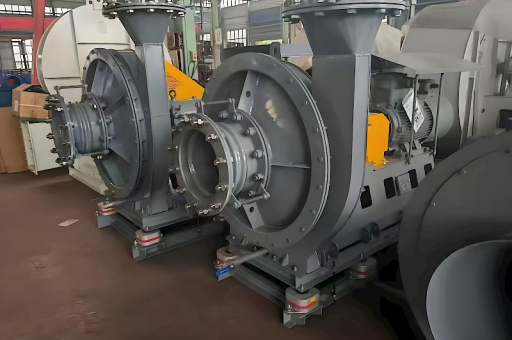
In modern thermal power plants and industrial coal pulverization systems, the Carbon Steel Large Capacity Coal Mill High Temperature Centrifugal Blower Fan plays a critical role in ensuring consistent air flow, adequate pressure, and reliable material transport. These fans are specifically engineered to withstand the harsh environment inside coal mills, where temperatures can exceed 400°C and airborne abrasive particles are abundant. By moving large volumes of hot, dust-laden air, these fans sustain the combustion process and prevent mill blockage. Understanding the fan’s design, material selection, and operational parameters is vital for plant engineers aiming to maximize uptime and minimize energy costs.
Why Carbon Steel is the Preferred Material
One of the most common questions in fan selection is: Why choose carbon steel over stainless steel or aluminum?
High-quality carbon steel, such as Q235B or Q345R, offers a superior balance of strength, thermal conductivity, and cost-effectiveness. When used in large capacity high temperature centrifugal blower fans, carbon steel provides:
- Excellent weldability and machinability for complex impeller and housing geometries.
- High tensile strength under continuous mechanical stress from rotating at high RPM.
- Adequate thermal stability up to 450°C without significant structural deformation.
- Better price per unit performance compared to high-alloy stainless steels.
Special heat-resistant coatings or ceramic linings are often applied to the carbon steel surfaces to further combat oxidation and erosion, ensuring multi-year service life in coal mill environments.
Key Engineering for Large Capacity & High Temperature
To achieve large capacity (e.g., 100,000 – 500,000 m³/h) and handle high temperature (up to 450°C), engineers focus on three core components:
- Impeller Design: Backward-curved blades reduce dust accumulation and minimize wear. For high-temperature conditions, the impeller is often manufactured from thick carbon steel plate, with stress-relieving heat treatment to prevent fatigue cracking.
- Shaft and Bearing Assembly: High-temperature operation demands a robust cooling system. Water-cooled or forced-air-cooled bearing housings are standard. The shaft is typically constructed from 40Cr or 45# carbon steel, then hardened for wear resistance.
- Housing and Inlet Box: A volute housing with a replaceable wear lining absorbs impact from coal particles. Expansion joints accommodate thermal expansion, preventing structural stress.
Performance Optimization and Energy Efficiency
Operators frequently ask: How can we reduce the fan’s energy consumption without sacrificing throughput?
Key strategies include:
- Variable Frequency Drives (VFDs): Adjusting fan speed to match actual mill demand. A 20% reduction in speed can yield nearly 50% power savings.
- Aerodynamic Inlet Dampers: Pre-rotate airflow to reduce turbulence and improve static efficiency.
- Regular Impeller Balancing: Dynamic balancing every 6 months minimizes vibration, extending bearing life and reducing parasitic losses.
- Sealing Systems: Using labyrinth or carbon ring seals prevents hot gas leakage and maintains pressure.
Optimized fan efficiency typically reaches 82-85% in modern large capacity designs, significantly lowering electricity costs.
Common Operational Challenges and Solutions
| Challenge | Cause | Solution |
|---|---|---|
| Impeller erosion | High coal dust impact | Apply tungsten carbide overlay or replace ceramic lining. |
| Bearing overheating | Inadequate cooling | Upgrade to water-cooled bearings; check oil levels. |
| Unbalanced airflow | Inlet blockage | Clean inlet screens; adjust damper positions. |
| Excessive vibration | Wear on rotor | Perform dynamic balancing; inspect shaft alignment. |
| Motor overloading | Over-speed operation | Calibrate VFD; verify fan curve matches system curve. |
Essential Maintenance and Safety Protocols
For carbon steel high-temperature centrifugal fans, longevity relies on a strict preventive maintenance schedule:
- Daily: Monitor bearing temperature (max 95°C), vibration levels (< 7.1 mm/s RMS), and air flow.
- Monthly: Inspect wear-resistant coating integrity; check tightness of all bolts.
- Quarterly: Lubricate bearings; inspect shaft seal for leakage.
- Annual: Complete rotor overhaul: replace worn blades, re-balance, test safety interlocks.
Safety Note: Always lock out/tag out (LOTO) before opening the fan housing. Never bypass temperature sensors—thermal runaway in a coal-dust environment can lead to fire or explosion.
Frequently Asked Questions
Q1: Can a carbon steel fan handle continuous operation at 450°C?
Yes, with proper heat-resistant coating (e.g., epoxy novolac or inorganic zinc silicate) and stress-relieved design. However, for sustained service above 450°C, low-alloy steel like 16Mo3 is recommended.
Q2: How do I calculate the required fan capacity for my coal mill?
Use the formula: Required Air Volume (m³/h) = (Mill Pulverization Rate × Air-to-Coal Ratio) / (Air Density at Operating Temperature). Typical air-to-coal ratio is 1.8–2.2:1 for medium-speed mills.
Q3: What is the typical warranty period for a large capacity centrifugal fan?
Industry standard is 12–18 months from commissioning or 2 years from shipment, whichever comes first. Extended warranties are available with sealed bearing systems.
Q4: Where can I purchase these fans?
You can source directly from specialized industrial fan manufacturers. For technical specifications and pricing, visit fan.
Conclusion
The Carbon Steel Large Capacity Coal Mill High Temperature Centrifugal Blower Fan remains an indispensable component in the thermal power and cement industries. By understanding its material selection, aerodynamic design, and heat-resistant features, plant operators can achieve reliable performance for decades. Advanced engineering—such as backward-curved impellers, VFD control, and ceramic abrasion protection—enables these fans to operate efficiently even under the harshest conditions. Whether you are upgrading an existing mill or commissioning a new plant, focusing on proper sizing, material specs, and maintenance discipline will maximize your return on investment. For tailored technical support, consult a reputable manufacturer at fan.





