
This article's table of contents introduction:
- Table of Contents
- Introduction: What Is a Stainless Steel Explosion Proof Gas Delivery High Temperature Centrifugal Fan?
- Key Design Features and Material Specifications
- How Does It Work? Operating Principles Explained
- Critical Application Scenarios in Industry
- Safety Certifications and Compliance Standards
- Common Questions Answered (FAQ)
- Installation, Maintenance, and Longevity Tips
- Conclusion: Why This Fan Is Indispensable for Hazardous Environments
** The Ultimate Guide to Stainless Steel Explosion Proof Gas Delivery High Temperature Centrifugal Fan: Design, Applications, and Safety Insights
Table of Contents
- Introduction: What Is a Stainless Steel Explosion Proof Gas Delivery High Temperature Centrifugal Fan?
- Key Design Features and Material Specifications
- How Does It Work? Operating Principles Explained
- Critical Application Scenarios in Industry
- Safety Certifications and Compliance Standards
- Common Questions Answered (FAQ)
- Installation, Maintenance, and Longevity Tips
- Conclusion: Why This Fan Is Indispensable for Hazardous Environments
Introduction: What Is a Stainless Steel Explosion Proof Gas Delivery High Temperature Centrifugal Fan?
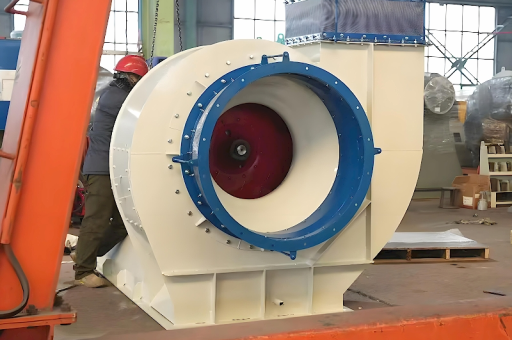
In industrial environments where high temperatures, flammable gases, and corrosive atmospheres coexist, standard ventilation equipment often fails. The Stainless Steel Explosion Proof Gas Delivery High Temperature Centrifugal Fan is an engineered solution designed to operate safely under extreme conditions. This fan integrates three critical attributes into a single, robust unit: corrosion resistance from stainless steel construction, explosion-proof protection against ignition sources, and the ability to handle gas delivery at elevated temperatures.
Unlike conventional fans, this equipment is built to move hazardous gases—such as methane, hydrogen, or solvent vapors—without creating sparks or overheating. The centrifugal design generates high static pressure, making it ideal for ducted systems in chemical plants, oil refineries, or pharmaceutical facilities. Its stainless steel body (typically SS304, SS316, or duplex grades) ensures resistance to chemical attack, while the motor and impeller are sealed and shielded to prevent any arc or friction from igniting the conveyed medium.
For safety managers and engineers, choosing the right fan is not just about airflow; it’s about risk mitigation. This fan type is often specified in ATEX, IECEx, or NEC Class I Division 1 environments. Whether you are retrofitting an existing system or designing a new one, understanding the technical nuances of this fan can prevent catastrophic failures.
Key Design Features and Material Specifications
The performance of a Stainless Steel Explosion Proof Gas Delivery High Temperature Centrifugal Fan hinges on three pillars: material integrity, spark-proof construction, and thermal management.
Material Selection
The housing, impeller, and shaft are typically fabricated from austenitic stainless steel (SS304 or SS316). For highly acidic or chloride-laden gases, duplex stainless steel (e.g., SAF 2205) is preferred due to its superior pitting resistance. The entire assembly is often electropolished to reduce surface roughness, minimizing particle adhesion and facilitating cleaning.
Explosion-Proof Motor and Sealing
The motor enclosure meets NEMA 7 or ATEX II 2G Ex d IIC T4 standards. This means the motor is flameproof: any internal explosion is contained within the housing, preventing ignition of the surrounding atmosphere. Additionally, the gap between the motor shaft and the casing is sealed with a labyrinth seal or a carbon ring seal, preventing gas leakage.
High-Temperature Tolerance
The fan is rated for continuous operation at gas inlet temperatures up to 400°C (752°F) or higher with customized cooling systems. Bearings are equipped with high-temperature grease (e.g., Mobil SHC 220) and sometimes an external cooling fan or water jacket. The impeller is dynamically balanced to survive thermal expansion without vibration.
Gas Delivery Efficiency
The centrifugal impeller (often forward-curved or backward-inclined) is optimized for moving large volumes of gas at moderate to high static pressures. The volute casing is designed to minimize turbulence and pressure loss, ensuring that the fan delivers the required flow rate for your process.
How Does It Work? Operating Principles Explained
To understand the Stainless Steel Explosion Proof Gas Delivery High Temperature Centrifugal Fan, let’s break down the physics behind its operation.
- Gas Intake: The gas enters the fan axially through the inlet cone, guided directly to the center of the rotating impeller.
- Centrifugal Force: As the impeller (with multiple blades) spins at high RPM, the gas is flung outward by centrifugal force. This action increases the gas velocity and pressure.
- Volute Collection: The high-velocity gas exits the impeller and enters the volute casing, a spiral-shaped chamber that converts kinetic energy into static pressure. This pressure differential forces the gas through the outlet duct.
- Explosion-Proof Dynamics: The key safety mechanism is the “flamepath.” In explosion-proof motors, the housing joints are designed with narrow, long gaps (e.g., 0.01 inch wide). If an internal explosion occurs, the hot gases cool as they escape through these gaps, dropping below the ignition temperature of the external atmosphere before reaching it.
- Heat Dissipation: The fan shaft and bearings are actively cooled. Some models use a separate cooling fan mounted on the motor tail, while others integrate a water-cooled jacket between the motor and the hot gas region.
This design ensures that even if the gas is flammable (e.g., at 6% LEL for methane), the fan does not become an ignition source—making it indispensable in Zone 1 and Class I Div 1 areas.
Critical Application Scenarios in Industry
Where exactly is this fan deployed? Here are the most common industrial scenarios:
| Industry | Application | Gas Type | Temperature Range |
|---|---|---|---|
| Chemical Processing | Moving hydrogen or solvent vapor in reactors | Flammable / Corrosive | 200°C – 350°C |
| Oil & Gas | Exhaust from flare gas recovery or vent lines | Methane / H₂S | Up to 400°C |
| Pharmaceutical | Drying powder handling or solvent recovery | Ethanol / Acetone | 150°C – 250°C |
| Power Generation | Flue gas recirculation or biomass dryer exhaust | CO / Fly ash laden | 300°C – 450°C |
| Wastewater Treatment | Digester gas transfer (biogas) | Methane / H₂S | 40°C – 80°C |
For example, in a petrochemical refinery, a Stainless Steel Explosion Proof Gas Delivery High Temperature Centrifugal Fan is used in the FCC unit to move regenerator flue gas. The fan must withstand both erosive catalyst fines and high temperatures while preventing any spark from igniting residual hydrocarbons. Similarly, in a pharmaceutical spray dryer, the fan handles ethanol vapor at 200°C with ATEX Zone 2 classification.
Safety Certifications and Compliance Standards
When selecting this fan, you must verify that it complies with recognized safety standards. Here are the most relevant:
-
ATEX Directive 2014/34/EU – Required in Europe for equipment in explosive atmospheres. The fan will be marked, e.g., II 2G Ex d IIC T4, where:
- II 2G: Category 2 for gas environments.
- Ex d: Flameproof enclosure.
- IIC: Suitable for hydrogen, acetylene (most dangerous gas groups).
- T4: Maximum surface temperature ≤135°C.
-
IECEx System – International equivalent. Certificates are recognized in many countries.
-
NEC / CEC – In North America, look for Class I, Division 1, Groups C & D, or Class I, Zone 1, Group IIB + H2.
-
UL / CSA – For product safety, including electrical and mechanical testing.
-
ISO 1940 – Dynamic balancing grade G6.3 or better, ensuring vibration levels remain safe at high temperature.
Always request a certificate of conformity from the manufacturer and verify that the fan’s temperature class matches your process gas’s auto-ignition temperature.
Common Questions Answered (FAQ)
Q1: Can this fan handle explosive gas mixtures without shutting down?
A: Yes, that is the primary design purpose. The flameproof motor and spark-proof impeller ensure that even if the fan operates in a flammable atmosphere, it will not ignite the gas. However, the fan is not designed to contain a continuous internal combustion; it prevents ignition from occurring in the first place.
Q2: What is the maximum gas temperature this fan can handle?
A: Standard models are rated for 400°C continuous. Custom designs can reach 600°C with ceramic coatings or high-temperature alloy impellers.
Q3: Is the fan suitable for dust-laden gases?
A: For moderate dust loads, yes. The impeller can be coated with abrasion-resistant material, and the casing may include an inspection door for cleaning. For heavy dust, a dust collector upstream is recommended.
Q4: How do I select the correct fan size?
A: Determine: 1) Volume flow rate (m³/h or CFM), 2) Static pressure required (Pa or inWG), 3) Gas density and temperature, 4) Gas composition (corrosive or flammable). Use manufacturer selection software or consult an engineer.
Installation, Maintenance, and Longevity Tips
Proper installation and maintenance can double the lifespan of a Stainless Steel Explosion Proof Gas Delivery High Temperature Centrifugal Fan.
Installation Best Practices:
- Mount the fan on a rigid, vibration-absorbing base.
- Use flexible connectors between the fan and ductwork to prevent thermal expansion stress.
- Ensure the explosion-proof conduit and seals are correctly installed per local codes.
- Provide a drain at the lowest point of the casing for condensation removal.
Routine Maintenance:
- Visual inspection: Weekly check for corrosion, cracks, or loose bolts.
- Bearing lubrication: Regrease every 500 hours of operation (or per manufacturer schedule) with high-temperature grease.
- Vibration monitoring: Use accelerometers to detect imbalance early.
- Thermal imaging: Scan motor and bearing housings for hot spots.
- Spark path inspection: Every 12 months, check flameproof joints for gaps or damage. If grinding is needed, never exceed the maximum gap width specified in the certificate.
Common Pitfalls:
- Ignoring thermal expansion clearance – leads to impeller rubbing against the casing.
- Using standard grease instead of high-temperature type – causes bearing failure.
- Operating above the rated pressure – results in motor overload.
With proper care, these fans can exceed 10 years of service life, even in harsh environments.
Conclusion: Why This Fan Is Indispensable for Hazardous Environments
The Stainless Steel Explosion Proof Gas Delivery High Temperature Centrifugal Fan is not a luxury—it is a safety-critical component in any facility handling flammable, corrosive, or hot gases. From chemical reactors to biogas plants, its ability to deliver reliable airflow while eliminating ignition risks makes it the preferred choice for safety-conscious engineers.
When you invest in this fan, you are investing in compliance (ATEX/IECEx), durability (stainless steel), and peace of mind. Always select a fan that matches your specific gas properties, temperature range, and environmental classification. For advanced applications, consult with a manufacturer who can provide thermal and flow simulations.
Remember: in explosive environments, there is no room for compromise. Choose the right fan, install it correctly, and maintain it diligently.





