
This article's table of contents introduction:
- Backward Curved (The Blade Design)
- Coal Mill / Boiler Fan (The Application)
- Anticorrosion & Long Life (The Material & Coating)
- Why this combination is superior (The "Unique Selling Point")
- Typical Specifications for such a fan
- Common Problems it Solves
- Recommendations for Procurement
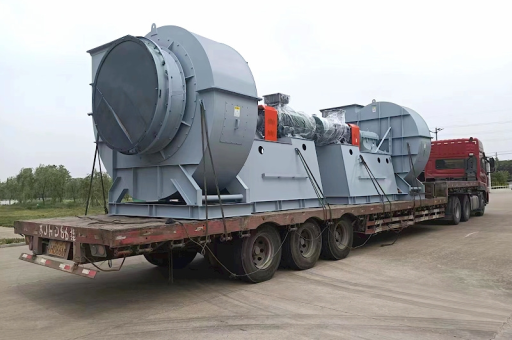
It appears you are describing a highly specific industrial fan, likely used in coal-fired power plants or heavy industrial boiler systems. Let's break down the terminology and engineering behind this piece of equipment, as the name combines several critical performance and durability features.
Here is a detailed explanation of each component of the name "Long Life Anticorrosion Backward Curved Coal Mill Boiler Fan" and how they work together.
Backward Curved (The Blade Design)
This is the aerodynamic "heart" of the fan. The blades curve away from the direction of rotation.
- How it works: Air enters the center of the wheel (the eye) and is thrown outward by centrifugal force. Because the blades are curved backward, the air exits the wheel at a lower velocity than in forward-curved fans.
- Key Characteristics:
- High Efficiency: They are the most efficient centrifugal fan design. The lower exit velocity means less energy loss due to friction and turbulence.
- Non-Overloading Power Curve: This is crucial for durability. The motor cannot burn out if the duct system becomes too open (less static pressure). The power draw peaks near the "duty point" and actually decreases at higher airflows.
- Lower Noise: Generally quieter than forward-curved or radial blade fans at the same duty.
Coal Mill / Boiler Fan (The Application)
This describes the fan's specific role in a coal-fired power plant.
- Coal Mill Fan (Primary Air Fan / Exhauster): This fan forces hot air into the coal pulverizer (the mill). The air dries the coal, carries the pulverized coal powder, and transports it to the burner. The air is often hot (300-400°C / 570-750°F), dusty, and contains abrasive coal particles.
- Boiler Fan (Forced Draft / Induced Draft):
- Forced Draft (FD) Fan: Pushes fresh air into the furnace for combustion. This air is clean but can be cold and corrosive if outside air is used.
- Induced Draft (ID) Fan: Pulls hot, dirty flue gas (the products of combustion) out of the boiler and sends it to the chimney. This gas is extremely hot, corrosive (contains sulfur, SOx, NOx), and very abrasive.
The fan is likely an Exhauster Fan (between the mill and the burner) or a Primary Air Fan (supplying the mill).
Anticorrosion & Long Life (The Material & Coating)
This is the critical value engineering part of the fan. Coal-fired environments are brutally corrosive due to:
- Sulfuric Acid: Coal contains sulfur. When it burns, it creates sulfur dioxide (SO2). In the presence of moisture (from the coal or combustion), this turns into sulfuric acid (H2SO4), which rapidly attacks standard carbon steel.
- Dew Point: When flue gas temperatures drop below the acid dew point, the acid condenses directly onto the fan blades, causing rapid pitting and failure.
How "Anticorrosion" is achieved for "Long Life":
- Wear-Resistant Liners: The fan housing and impeller are often lined with:
- Ceramic Tiles: Small, hard alumina tiles epoxied to the leading edges and wear zones of the blades. Extremely resistant to abrasion and acid.
- Hard Facing: Welded-on layers of high-chrome, nickel-based, or stellite alloys on the blade surface.
- Base Material: The fan is not made from standard steel. It is often fabricated from Corten Steel (weathering steel) or Stainless Steel (304L, 316L, or duplex grades like 2205) which offers inherent corrosion resistance.
- Protective Coatings: Advanced, high-temperature resistant paint systems (e.g., epoxy phenolic, zinc-rich primers, or fluoro-polymer topcoats) are applied to the internal and external surfaces.
- Design for Drainage: The scroll (housing) is designed with drains to prevent condensation from pooling at the bottom.
Why this combination is superior (The "Unique Selling Point")
A standard fan in a coal mill will fail in months due to erosion (from coal dust) and corrosion (from acid). This specific fan type solves those problems:
- Backward Curved provides the maximum efficiency for the high-pressure, moderate-flow requirements of a coal mill and boiler, and the non-overloading feature prevents the motor from burning out.
- Anticorrosion & Long Life ensures the fan can survive the acidic, abrasive, high-temperature environment for 3-5x longer than a standard fan, drastically reducing maintenance downtime.
Typical Specifications for such a fan
| Parameter | Typical Value |
|---|---|
| Type | Centrifugal, Single or Double Inlet |
| Blade Shape | Backward Curved (Airfoil or Plate) |
| Application | Primary Air, Mill Exhauster, FD Fan |
| Air Flow | 50,000 – 300,000 CFM (or higher) |
| Static Pressure | 20 – 60 inches w.g. (5000 – 15000 Pa) |
| Temperature | 150°F – 750°F (65°C – 400°C) |
| Drive | Motor via V-Belt, Coupling, or Direct Drive |
| Material (Impeller) | High Tensile Carbon Steel with Hard facing / Ceramic Lining or Stainless Steel |
| Housing | Heavy gauge steel with replaceable wear plates |
Common Problems it Solves
- Blade Failures: Standard fan blades wear through in 6-12 months. This fan's hard facing or ceramic coating extends that to 3-5 years.
- Unbalanced Vibration: Uneven wear from erosion causes the fan to wobble violently. Ceramic lining eliminates this wear pattern.
- Motor Overload: Forward curved fans have a "power climb" that can trip the motor. The backward curved design prevents this.
- Corrosion Pitting: Acid condensation eats through the housing. The anticorrosion coating and stainless steel mitigate this.
Recommendations for Procurement
If you are sourcing this fan, you must be specific about:
- Temperature Profile: (Continuous vs. Spikes)
- Gas Composition: (Sulfur content, moisture level, dust loading in grains per cubic foot)
- Mounting: (Indoor/outdoor, seismic zone)
- Testing: (Request a balance quality grade of G2.5 or better per ISO 1940, and a Non-Destructive Test (NDT) like dye penetrant on the blade welds).
In summary: A "Long Life Anticorrosion Backward Curved Coal Mill Boiler Fan" is a premium, engineered solution designed to operate reliably in the harshest environments of a coal-fired power plant, where standard equipment would fail quickly. It prioritizes efficiency (backward curve), survivability (anticorrosion), and uptime (long life).





