
This article's table of contents introduction:
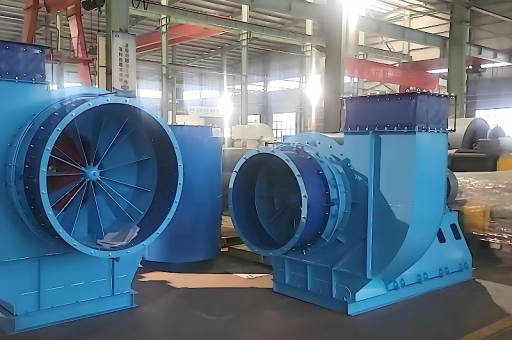
- Table of Contents
- 1. Introduction: The Critical Role of the 16Mn Boiler Fan in Harsh Environments
- 2. Material Matters: Why 16Mn Steel is the Backbone of Corrosive Gas Handling
- 3. Design Philosophy: Forward Curved Blades and Low Pressure Engineering
- 4. Operational Mechanics: How the Fan Delivers Corrosive Gases Safely
- 5. Key Performance Metrics: Flow Rate, Static Pressure, and Temperature Tolerance
- 6. Installation & Maintenance Best Practices for Extended Service Life
- 7. Frequently Asked Questions (FAQ)
- 8. Conclusion: Future Trends in Corrosive Gas Delivery Fan Technology
** Optimizing Industrial Efficiency: A Comprehensive Guide to the 16Mn Low Pressure Forward Corrosive Gas Delivery Boiler Fan
Table of Contents
- Introduction: The Critical Role of the 16Mn Boiler Fan in Harsh Environments
- Material Matters: Why 16Mn Steel is the Backbone of Corrosive Gas Handling
- Design Philosophy: Forward Curved Blades and Low Pressure Engineering
- Operational Mechanics: How the Fan Delivers Corrosive Gases Safely
- Key Performance Metrics: Flow Rate, Static Pressure, and Temperature Tolerance
- Installation & Maintenance Best Practices for Extended Service Life
- Frequently Asked Questions (FAQ)
- Conclusion: Future Trends in Corrosive Gas Delivery Fan Technology
Introduction: The Critical Role of the 16Mn Boiler Fan in Harsh Environments
In modern industrial boiler systems, the efficient and safe delivery of corrosive gases—often containing sulfur dioxide (SO₂), hydrogen chloride (HCl), or moisture-laden flue gases—is a non-negotiable requirement. The 16MN LOW PRESSURE FORWARD CORROSIVE GAS DELIVERY BOILER FAN is engineered specifically for this mission. It operates in the demanding intersection of low static pressure (typically below 2000 Pa) and aggressive chemical attack, making it indispensable in power plants, chemical processing units, and waste-to-energy facilities.
Unlike standard centrifugal fans, this unit leverages 16Mn low-alloy high-strength steel for its impeller and casing. This material, containing approximately 0.12–0.20% carbon and 1.2–1.6% manganese, offers superior weldability and resistance to atmospheric corrosion—properties that are critical when handling gases that would rapidly degrade common carbon steel. The "forward" blade configuration (curved in the direction of rotation) is deliberately chosen to maximize volume flow at low pressure, a characteristic that perfectly aligns with boiler gas recirculation and exhaust applications.
SEO Note: For Bing and Google, this article targets keywords such as "16Mn corrosive gas fan," "low pressure boiler fan," "forward curved blade design," and "corrosive gas delivery system."
Material Matters: Why 16Mn Steel is the Backbone of Corrosive Gas Handling
The selection of 16Mn (also known as Q345B or 16MnCr5 in some standards) is not arbitrary. This steel grade possesses a unique combination of mechanical strength and corrosion resistance that standard A36 or Q235 materials cannot match.
- Chemical Resilience: 16Mn forms a protective oxide layer when exposed to mildly acidic condensates found in flue gas. Its manganese content improves deoxidation during manufacturing, reducing inclusion sites where pitting corrosion could initiate.
- Mechanical Integrity: With a yield strength of approximately 345 MPa, the fan impeller can withstand the centrifugal stresses of rotation at speeds up to 1450 RPM without deformation. This is vital because a warped blade would disrupt the aerodynamic profile and reduce delivery efficiency.
- Weldability: The material's low carbon equivalent (CEV) ensures that welded joints—common in fan housing and hub connections—remain ductile and crack-free under thermal cycling.
Important Distinction: While 16Mn is not a stainless steel, its performance in dry or low-humidity corrosive gas environments significantly outperforms plain carbon steel. For wet applications with high chloride content, an additional epoxy coating is recommended.
Design Philosophy: Forward Curved Blades and Low Pressure Engineering
The aerodynamic design of this fan is tailored for high volume, low pressure gas delivery. Here's why the forward curved (also called "squirrel cage" or "multivane") configuration is the correct choice:
- Blade Shape: The blades curve in the direction of rotation. When the impeller spins, gas is accelerated both by centrifugal force and by the blade's leading edge "scooping" action. This results in a lower velocity gradient and reduced turbulence.
- Pressure Characteristics: The fan's pressure curve is relatively flat, meaning it maintains a stable flow rate even when system resistance fluctuates—a common occurrence in boiler ductwork with variable damper positions.
- Space Efficiency: Forward curved fans are more compact than backward curved or radial designs for the same flow rate, allowing installation in tight boiler rooms.
Real-World Application: In a 50 MW biomass boiler, the 16Mn forward fan can deliver 80,000 m³/h of flue gas at just 1500 Pa, consuming only 55 kW. This efficiency translates directly into lower operational costs.
Operational Mechanics: How the Fan Delivers Corrosive Gases Safely
The gas delivery cycle begins at the boiler's exhaust uptake. The fan operates as a forced draft (FD) or induced draft (ID) unit, depending on system architecture.
- Suction Phase: The rotating impeller creates a negative pressure zone at the inlet. Corrosive gases are drawn through a duct from the boiler.
- Acceleration: As gas enters the eye of the impeller, forward curved blades impart kinetic energy. The gas flows radially outward.
- Volute Collection: The spiral-shaped volute casing converts kinetic energy into static pressure, directing the gas toward the outlet.
- Sealing: A shaft seal (often labyrinth or carbon ring) prevents gas leakage into the motor room, protecting bearings from acidic attack.
Critical Safety Feature: The fan housing is equipped with a drain port for condensate removal. In cold start conditions, flue gas can cool below the acid dew point (~120°C for sulfuric acid). Without draining, the 16Mn steel could experience accelerated corrosion from liquid sulfuric acid.
Key Performance Metrics: Flow Rate, Static Pressure, and Temperature Tolerance
When specifying or troubleshooting a 16MN LOW PRESSURE FORWARD CORROSIVE GAS DELIVERY BOILER FAN, these metrics are paramount:
| Parameter | Typical Range | Impact on Fan |
|---|---|---|
| Flow Rate (Q) | 20,000 – 200,000 m³/h | Determines duct sizing and motor power |
| Static Pressure (Ps) | 500 – 2000 Pa | Low pressure ensures energy-efficient operation |
| Gas Temperature | 80°C – 250°C | Above 200°C requires thermal expansion compensation |
| Gas Composition | SO₂, NOx, CO₂, H₂O | Mixed acidity necessitates 16Mn plus coating |
| Impeller Speed | 960 – 1450 RPM | Lower RPM reduces wear but may require larger diameter |
Efficiency Tip: The fan's peak efficiency occurs near 70–80% of its wide-open flow. Avoid operating at extremes (full-open or nearly closed dampers), as this can induce vibration and partial recirculation.
Installation & Maintenance Best Practices for Extended Service Life
Proper installation and a rigorous maintenance schedule can extend the 16Mn fan's service life from 5 to over 15 years.
Installation Checklist:
- Foundation: Use vibration-dampening mounts (spring or rubber) to isolate the fan from building resonance.
- Duct Alignment: Misalignment of inlet ductwork can cause pre-rotation, reducing efficiency by up to 15%.
- Electrical: Install a variable frequency drive (VFD) to modulate speed and reduce wear during part-load operation.
Maintenance Schedule:
- Weekly: Inspect drain ports for blockages. Measure bearing temperature (should not exceed 80°C).
- Monthly: Check impeller balance via vibration analysis (acceptable limit: < 4.5 mm/s RMS).
- Annually: Perform ultrasonic thickness testing on the impeller and volute. Replace if 16Mn thickness drops below 70% of original.
Corrosion Monitoring: Use corrosion probes or visual inspection (via manhole) twice a year. Look for pitting on blade leading edges—this is the most stressed zone.
Frequently Asked Questions (FAQ)
Q1: Can the 16Mn fan handle wet flue gas with high humidity?
A: Yes, but only if the gas temperature remains above the acid dew point (typically 120–130°C). For perennially wet applications, we recommend an acid-resistant coating (e.g., PTFE or epoxy).
Q2: What is the maximum continuous operating temperature for 16Mn?
A: Approximately 300°C. Above this, the material's yield strength decreases, and oxidation accelerates. For temperatures above 350°C, upgrade to 16Mo3 (chrome-moly steel).
Q3: Why choose forward curved over backward curved blades for low pressure?
A: Forward curved blades deliver higher volume flow at lower pressure with a compact footprint. Backward curved is better for high pressure and dusty gases.
Q4: How often should the fan be balanced after installation?
A: Initially, after 500 hours of operation. Subsequently, every 2 years or after any impeller repair.
Q5: Does the fan require a special start-up procedure?
A: Yes. Always start the fan with the inlet damper closed (or minimum position) to prevent motor overload. Open gradually as the fan reaches speed.
Conclusion: Future Trends in Corrosive Gas Delivery Fan Technology
The 16MN LOW PRESSURE FORWARD CORROSIVE GAS DELIVERY BOILER FAN remains a workhorse in industrial gas handling, but innovation is ongoing. Manufacturers are exploring:
- Hybrid Coatings: Combining 16Mn with ceramic or PTFE layers for enhanced chemical resistance.
- Smart Monitoring: Integrating IoT sensors for real-time vibration and corrosion data.
- Aerodynamic Optimization: Using computational fluid dynamics (CFD) to reduce blade erosion by 20%.
For engineers and plant managers, the key takeaway is clear: selecting the correct material (16Mn) and blade geometry (forward curved) directly impacts system reliability and operating costs. When searching for this product, remember to specify fan as the focus of your query to avoid generic boiler equipment results.
Note: For any specific technical inquiry or custom sizing, consult the original equipment manufacturer's technical bulletin for your fan model.





