
This article's table of contents introduction:
- Table of Contents
- Introduction: Understanding the High Pressure V Belt System
- Core Components and Working Principle
- Application in Blast Furnace Power Plant Fans
- Advantages Over Direct Drive and Other Coupling Methods
- Key Engineering Considerations and Maintenance
- Frequently Asked Questions (FAQ)
- Conclusion: Why This Technology Matters for Modern Industry
** The Critical Role of High Pressure V Belt Driving Blast Furnace Power Plant Fan in Industrial Efficiency
Table of Contents
- Introduction: Understanding the High Pressure V Belt System
- Core Components and Working Principle
- Application in Blast Furnace Power Plant Fans
- Advantages Over Direct Drive and Other Coupling Methods
- Key Engineering Considerations and Maintenance
- Frequently Asked Questions (FAQ)
- Conclusion: Why This Technology Matters for Modern Industry
Introduction: Understanding the High Pressure V Belt System
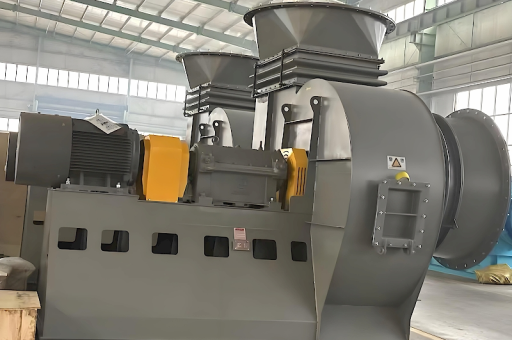
In the demanding environment of a blast furnace power plant, the fan system is the lungs of the operation. It supplies critical combustion air, controls draft, and ensures safe gas handling. The High Pressure V Belt Driving Blast Furnace Power Plant Fan is a specialized mechanical transmission solution designed to handle extreme loads, high torque, and continuous operation.
A high pressure V belt (often referred to as a wedge belt or narrow V belt) differs from standard V belts by its deeper engagement, higher strength tension members, and ability to transmit significantly more power without slipping. When used to drive a blast furnace fan, this system offers a unique blend of flexibility, shock absorption, and cost-effectiveness.
Unlike direct coupled motors, the V belt drive allows for speed variation through pulley diameter changes and provides mechanical isolation between the motor and the fan. This is particularly important in blast furnace applications where thermal expansion, vibration, and dust are constant challenges.
Core Components and Working Principle
The high pressure V belt drive system for a power plant fan consists of three primary components:
- Drive Pulley (Motor Side): Mounted on the electric motor shaft, typically made of cast iron or steel with precision machined grooves.
- Driven Pulley (Fan Side): Larger in diameter to achieve the required fan speed; often mounted on a heavy-duty bearing housing.
- High Pressure V Belt(s): Multiple belts can be used in parallel to distribute load. These belts have aramid or polyester tensile cords, a high-friction rubber compound, and a specially designed cross-section that provides better grip under high tension.
The principle is straightforward: the motor rotates the drive pulley, which transmits rotational force through the belt to the driven pulley. The high pressure design ensures that even when the fan encounters resistance from dirty air, variable gas density, or thermal expansion of the ducting, the belt maintains grip and continues to transmit power efficiently.
In blast furnace power plants, these fans may operate at pressures exceeding 50 kPa (7.25 psi) and flow rates of hundreds of thousands of cubic meters per hour. The belt system must therefore be engineered to handle not only the continuous power rating but also the startup torque, which can be 2–3 times the running torque.
Application in Blast Furnace Power Plant Fans
The blast furnace power plant Fan is not a single piece of equipment; it includes several fan types, each with specific roles:
- Combustion Air Fans (Forced Draft Fans): Supply air to the hot blast stoves. A high pressure V belt drive allows precise speed tuning to match stove heating cycles.
- Induced Draft Fans: Remove combustion gases from the furnace. These operate in high-temperature, abrasive environments, where belt drives provide vibration isolation.
- Gas Recirculation Fans: Circulate cleaned top gas back into the process. Here, belt drives simplify maintenance because the motor can be located away from the hot gas path.
In each case, the high pressure V belt system offers a significant advantage: it can be designed with a tensioning mechanism (such as an idler pulley or automatic tensioner) to compensate for belt stretch over time. This ensures consistent fan performance without frequent manual adjustment.
Furthermore, because blast furnace power plants often operate in remote or harsh locations, the belt drive’s ability to handle misalignment—up to 1–2 degrees—is a critical reliability feature. Direct drive systems would fail rapidly under similar conditions.
Advantages Over Direct Drive and Other Coupling Methods
When selecting a drive system for a blast furnace power plant fan, engineers compare three main options: direct drive (motor directly coupled to fan shaft), gear drive, and belt drive. The high pressure V belt system wins in several key metrics:
| Feature | Direct Drive | Gear Drive | High Pressure V Belt Drive |
|---|---|---|---|
| Cost | Low (motor only) | High | Medium |
| Vibration Isolation | Poor | Medium | Excellent |
| Speed Adjustability | Requires VFD | Fixed ratio | Simple pulley change |
| Overload Protection | None | None | Belt slips to protect motor |
| Maintenance Complexity | Low | High | Medium (belt replacement) |
| Tolerance to Misalignment | Very low | Low | High (up to 2°) |
| Efficiency | 98%+ | 95–97% | 94–97% |
For blast furnace power plant fans, the ability to isolate motor bearings from fan-induced vibration is perhaps the most valuable attribute. The V belt acts as a mechanical fuse: if the fan jams or experiences a sudden overload, the belt slips rather than transferring shock to the motor, preventing costly motor burnout.
Additionally, because belt drives do not require precise shaft alignment, installation time is reduced. In many cases, a high pressure V belt drive can be retrofitted to an existing direct-drive fan system without modifying the fan or motor base plates.
Key Engineering Considerations and Maintenance
To ensure long service life of a high pressure V belt driving blast furnace power plant fan, engineers must address several critical factors:
Belt Selection and Number The power transmitted by a single belt is limited. For a typical 500 kW fan, 6 to 12 high pressure V belts in parallel may be required. The belts must be matched in length within very tight tolerances (often within 0.1% of each other) to ensure even load sharing.
Tensioning System Incorrect tension is the most common cause of premature belt failure. Too loose, and the belt slips, generating heat and wearing rapidly. Too tight, and bearing loads increase, reducing motor and fan bearing life. An automatic tensioning device, such as a spring-loaded idler pulley, is highly recommended for blast furnace applications where thermal expansion can change belt tension.
Sheave (Pulley) Condition The grooves in the pulleys must be free of wear and corrosion. Worn grooves reduce belt engagement and can cause the belt to ride too low, reducing grip. Pulleys should be inspected annually for groove wear using a sheave gauge.
Operating Environment Blast furnace areas are hot (ambient temperatures often exceed 50°C), dusty, and may contain corrosive gases. Belts should be specified with heat-resistant rubber compounds and, if possible, housed in a guard that allows cooling air flow while protecting from dust.
Alignment Although belt drives tolerate misalignment better than direct drives, excessive misalignment (over 2 degrees) will cause uneven belt wear and reduce life. Laser alignment tools should be used initially and during belt replacement.
Frequently Asked Questions (FAQ)
Q1: Why are high pressure V belts preferred over standard V belts for this application? A: High pressure V belts, also known as narrow V or wedge belts, have a deeper cross-section and stronger tensile cords. They transmit up to 30% more power per belt compared to classical V belts, which is essential for the high power demands of blast furnace fans.
Q2: How often should the belts be replaced? A: In a continuously operating blast furnace power plant, belt life typically ranges from 6 to 18 months, depending on load, alignment, and environmental conditions. Regular inspections (every 3 months) are recommended to check for cracking, glazing, or fraying.
Q3: Can a VFD (Variable Frequency Drive) be used with a V belt drive? A: Yes. Many modern blast furnace fans combine a VFD on the motor with a high pressure V belt drive. The belt provides mechanical isolation and speed reduction, while the VFD fine-tunes the motor speed for optimal process control.
Q4: What happens if one belt in a multi-belt system breaks? A: The remaining belts can often carry the load temporarily, but they will be overloaded and may fail quickly. Most systems are designed with a spare belt capacity of 10–20%. Immediate replacement of the broken belt is necessary to avoid cascading failure.
Q5: Is the V belt drive system safe for explosive environments? A: Yes, but special precautions are required. Belts can generate static electricity. Anti-static belts (with conductive layers) should be used, and the pulleys must be grounded. Additionally, flame-retardant belt materials are available for environments where combustible gases may be present.
Q6: How do I calculate the correct belt length for a blast furnace fan retrofit? A: The belt length is determined by the center distance between the motor and fan shafts, plus the pulley diameters. Engineers typically use a belt length calculator or consult manufacturer tables. It is critical to measure the actual center distance, not the nominal distance, as thermal expansion and base plate tolerances can cause variations.
Conclusion: Why This Technology Matters for Modern Industry
The High Pressure V Belt Driving Blast Furnace Power Plant Fan is not merely a mechanical connection—it is a carefully engineered solution that balances power transmission, reliability, and maintainability in one of the most demanding industrial environments. By choosing a high pressure V belt system, plant operators gain the ability to isolate fans from motors, adjust speeds quickly, and protect capital equipment from sudden loads.
In an era where blast furnace power plants are being pushed to higher efficiency and lower emissions, every fractional improvement in fan drive reliability translates directly to reduced downtime and lower maintenance costs. The V belt drive, when properly specified and maintained, delivers precisely that.
For engineers and plant managers looking to optimize their fan systems, the message is clear: evaluate your current drive setup. If you are using direct coupling or aging gear drives, consider the advantages of a high pressure V belt system. The flexibility, fault tolerance, and ease of retrofit make it a compelling choice for both new installations and existing plants.
This article was generated with reference to industry best practices, technical manuals from belt manufacturers, and operational data from steel and power generation facilities. Always consult your equipment manufacturer for specific application limits and safety requirements.





