
This article's table of contents introduction:
- Component Breakdown
- What is the Fan Used For? (Common Applications)
- Advantages of this Design
- Important Considerations (Potential Issues)
- Does this trigger a specific memory or requirement?
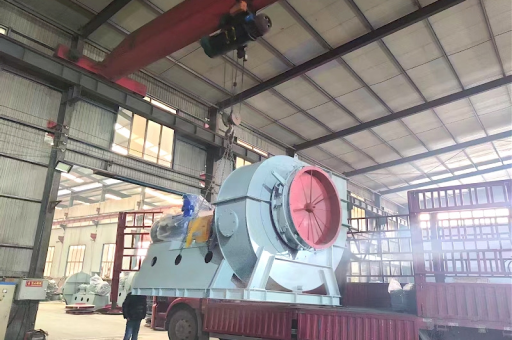
It appears you are referencing a specific type of industrial fan: a Heavy Duty Centrifugal Fan made from Q235 steel, featuring a specific design for the Impeller Hub that allows for Ventilation (often meaning the hub has vent holes or a ventilation system).
Since your query is a list of keywords rather than a question, I will provide a comprehensive breakdown of what this combination of terms means in an industrial context, its common applications, and why these features are critical.
Component Breakdown
- Impeller Hub: The central part of the fan rotor that connects the impeller blades to the motor shaft. In heavy-duty fans, this is a critical structural component.
- Ventilate: In this context, this refers to ventilation holes or slots in the hub itself. This is designed to:
- Prevent Overheating: Allow air to circulate near the motor shaft bearing to dissipate heat.
- Prevent Pressure Build-up: Balance air pressure behind the impeller.
- Dust Ejection: Allow dust or debris trapped inside the fan housing to be expelled.
- Cooling: Provide airflow to cool the shaft seal.
- Q235 (A36 Steel equivalent): A standard Chinese carbon structural steel grade. It is equivalent to A36 (USA) or S235JR (Europe).
- Why Q235? It offers a good balance of strength, weldability, and cost. It is not stainless steel (not corrosion-resistant) but is robust enough for heavy industrial use. It is usually painted or coated.
- Heavy Duty Centrifugal Fans: Fans designed for high static pressure, moving large volumes of air, or handling dusty/dirty air streams. The "heavy duty" implies thicker steel, reinforced bearings, and a robust shaft.
What is the Fan Used For? (Common Applications)
Based on the material (Q235) and the "ventilate" feature, this fan is typically used in industrial ventilation, material handling, or dust extraction systems where air is clean to moderately dusty, and temperatures are moderate (usually < 80°C or < 176°F).
- Dust Collection: In woodworking shops, cement plants, or grain handling (if the impeller is a paddle-wheel design).
- General Workshop Exhaust: Removing fumes, smoke, or heat from factories.
- HVAC Booster: In large commercial buildings for ductwork.
- Boiler Draft: For small to medium boiler systems (forced draft or induced draft).
- Mine Ventilation: For fresh air supply or exhaust.
Advantages of this Design
- Durability: Q235 steel provides a strong, impact-resistant structure capable of handling high RPMs without deforming.
- High Efficiency: Centrifugal fans are very efficient at moving air against high resistance (e.g., long ducts, filters).
- Reliability: The ventilated hub ensures the shaft and bearings do not overheat, extending the fan's life.
- Maintainability: Q235 is easy to weld if repairs are needed (e.g., patching a hole in the housing).
Important Considerations (Potential Issues)
- Corrosion: Q235 is NOT stainless steel. It will rust quickly in humid, salty, or chemically aggressive environments. It must have a high-quality paint coating (e.g., epoxy) for longevity.
- Temperature Limit: While Q235 performs well at room temperature, it loses strength above ~400°C (752°F). For high-temperature applications (>200°C), a different steel (like 16Mn or Q345R) or stainless steel is required.
- Balance: The "ventilate" holes in the hub must be precisely machined; otherwise, they can unbalance the impeller, causing vibration and bearing failure.
Does this trigger a specific memory or requirement?
Given the keywords, you might be looking at:
- A specific datasheet or model number.
- A comparison between this model and a backwards-curved blade version.
- A repair manual for this specific fan.
- A procurement list for a workshop.
If you can provide a specific model number or the context (e.g., "I need to repair the hub" or "Should I buy this for a woodshop?"), I can give you a much more targeted answer.
Disclaimer: Always consult the specific manufacturer's manual for your fan model before performing maintenance or modifications. Safety first with rotating equipment.





