
This article's table of contents introduction:
- Table of Contents
- Introduction: The Challenge of High-Temperature Air Movement
- What Is an Alloy Steel Antifraying High Temperature Centrifugal Blower Fan?
- Why Alloy Steel? Material Science Behind the Durability
- The "Antifraying" Feature: Preventing Structural Wear in Harsh Conditions
- Key Design Characteristics of High Temperature Centrifugal Fans
- Operating Principles: How It Moves Air at Extreme Temperatures
- Critical Industry Applications (Cement, Steel, Power, Chemical)
- Performance Metrics: Pressure, Flow, Temperature Limits
- Installation, Maintenance, and Safety Best Practices
- Frequently Asked Questions (FAQ)
- Conclusion: Why This Fan Is a Long-Term Investment
** The Ultimate Guide to Alloy Steel Antifraying High Temperature Centrifugal Blower Fan: Design, Benefits, and Industry Applications
Table of Contents
- Introduction: The Challenge of High-Temperature Air Movement
- What Is an Alloy Steel Antifraying High Temperature Centrifugal Blower Fan?
- Why Alloy Steel? Material Science Behind the Durability
- The "Antifraying" Feature: Preventing Structural Wear in Harsh Conditions
- Key Design Characteristics of High Temperature Centrifugal Fans
- Operating Principles: How It Moves Air at Extreme Temperatures
- Critical Industry Applications (Cement, Steel, Power, Chemical)
- Performance Metrics: Pressure, Flow, Temperature Limits
- Installation, Maintenance, and Safety Best Practices
- Frequently Asked Questions (FAQ)
- Conclusion: Why This Fan Is a Long-Term Investment
Introduction: The Challenge of High-Temperature Air Movement
Industrial processes that involve furnaces, kilns, boilers, or dryers generate extreme heat, often exceeding 400°C (752°F). Moving this hot, often abrasive air is not a task for standard equipment. Standard fans fail quickly due to thermal expansion, material fatigue, and erosion from particulate matter. This is where the Alloy Steel Antifraying High Temperature Centrifugal Blower Fan steps in. It is specifically engineered to withstand thermal stress while maintaining structural integrity, offering reliability in environments where failure is not an option.
This article provides a comprehensive, SEO-optimized deep dive into this industrial fan, covering its material science, antifraying technology, operational benefits, and industry use cases.
What Is an Alloy Steel Antifraying High Temperature Centrifugal Blower Fan?
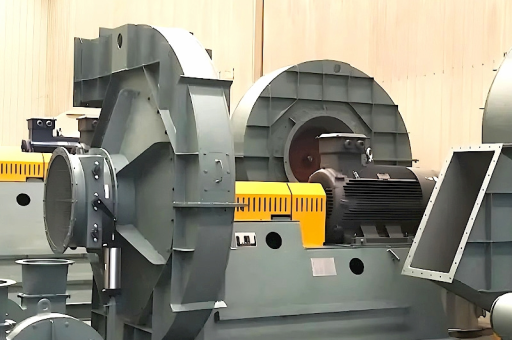
A centrifugal blower fan uses a rotating impeller to increase the velocity and pressure of air or gas. The "high temperature" variant is designed to handle gas streams ranging from 250°C to over 700°C. The "alloy steel" construction refers to the use of chromium, molybdenum, or nickel-based alloys rather than standard carbon steel. The "antifraying" feature specifically addresses the erosion and fraying of the impeller blades and housing caused by hot, abrasive particles (such as fly ash, clinker dust, or metal shavings). Unlike generic fans, this model resists cracking, warping, and material loss over extended operational cycles.
Why Alloy Steel? Material Science Behind the Durability
The choice of alloy steel is non-negotiable in high-temperature environments. Here is why:
- High Creep Resistance: At elevated temperatures, metals deform slowly under mechanical stress. Alloy steels maintain their shape and strength.
- Oxidation Resistance: Chromium-rich alloys form a protective oxide scale that prevents further corrosion from hot gases.
- Thermal Expansion Control: Alloy steel has a controlled coefficient of thermal expansion, reducing the risk of impeller rub against the housing.
- Hardness Retention: Unlike carbon steel, which softens above 300°C, alloy steels retain hardness and stiffness, preventing "fraying" of blade edges.
Common alloys used: AISI 310S (for up to 1000°C), Hastelloy X, and Inconel 601 for extreme conditions. The "antifraying" property is achieved through hardened surfaces or sacrificial wear liners.
The "Antifraying" Feature: Preventing Structural Wear in Harsh Conditions
"Fraying" in industrial fans refers to the gradual erosion of impeller blade edges and housing surfaces, often caused by high-velocity particulate impact. Over time, this leads to imbalance, vibration, and catastrophic failure.
The Alloy Steel Antifraying High Temperature Centrifugal Blower Fan addresses this through:
- Hardfacing: Application of tungsten carbide or stellite onto leading edges.
- Thick-Walled Scroll Housing: The casing is reinforced to absorb impact.
- Backward-Curved Blades: These blades reduce particle deposition and cushion collisions.
- Wear Liners: Replaceable liners protect the main structure, extending the fan's lifespan by 3x to 5x compared to untreated fans.
This design prevents "stringy" wear patterns that lead to fatigue cracks.
Key Design Characteristics of High Temperature Centrifugal Fans
Design features of this fan type include:
- High-Temperature Bearings: External bearing housings with cooling fins or water jackets to prevent lubricant breakdown.
- Expansion Joints: Allow the shaft and housing to expand without stress locking.
- Vibration Monitoring: Integrated ports for sensors to detect imbalance early.
- Aerofoil Impellers: Optimized for both high pressure and low noise.
- Shaft Seals: Prevent hot gas leakage into the environment.
Operating Principles: How It Moves Air at Extreme Temperatures
The fan operates on the centrifugal principle: Gas enters axially at the eye of the impeller. The rotating blades accelerate the gas radially outward. The volute (scroll) casing converts the high-velocity kinetic energy into steady pressure at the fan outlet. At high temperatures, the gas density decreases significantly, meaning the fan must handle a higher volumetric flow with lower mass flow. The alloy steel impeller is designed to withstand these density changes without stalling.
Critical Industry Applications (Cement, Steel, Power, Chemical)
- Cement Plants: Used for kiln exhaust, clinker cooling, and raw mill ventilation. Abrasive dust makes antifraying essential.
- Steel Mills: Moves hot flue gas from blast furnaces and electric arc furnaces (EAF). Temperatures exceed 600°C.
- Power Generation: Induced draft (ID) fans in thermal power plants must move hot flue gas with fly ash.
- Chemical & Petrochemical: Used in reactors and incinerators handling corrosive hot gases.
- Waste-to-Energy: Handles combustion gases from municipal solid waste incinerators.
Performance Metrics: Pressure, Flow, Temperature Limits
Typical specifications include:
- Temperature Range: 250°C to 750°C (with water cooling for bearing housings above 400°C).
- Static Pressure: Up to 7000 Pa (28 inches of water gauge).
- Airflow: Up to 500,000 m³/h (294,000 CFM).
- Wheel Diameter: From 500 mm to 4000 mm.
- Speed: 600 to 3000 RPM, depending on required pressure.
Efficiency is typically 75%–85% at the best efficiency point (BEP).
Installation, Maintenance, and Safety Best Practices
- Installation: Must include a thermal expansion allowance. Use flexible connectors and baseplates designed for heat dissipation.
- Maintenance: Weekly inspection of blade erosion patterns, bearing temperature monitoring, and vibration analysis. Replace wear liners proactively.
- Safety: Install emergency shut-off systems. Never operate beyond the rated temperature or particulate load. Lockout/tagout (LOTO) before any physical inspection.
Frequently Asked Questions (FAQ)
Q1: Can a standard centrifugal fan handle temperatures above 300°C? No. Standard carbon steel fans will warp, crack, and experience blade fraying. Only alloy steel fans with thermal compensation can operate reliably above 300°C.
Q2: How long does an antifraying high-temperature fan last? Properly maintained, these fans can last between 10 to 20 years. The antifraying liners may require replacement every 2–4 years, depending on particle load.
Q3: What is the typical cost difference compared to a mild steel fan? Alloy steel high-temperature fans are 30%–60% more expensive due to material costs and specialized welding. However, the total cost of ownership is lower due to reduced downtime and longer life.
Q4: How do I choose between backward-curved and forward-curved blades for high temperature? Backward-curved blades are preferred for high-temperature, abrasive environments because they are less prone to particle buildup and offer higher efficiency at high static pressures.
Q5: Can this fan be repaired instead of replaced? Yes. Many components—such as blades, wear liners, and shaft seals—are replaceable. However, if the main housing or shaft has thermal cracks, replacement is safer.
Q6: Is noise a concern with this fan type? These fans produce less noise than axial fans at the same pressure. However, for very high pressure applications, silencers can be installed on the inlet and outlet.
Q7: What certifications should a high-temperature blower fan have? Look for ISO 1940 (balance quality), ATEX (explosive environment compliance), and AMCA (air performance certification).
Q8: How does antifraying technology affect fan efficiency? Antifraying treatments, such as hardfacing, may slightly increase friction losses, but the gain in structural longevity far outweighs the minimal efficiency drop (typically <2%).
Conclusion: Why This Fan Is a Long-Term Investment
The Alloy Steel Antifraying High Temperature Centrifugal Blower Fan is not just a piece of industrial equipment; it is a critical reliability asset. It solves three fundamental problems of high-temperature air handling: material fatigue (via alloy steel), structural erosion (via antifraying surfaces), and thermal expansion (via engineered design). Industries that depend on continuous operation—such as cement, steel, power, and chemical processing—rely on these fans to maintain uptime. While the initial investment is higher than standard fans, the return on investment is delivered through minimal maintenance costs, reduced energy consumption, and extended service life. When selecting a fan for a new project or retrofit, prioritize alloy steel construction and validated antifraying features. For additional technical specifications or custom sizing, consult an industrial fan manufacturer to ensure your system is designed for the heat—and the future.





