
This article's table of contents introduction:
- What the Name Tells You
- Key Design Features to Look For
- Typical Applications
- Important Cautions
- Summary & Next Steps
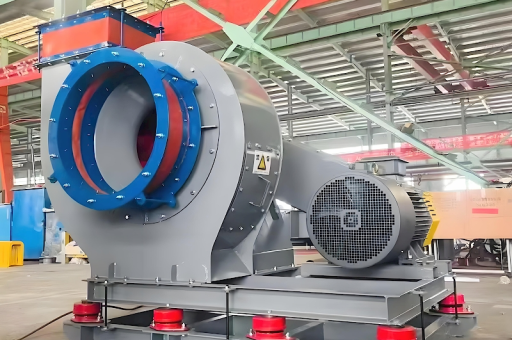
This sounds like a specification for a highly specialized industrial fan, likely used in pneumatic conveying, dust collection, or exhaust systems where the material being moved is abrasive, corrosive, or both.
Here is a breakdown of what that phrase means, the key features to look for, and typical applications.
What the Name Tells You
- Stainless Steel (SS): The fan is made from stainless steel (typically 304 or 316L). This is chosen for corrosion resistance (from moisture, chemicals, or acidic dust) or hygiene requirements (food, pharmaceutical industries). It is not typically the most abrasion-resistant material (hardened steel is better for pure abrasion).
- High Air Flow: The fan is designed to move a large volume of air (CFM / m³/h) at a relatively low to medium pressure. This suggests a radial or backward-curved centrifugal fan design, not an axial fan.
- Wear Resistant: The fan is specifically engineered to handle particulate-laden air (dust, chips, granules, powders) without the impeller or housing eroding quickly. This is achieved through:
- Thicker Materials: Heavier gauge metal.
- Reinforced Blades: Often with a thicker leading edge or a replaceable wear liner.
- Hardfacing: Application of a harder alloy (like Stellite or tungsten carbide) to the blade tips.
- Material Handling: This is the critical differentiator. The fan is designed to pass the material through the impeller. This is different from a "clean air" fan. The impeller blades are typically radial or radial-tipped, which are less efficient for air alone but much more tolerant of material impact.
- Blower Fan: In industrial terms, this often refers to a centrifugal fan capable of generating moderate to high static pressure, necessary for pushing material through long pipe runs or against filter resistance.
Key Design Features to Look For
If you are sourcing or specifying this fan, check for these specific details:
- Wheel Design:
- Radial Blades (Paddlewheel): The most robust design for handling heavy, sticky, or abrasive materials. Easy to weld repair.
- Backward-Inclined (BI): Slightly less tolerant of heavy debris but more efficient for high air flow. Must have a thick, reinforced blade.
- Wheel Material: 304 SS or 316L SS. Look for a "wear plate" or "liner" on the backplate and shroud.
- Housing:
- Volute Casing: Standard scroll design.
- Access Doors/Inspection Hatch: Crucial for clearing blockages or inspecting wear.
- Liner: An optional (but highly recommended) wear liner inside the housing that can be replaced without replacing the entire casing.
- Shaft & Bearings:
- Shaft: Oversized stainless steel shaft with a protective sleeve or coating where it passes through the housing (shaft seals are critical to prevent material from entering bearings).
- Bearings: Heavy-duty, pillow block bearings with extended lube lines and high-temperature grease. Often located outside the air stream.
- Seals:
- Shaft Seal: A high-quality, air-purged seal (e.g., labyrinth or ceramic packing) to prevent process gas or dust from leaking out and to keep contaminants from the bearings.
- Wear Protection Zones:
- Blade Tips: The highest wear area. Look for carbide hardfacing or replaceable hardened steel wear strips welded to the tip.
- Inlet Cone (Venturi): Often reinforced or replaceable.
- Cutoff (Volute Tongue): The point in the housing where the blade passes closest. This is a high-wear area and should be thick or have a sacrificial liner.
Typical Applications
- Pneumatic Conveying: Moving cement, sand, plastic pellets, grain, flour, wood chips, minerals.
- Dust Collection: In high-abrasion environments like sandblasting booths, mining operations, or metal grinding.
- Exhaust Systems: Fume exhaust from chemical processing or welding that contains hot, corrosive, and abrasive particles.
- Air Knife / Drying Systems: In food or textile processing where high-velocity, dry, sterile air is needed (stainless steel for cleanability).
Important Cautions
- Stainless Steel vs. Abrasion: 316SS is not as hard as AR400 (abrasion-resistant) steel. If the primary concern is pure sand or metal particles, a stainless steel fan will wear much faster. You are likely choosing SS for corrosion or hygiene reasons. If abrasion is the #1 concern, consider a carbon steel fan with a stainless steel coating or a fully hardened steel fan.
- Explosion Proofing: If the material is combustible (grain dust, metal dust, plastic particles), the fan must be ATEX (Europe) or Class II, Div 1 or 2 (North America) rated. This means:
- Non-sparking construction (stainless steel helps, but the impeller must be spark-resistant).
- Proper grounding of the fan.
- Shaft grounding rings to prevent static discharge.
- Impeller Balancing: A standard fan is balanced for clean air. A material-handling fan must be dynamically balanced to a higher tolerance to handle the unbalanced forces caused by the abrasive material.
Summary & Next Steps
| Feature | Why it matters |
|---|---|
| Stainless Steel | Corrosion resistance or hygiene (food/pharma). Not the best for pure abrasion. |
| High Air Flow | Large volume, moderate pressure (e.g., radial or BI wheel). |
| Wear Resistant | Thick metal, hardfaced blade tips, replaceable liners. |
| Material Handling | The fan passes the stuff through the wheel. Requires a robust, open design. |
Recommendation: If you are building or buying this:
- Specify the material type (e.g., "304 SS, 10-gauge housing, ¼-inch plate for impeller blades").
- Insist on a wear liner (replaceable, 1/8" to 1/4" thick 316SS or hardened steel).
- Demand hardfacing on the blade tips (e.g., "tungsten carbide overlay on the leading edge of all blades").
- Check the balance specification (e.g., "G2.5 dynamic balance after hardfacing").
Would you like me to help you write a detailed specification sheet for a vendor quote? If so, please tell me the air flow (CFM), static pressure (inches w.g.), material being handled, and operating temperature.





