
This article's table of contents introduction:
- Decoding the Terms
- The Likely Application
- Potential Features of this Fan
- Critical Considerations & Risks
- Alternatives & Comparison
- Summary
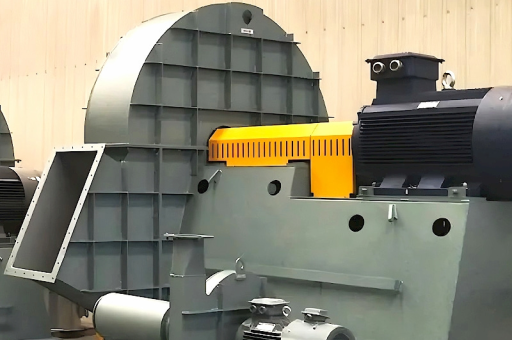
It appears you are describing a specific type of industrial fan. Let's break down the key terms you've provided and offer a technical interpretation, potential applications, and considerations. Since "HG785" is not a standard international steel grade (like ASTM or EN), it is most likely a Chinese standard high-strength low-alloy (HSLA) steel.
Here is a detailed breakdown of your query:
Decoding the Terms
-
HG785 Alloyed Steel:
- What it is: This is a Chinese national standard (GB/T 1591) grade, commonly referred to as Q690D or Q690E in newer standards. Its yield strength is around 690 MPa (100,000 psi).
- Why it's used: It offers an excellent strength-to-weight ratio. Using HG785 allows the fan to be lighter, stronger, and more resistant to fatigue than standard carbon steel (like Q235) or common alloy steels (like 16Mn).
- The Risk (Crucial): HG785 is prone to hydrogen-induced cracking (HIC) and has poor weldability if not handled correctly (strict preheating, low-hydrogen electrodes, and post-weld heat treatment are required).
-
Backward Antifraying:
- Backward: Refers to the fan blade design (Backward Curved / Backward Inclined). The blades curve away from the direction of rotation. This design is more efficient, has a stable power curve, and handles dustier gases better than forward-curved blades.
- Antifraying: This is likely a specific OEM term from the manufacturer (possibly "Anti-Fraying" or "Anti-Wear"). In fan design, this usually means:
- Wear Protection: The fan has been reinforced to resist erosion from particulate matter (ash, dust) in the gas stream.
- Liner Plates: Often, HG785 steel is used for the main impeller, with ablative or sacrificial wear plates (made of hardened steel or ceramic-lined) attached to the leading edges of the blades.
-
Boiler Centrifugal Fan:
- This is the application. The fan moves air or flue gas in a large industrial boiler system.
- Types:
- ID Fan (Induced Draft): Pulls hot, dirty flue gas from the boiler to the stack.
- FD Fan (Forced Draft): Pushes ambient air into the furnace.
- PA Fan (Primary Air): Supplies air to the coal mill to dry and transport fuel.
The Likely Application
Given the combination of HG785 (high-strength, wear-resistant) and Antifraying, this fan is most likely an Induced Draft (ID) Fan or a Primary Air (PA) Fan used in a coal-fired power plant, biomass boiler, or industrial furnace.
Why this combination is critical:
- Wear: Flue gas contains fly ash, sand, and unburnt carbon particles. These act like sandpaper, rapidly eroding standard steel blades. "Antifraying" describes the engineering solution to prevent the blade edges from fraying (eroding) into sharp, dangerous shapes.
- Strength: The high strength of HG785 allows the impeller to spin at high RPMs (needed for high pressure) while being thinner and lighter, reducing bearing load and start-up inertia.
- Fatigue: Boiler fans run 24/7. The high fatigue limit of HG785 prevents cracks from vibration and resonance.
Potential Features of this Fan
- Impeller: Fully welded or riveted construction using HG785 plate.
- Blades: Backward-curved (e.g., High Efficiency Backward Inclined or Airfoil). For antifraying, the leading edges are often covered with a tungsten carbide coating or have screw-on sacrificial wear plates.
- Casing: Usually made of standard carbon steel (Q235) or Corten steel, but the scroll liner (wearing surface) may also be HG785 or a thicker abrasion-resistant plate.
- Shaft: Often high-strength alloy steel (e.g., 42CrMo).
- Maintenance: These fans require regular thickness measurements on the blades (ultrasonic testing) to prevent catastrophic failure from wall thinning.
Critical Considerations & Risks
- Weldability is the #1 Problem: As mentioned, HG785 is notoriously difficult to weld. Do NOT attempt to weld this fan with standard welding rods (E6013 or E7018). It requires:
- Preheating: Typically 200°C - 250°C (400°F - 480°F).
- Low-Hydrogen Process: TIG or MIG with specialized wire (e.g., ER110S-G).
- Post-Weld Stress Relief: To prevent cracking.
- Impact Resistance: HG785 is strong but can be brittle, especially in cold climates. If the boiler gas is cold (e.g., start-up), a particle impact can crack a blade. A more ductile grade like HG70 (Q460) is sometimes preferred for cold-start applications, with HG785 used only for the wear liners.
- Balance: Because it's high-strength, the fan can spin faster, but the inertia is higher. Dynamic balancing is absolutely critical after any repair.
Alternatives & Comparison
| Feature | Your Fan: HG785 Backward Antifraying | Standard Fan: Q235 Carbon Steel | Advanced Fan: Inconel / Hastelloy |
|---|---|---|---|
| Cost | Medium-High | Low | Extremely High |
| Weight | Light (for its strength) | Heavy | Light |
| Wear Life | Very High (with liners) | Low (erodes quickly) | Extreme (corrosion resistant) |
| Weld Repair | Very Difficult (needs specialist) | Easy | Very Difficult |
| Max Temp | ~400°C (752°F) | ~400°C (752°F) | >800°C (1472°F) |
| Application | High wear, high temp (Coal, Biomass) | Clean air, low temp (HVAC) | Corrosive + High Temp (Waste-to-Energy) |
Summary
Your query describes a high-performance, heavy-duty industrial fan designed for the most punishing environments (coal boilers, cement kilns, steel mills). The HG785 steel is the key differentiator—it makes the fan lighter and more durable than standard steel, but it makes repair and fabrication extremely risky if not done by a certified team with proper welding procedures.
If you are buying a replacement fan: Ensure the manufacturer provides a Weld Procedure Specification (WPS) for the HG785 material. If you are repairing a fan: Stop. Review the material certification and hire a Certified Welding Inspector (CWI) familiar with high-yield alloys. A crack in the impeller can cause a catastrophic, high-energy explosion.





