
This article's table of contents introduction:
- Table of Contents
- Introduction: The Role of High-Performance Centrifugal Fans in Industrial Drying
- Anatomy of the Fan: Alloy Steel Construction and Double Suction Design
- Medium Pressure Dynamics: Balancing Airflow and Static Resistance
- Operational Efficiency in Drying Applications
- Frequently Asked Questions (FAQ)
- Conclusion: Optimizing Industrial Processes with Advanced Fan Technology
Article Title: Alloy Steel Double Suction Medium Pressure Drying Industrial Centrifugal Fans: Design, Performance, and Applications
Table of Contents
- Introduction: The Role of High-Performance Centrifugal Fans in Industrial Drying
- Anatomy of the Fan: Alloy Steel Construction and Double Suction Design
- Medium Pressure Dynamics: Balancing Airflow and Static Resistance
- Operational Efficiency in Drying Applications
- Frequently Asked Questions (FAQ)
- Conclusion: Optimizing Industrial Processes with Advanced Fan Technology
Introduction: The Role of High-Performance Centrifugal Fans in Industrial Drying
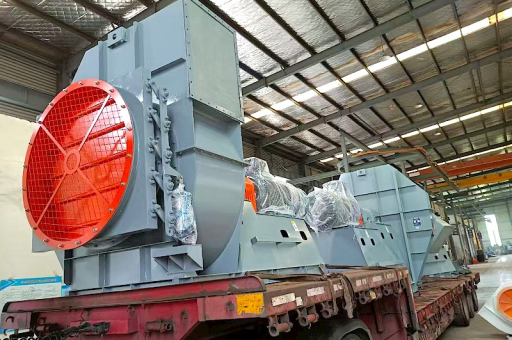
In heavy industries such as mining, steel production, food processing, and chemical manufacturing, the need for reliable and efficient air movement systems is critical. Among all fan types, the Alloy Steel Double Suction Medium Pressure Drying Industrial Centrifugal Fan represents a pinnacle of engineering tailored for processes where both high volume and moderate pressure are required. These fans are specifically designed for high-temperature, humid, or corrosive environments where standard carbon steel fans would rapidly degrade.
The drying process, in particular, demands a steady, powerful airstream to evaporate moisture from materials. Unlike high-pressure blowers that risk over-pressurizing ductwork, medium pressure fans offer an optimal balance. When combined with double suction rotors – which draw air from both axial sides – the fan achieves a higher flow rate while maintaining a compact footprint. This article explores the technical nuances of these machines, their material advantages, and their critical role in modern industrial drying systems.
Anatomy of the Fan: Alloy Steel Construction and Double Suction Design
The term "Alloy Steel Double Suction Medium Pressure Drying Industrial Centrifugal Fan" can be broken into four key technical pillars:
-
Alloy Steel Construction: The impeller, housing, and shaft are typically fabricated from low-alloy or high-alloy steel (e.g., 16MnR, Q345R, or stainless steel grades 304/316). This metal composition offers superior wear resistance and high-temperature strength. In drying applications where steam, hot air (up to 300°C or higher), or particulate matter is present, alloy steel mitigates corrosion and erosion. For example, high-chromium alloys are often used for impeller blades to resist abrasion.
-
Double Suction Configuration: Unlike single-suction fans where air enters from one side, the double suction (or "dual-inlet") rotor pulls air symmetrically from both sides of the impeller. This design balances the axial thrust forces, reducing stress on bearings and the motor. It also allows for a larger air intake area without increasing the fan’s diameter, making the unit inherently more stable at high rotational speeds.
-
Housing and Volute: The spiral volute housing is often reinforced with internal stiffeners to handle medium pressure loads. The design supports a direct or belt-driven configuration, and the outlet can be rotated to suit various duct layouts. Many designs also include an integrated drain plug to handle condensation, a common issue in drying loops.
Medium Pressure Dynamics: Balancing Airflow and Static Resistance
Medium pressure fans are classified by a pressure range typically between 1,000 Pa (4 in w.g.) and 4,000 Pa (16 in w.g.). This makes them distinct from low-pressure axial fans and high-pressure ring blowers.
The alloy steel double suction fan is engineered to operate efficiently in the medium pressure range for the following reasons:
-
Impeller Blade Profile: The impeller blades are often backward-curved (or backward-inclined). This design generates stable pressure-rise characteristics and prevents non-overloading power behavior. As system resistance increases – for example, when drying filters become dirty – the fan will not draw excessive current, protecting the drive train.
-
Efficiency Curve: Double suction fans exhibit a flatter efficiency curve over a wider flow range. In a drying system where the airflow demands may fluctuate (e.g., during batch drying cycles), this flat curve means the fan maintains good efficiency without dramatic energy loss.
-
Dimensional Optimization: By using the double suction method, the fan achieves a larger flow rate (m³/h) with a smaller impeller diameter. This reduces the footprint and makes installation easier in confined spaces.
Operational Efficiency in Drying Applications
In drying systems – such as flash dryers, spray dryers, tunnel dryers, or rotary drum dryers – the fan must overcome a specific set of challenges:
-
Thermal Expansion: The fan experiences significant temperature swings. Alloy steel, with its defined coefficient of thermal expansion, is machined with precise clearances to prevent the impeller from "rubbing" against the housing when hot.
-
Moisture and Condensation: During startup and shutdown, condensation can occur. The double suction design inherently provides a more direct path for airflow, reducing the chances of moisture pooling on the blades. Some manufacturers also apply a hydrophobic coating or use corrosion-resistant alloys specifically for wet drying applications.
-
Contaminant Handling: If the product being dried (e.g., sawdust, salt, plastic pellets) generates fine dust, the alloy steel construction resists pitting and structural degradation. Medium pressure is ideal for conveying such materials over moderate distances without requiring excessively heavy ductwork.
From an energy perspective, these fans can be paired with Variable Frequency Drives (VFDs). The flat pressure curve of a double suction fan allows precise speed tuning. Operators can reduce fan speed during low-demand drying periods and increase it during peak moisture removal, achieving up to 30% energy savings compared to fixed-speed systems.
Frequently Asked Questions (FAQ)
Q1: What is the advantage of alloy steel over carbon steel in a drying centrifugal fan?
Alloy steel offers superior oxidation resistance, higher tensile strength at elevated temperatures, and better corrosion resistance when exposed to condensation or chemical vapors. For high-temperature drying environments (above 200°C), alloy steel will maintain structural integrity longer than standard carbon steel, reducing replacement frequency.
Q2: Can a Double Suction Medium Pressure Fan be used for both supply air and exhaust?
Yes, these fans can be configured for either forced draft (supply) or induced draft (exhaust) duty. However, when used for exhaust in drying processes that contain moisture, solvents, or sticky particulates, the housing should be specified with a clean-out door and a sloped bottom to prevent material buildup.
Q3: How do you determine the correct fan speed for a specific drying application?
The correct speed is determined by the required airflow (CFM or m³/h) and system static pressure (SP). The fan manufacturer provides a performance curve for the specific impeller. By plotting your desired operating point (airflow vs. pressure) on that curve, you identify the RPM that meets your demand. Always ensure the operating point stays within the stable region of the curve (left of the peak pressure point).
Q4: What maintenance is required for alloy steel double suction fans in drying service?
Essential maintenance includes: periodic checks of bearing temperatures and vibration levels; inspection of impeller blades for material buildup or erosion; lubrication of bearings per manufacturer intervals; and verification of belt tension (if belt-driven). For alloy steel fans operating in extremely hot environments, thermal expansion monitoring is recommended.
Q5: Are these fans suitable for drying of flammable materials?
Fan can be built with spark-resistant construction (e.g., non-ferrous impeller tips, shaft grounding, and anti-static belts). For drying flammable dusts (e.g., wood, grain, or chemical powders), consult with the manufacturer about ATEX or NFPA compliance, and ensure the fan is not a source of ignition.
Conclusion: Optimizing Industrial Processes with Advanced Fan Technology
The Alloy Steel Double Suction Medium Pressure Drying Industrial Centrifugal Fan is more than just an air mover; it is a critical component designed for extended service life and process reliability. Its material construction directly addresses the challenges of thermal stress, corrosion, and abrasion. The double suction design allows for high flow rates with a smaller physical footprint and reduced bearing loads. By operating in the medium pressure range, it perfectly fills the gap between high-volume/low-pressure ventilators and high-pressure blowers, making it ideal for the demanding environment of industrial drying.
When selecting a fan for a drying installation, evaluating alloy steel and double suction configurations based on actual temperature and moisture parameters will yield better efficiency, lower downtime, and a stronger return on investment. By understanding the unique interplay of material science and airflow dynamics, industrial engineers can achieve precisely the moisture removal performance their processes require.





