
This article's table of contents introduction:
- The Material: Alloy Steel
- The Motor: Large Capacity AC Motor
- The Application: Building Ventilation
- The Type: Centrifugal Ventilation Fans
- Common Configurations for this Query
- Typical Specifications You Might Be Looking For:
- Are you looking to:
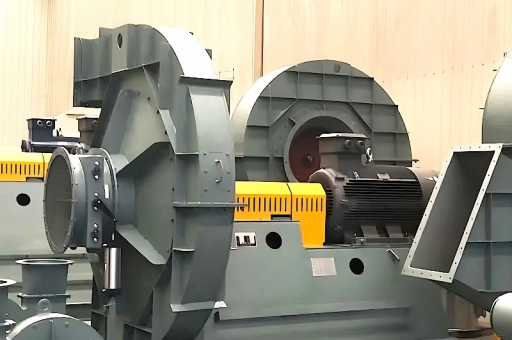
This appears to be a specification or search query for an industrial ventilation fan. It combines several specific engineering and material characteristics into one request.
Here is a breakdown of what each term means and the type of fan you are describing:
The Material: Alloy Steel
- What it means: The fan housing, impeller (wheel), or shaft is made from a specific alloy steel (like Corten, Chrome-Moly, or Stainless Steel), rather than standard carbon steel or aluminum.
- Why it’s used:
- Strength: Handles high static pressures and RPMs.
- Wear Resistance: Better for abrasive dust or particulate (e.g., cement, wood chips, mining).
- Corrosion Resistance: Suitable for mildly corrosive environments or high humidity.
- High Temperature: Withstands heat better than standard steel (common for exhaust from ovens or furnaces).
The Motor: Large Capacity AC Motor
- What it means: The fan is direct-drive or belt-driven by a high-power, industrial-grade alternating current electric motor.
- Characteristics:
- Horsepower: Typically ranges from 5 HP to 200+ HP (3.7 kW to 150+ kW).
- Voltage: Usually 230V, 460V, or 575V (3-phase).
- Enclosure: Often TEFC (Totally Enclosed Fan Cooled) or Explosion-proof (XP).
- "Large Capacity" usually implies high CFM (Cubic Feet per Minute) or high Static Pressure.
The Application: Building Ventilation
- Common uses for this type of fan:
- Industrial Plants: Removing welding fumes, dust, hot air, or chemical vapors.
- Power Plants: Boiler forced draft (FD) or induced draft (ID).
- Commercial Buildings: Parking garage exhaust, stairwell pressurization, or kitchen exhaust.
- Tunnels & Subways: Moving large volumes of air.
- Warehouses: General air circulation and cooling.
The Type: Centrifugal Ventilation Fans
- How it works: Air is drawn into the center of a rotating wheel (impeller) and expelled at a 90-degree angle (outward) due to centrifugal force.
- Why choose Centrifugal over Axial (like a propeller fan)?
- High Static Pressure: Can push air through long ductwork, filters, or restrictive dampers.
- Quieter Operation: Generally quieter than axial fans at the same airflow.
- Efficiency: More efficient for applications requiring pressure.
Common Configurations for this Query
| Configuration | Wheel Type | Typical Use |
|---|---|---|
| Backward Inclined (BI) | Flat blades, curved backward | Clean air, general HVAC, high efficiency. |
| Airfoil (AF) | Airfoil-shaped blades | Highest efficiency, lowest noise, clean air. |
| Radial / Paddlewheel | Straight, heavy-duty blades | Handling dust, sticky materials, grains (requires more power). |
| Forward Curved (FC) | Many shallow blades, curved forward | High volume, low pressure (often used in lighter commercial units). |
Typical Specifications You Might Be Looking For:
- Impeller Diameter: 20" to 60" (500mm to 1500mm).
- CFM: 10,000 to 100,000+ CFM.
- Static Pressure: 2" to 20" w.g. (inches water gauge) or higher.
- Temperature Rating: Up to 200°F (93°C) standard, or up to 600°F (315°C) with heat slinger.
Are you looking to:
- Buy one? You will need to specify CFM, Static Pressure, and voltage.
- Repair one? Check the bearings, shaft seals, and balance of the alloy steel impeller.
- Specify one for a design? You need an Alloy Steel Backward Inclined Centrifugal Fan for heavy duty, high pressure building ventilation.
If you need a recommendation or a specific product, please provide the desired CFM (airflow) and Static Pressure (resistance).





