
This article's table of contents introduction:
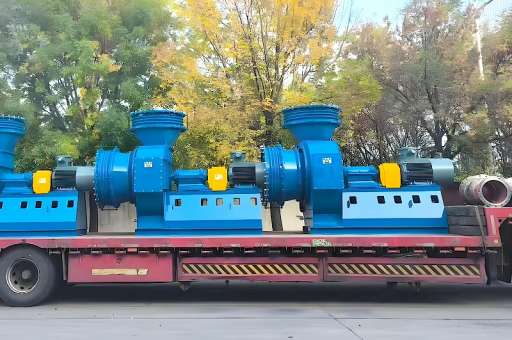
- Table of Contents
- Introduction to V Belt Driven Centrifugal Flow Fans
- What Does "Medium Pressure Backward Cooling" Mean?
- Key Components: V-Belt Drive System and Centrifugal Impeller
- How Does a Backward Curved Centrifugal Fan Differ from Other Types?
- Why Cooling Matters in Medium Pressure Fan Systems
- Applications: Where Are These Fans Most Effective?
- Performance Optimization: Efficiency, Noise, and Maintenance
- Frequently Asked Questions (FAQ)
- Conclusion: Choosing the Right V Belt Driven Centrifugal Flow Fan
*The Ultimate Guide to V Belt Driven Centrifugal Flow Fan: Medium Pressure Backward Cooling Design, Applications, and Optimization*
Table of Contents
- Introduction to V Belt Driven Centrifugal Flow Fans
- What Does "Medium Pressure Backward Cooling" Mean?
- Key Components: V-Belt Drive System and Centrifugal Impeller
- How Does a Backward Curved Centrifugal Fan Differ from Other Types?
- Why Cooling Matters in Medium Pressure Fan Systems
- Applications: Where Are These Fans Most Effective?
- Performance Optimization: Efficiency, Noise, and Maintenance
- Frequently Asked Questions (FAQ)
- Conclusion: Choosing the Right V Belt Driven Centrifugal Flow Fan
Introduction to V Belt Driven Centrifugal Flow Fans
In the world of industrial air movement, few configurations are as reliable and versatile as the V Belt Driven Centrifugal Flow Fan. This system combines the mechanical simplicity of a belt-driven transmission with the aerodynamic efficiency of a centrifugal impeller. When designed for medium pressure and equipped with backward curved blades for cooling applications, it becomes a workhorse for HVAC, process cooling, and ventilation systems.
Unlike direct-drive fans, the V-belt configuration allows operators to adjust fan speed easily by changing pulley diameters. This flexibility makes it ideal for facilities where airflow requirements fluctuate. According to industry data from sources like the Air Movement and Control Association (AMCA), belt-driven centrifugal fans account for over 40% of industrial fan installations due to their cost-effectiveness and ease of maintenance.
What Does "Medium Pressure Backward Cooling" Mean?
Breaking down the phrase:
- Medium Pressure: This typically refers to static pressure ranges between 2.5 and 7.5 inches water gauge (in. wg) or roughly 620–1870 Pa. These fans are designed to overcome moderate resistance in ductwork, filters, and cooling coils.
- Backward: Refers to the blade orientation. Backward-curved (or backward-inclined) blades lean away from the direction of rotation. This design reduces air turbulence and allows higher efficiency at medium pressures.
- Cooling: The fan is optimized for moving air across heat exchangers, radiators, or electronic enclosures. Cooling duty requires consistent airflow even under varying backpressure.
Why backward cooling matters: In medium pressure systems, backward-curved blades produce a non-overloading power curve. This means the motor will not draw excessive current if duct resistance decreases—a critical safety feature for continuous cooling operations.
Key Components: V-Belt Drive System and Centrifugal Impeller
A V Belt Driven Centrifugal Flow Fan consists of three primary subsystems:
- Motor and V-Belt Drive: An AC induction motor (typically 3-phase) transmits power via a belt wrapped around motor and fan pulleys. The belt tension and alignment directly affect vibration and efficiency. A well-maintained V-belt drive can achieve 94–97% mechanical efficiency.
- Centrifugal Impeller (Backward Curved): The impeller draws air into the center of the fan (axial intake) and accelerates it radially outward. Backward-curved blades generate higher static pressure with lower noise compared to forward-curved designs.
- Housing and Scroll: The fan housing collects the discharged air and directs it to the outlet. The clearance between the impeller and the housing (cutoff distance) must be optimized to prevent recirculation.
Expert tip: For cooling applications, look for impellers made of corrosion-resistant materials such as galvanized steel or aluminum, and ensure the V-belt drive is equipped with a tension adjustment mechanism.
How Does a Backward Curved Centrifugal Fan Differ from Other Types?
| Feature | Backward Curved | Forward Curved | Radial (Paddle) |
|---|---|---|---|
| Efficiency | High (75–85%) | Moderate (60–70%) | Low (50–60%) |
| Pressure Capability | Medium to High | Low to Medium | High |
| Airflow Stability | Excellent | Poor at low flow | Good |
| Noise Level | Low | Moderate | High |
| Overload Protection | Non-overloading | Overloading possible | Non-overloading |
For medium pressure backward cooling applications, the backward-curved design is superior. It delivers stable airflow even when filters become dirty, and it produces less heat due to higher aerodynamic efficiency. This directly benefits cooling systems by reducing the temperature rise across the fan itself.
Why Cooling Matters in Medium Pressure Fan Systems
Cooling fans must maintain consistent airflow under varying thermal loads. In a V Belt Driven Centrifugal Flow Fan designed for medium pressure cooling:
- Airflow consistency: The backward blade curve prevents stall and surge at partial flow rates, which is common when cooling coils cause fluctuating resistance.
- Temperature rise control: A high-efficiency fan minimizes the heat added to the airstream. A fan operating at 80% efficiency versus 65% can reduce motor heat gain by 20–30%, improving overall system thermal performance.
- Belt drive advantages: The V-belt system isolates the motor from fan vibration, extends bearing life, and allows motor replacement without disassembling the fan rotor.
Real-world example: A data center cooling system using medium pressure V-belt driven fans with backward impellers reported 18% energy savings compared to forward-curved alternatives, while maintaining inlet air temperature within ±1°C.
Applications: Where Are These Fans Most Effective?
- HVAC and Commercial Ventilation: Used in rooftop units (RTUs) and air handlers for medium-pressure ductwork.
- Industrial Cooling Towers: Backward inclined fans handle moist, corrosive air efficiently.
- Electronic Enclosure Cooling: Medium pressure ensures airflow through dense server racks and heat sinks.
- Agricultural Ventilation: Poultry and livestock barns require consistent air movement under varying filter loads.
- Manufacturing Dust Collection: When paired with baghouse filters, these fans overcome medium static pressures.
Key takeaway for buyers: Always match the fan’s operating point to the system curve. A V-belt drive makes it easy to adjust by changing pulley ratios.
Performance Optimization: Efficiency, Noise, and Maintenance
To get the most from a V Belt Driven Centrifugal Flow Fan in cooling applications:
- Pulley ratio selection: Choose pulleys so the fan operates near its peak efficiency region (usually 70–80% of full open flow).
- Belt tension guidelines: Use a belt tension gauge. Too loose — slippage and overheating. Too tight — bearing wear and energy waste.
- Inlet and outlet configurations: Install inlet cones and smooth duct transitions. Sharp edges can reduce efficiency by 10–15%.
- Noise control: Backward-curved fans are quieter than forward-curved, but vibration isolators and sound-attenuating ducts further reduce noise levels.
- CFD optimization: Modern manufacturers use Computational Fluid Dynamics (CFD) to sculpt blade profiles for lower turbulence. Choose fans with published AMCA performance curves.
Maintenance checklist: Monthly bearing lubrication, quarterly belt check, annual impeller cleaning.
Frequently Asked Questions (FAQ)
Q1: Can I use a forward-curved fan instead of a backward-curved for medium pressure cooling?
A1: Not recommended. Forward-curved fans have an overloading power characteristic — if duct resistance suddenly drops, motor current can spike dangerously. Backward-curved fans are inherently non-overloading.
Q2: How does belt-driven vs. direct-driven affect cooling performance?
A2: Belt-driven offers speed adjustability and motor isolation, but direct drive has higher mechanical efficiency (no belt losses). For medium pressure cooling where flexibility is critical, V-belt drive is preferred.
Q3: What is the maximum temperature this fan can handle?
A3: Standard models handle up to 80°C (176°F). High-temperature versions with special grease and shaft seals can operate at 120–150°C.
Q4: Why does my fan vibrate after belt replacement?
A4: Check pulley alignment using a straightedge or laser alignment tool. Even 1mm offset can cause significant vibration. Also ensure belt tension is within manufacturer specs.
Q5: What does "medium pressure" mean for fan selection?
A5: It means the fan is designed to overcome system resistance of 2.5–7.5 in. wg. For lower pressure, choose axial fans. For higher pressure (above 10 in. wg), consider airfoil blade designs.
Conclusion: Choosing the Right V Belt Driven Centrifugal Flow Fan
The V Belt Driven Centrifugal Flow Fan with Medium Pressure Backward Cooling design is an optimal solution for applications requiring reliable, adjustable, and efficient air movement under moderate resistance. Its backward-curved impeller provides non-overloading performance, low noise, and stable air delivery—critical for cooling systems where thermal consistency is paramount.
Final recommendations for engineers and buyers:
- Verify that the fan’s published performance curve matches your system’s expected resistance range.
- Select a fan with AMCA-certified ratings for air and sound performance.
- For belt-drive reliability, use premium V-belts (e.g., notched or cogged belts) and maintain proper alignment.
- Always consider inverter-ready motors if future speed control might be needed.
Whether you are upgrading an existing cooling system or designing a new ventilation network, this fan configuration offers a proven balance of technical performance, operational flexibility, and long-term reliability. For more detailed selection tools and product specifications, consult reputable fan manufacturers or their certified distributor networks.





