
This article's table of contents introduction:
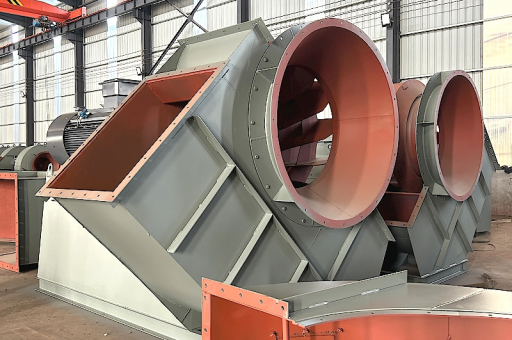
- Introduction: What Is an Alloy Steel Forced Draft Boiler Fan?
- Why Alloy Steel? Material Properties and Anticorrosion Advantages
- Large Capacity Design: Engineering for High-Volume Airflow
- Forced Draft vs. Induced Draft: Key Differences in Boiler Systems
- Anticorrosion Technologies: Coatings, Linings, and Alloy Selection
- Applications in Power Plants, Petrochemical, and Marine Industries
- Maintenance Best Practices for Long Service Life
- Frequently Asked Questions (FAQ)
- Conclusion: Investing in Durability and Efficiency
** The Ultimate Guide to Alloy Steel Forced Draft Boiler Fans: Large Capacity, Anticorrosion Design & Industry Applications
Table of Contents
- Introduction: What Is an Alloy Steel Forced Draft Boiler Fan?
- Why Alloy Steel? Material Properties and Anticorrosion Advantages
- Large Capacity Design: Engineering for High-Volume Airflow
- Forced Draft vs. Induced Draft: Key Differences in Boiler Systems
- Anticorrosion Technologies: Coatings, Linings, and Alloy Selection
- Applications in Power Plants, Petrochemical, and Marine Industries
- Maintenance Best Practices for Long Service Life
- Frequently Asked Questions (FAQ)
- Conclusion: Investing in Durability and Efficiency
Introduction: What Is an Alloy Steel Forced Draft Boiler Fan?
A forced draft boiler fan is a critical component in industrial boiler systems. Its primary function is to supply a controlled amount of combustion air into the furnace, ensuring optimal fuel combustion efficiency. When operating under demanding conditions—such as high temperatures, corrosive flue gases, or continuous heavy-duty cycles—standard carbon steel fans often fail prematurely. This is where the alloy steel forced draft boiler fan enters the picture.
These fans are engineered with high-strength alloy steels (e.g., chrome-molybdenum, stainless steel grades) to withstand large capacity airflow demands while resisting corrosion caused by acidic condensates, sulfur compounds, or moisture-laden air. Whether used in utility boilers, waste-to-energy plants, or marine vessels, these fans deliver reliability that standard fans cannot match.
Why Alloy Steel? Material Properties and Anticorrosion Advantages
High-Temperature Strength
Alloy steels retain mechanical integrity at elevated temperatures (up to 600°C or more), unlike carbon steel which loses strength above 400°C. This is vital for forced draft fans operating near burners or heat exchangers.
Corrosion Resistance
The addition of chromium, nickel, and molybdenum creates a passive oxide layer that resists pitting and chemical attack. In environments with high sulfur content (e.g., heavy oil or coal combustion), alloy steel prevents rapid degradation.
Fatigue and Wear Resistance
Large capacity fans rotate at high speeds, generating cyclic stresses. Alloy steel’s higher yield strength and fatigue limit extend fan blade and impeller life, reducing unplanned downtime.
Large Capacity Design: Engineering for High-Volume Airflow
A large capacity forced draft boiler fan must move thousands of cubic meters of air per minute (e.g., 100,000+ m³/h) against moderate static pressures (up to 5000 Pa). Design considerations include:
- Impeller Geometry: Backward-curved or airfoil blades minimize energy loss while handling large air volumes.
- Housing Stiffness: Heavy-gauge alloy steel construction prevents vibration and resonance at high flow rates.
- Shaft and Bearing Sizing: Oversized shafts and anti-friction bearings accommodate the torque and radial loads of high-capacity operation.
Accurate aerodynamic modeling ensures that the fan delivers the required airflow with minimal power consumption—critical for reducing operational costs in large industrial facilities.
Forced Draft vs. Induced Draft: Key Differences in Boiler Systems
While both fans serve combustion air management, they operate in different pressure zones:
| Feature | Forced Draft (FD) Fan | Induced Draft (ID) Fan |
|---|---|---|
| Location | Before the boiler furnace | After the heat exchangers |
| Pressure | Positive (pushes air into furnace) | Negative (pulls flue gas out) |
| Gas condition | Clean, ambient air | Hot, corrosive flue gas |
| Material requirement | Moderate corrosion resistance | Maximum corrosion & wear resistance |
| Typical alloy | Chrome-moly steel | Stainless steel with cladding |
For forced draft applications, anticorrosion protection is still essential because moisture in intake air can condense on cold surfaces, forming acidic solutions that attack unprotected metals.
Anticorrosion Technologies: Coatings, Linings, and Alloy Selection
To maximize the lifespan of an alloy steel forced draft boiler fan, manufacturers employ multiple anticorrosion strategies:
A. Alloy Selection
- ASTM A387 (Chrome-Moly): Excellent for moderate temperatures and sulfur resistance.
- Duplex Stainless Steel (e.g., 2205): High strength + pitting resistance for wet intake conditions.
- Hastelloy or Inconel: For extreme chemical exposure (optional for niche applications).
B. Surface Coatings
- Epoxy-phenolic coatings: Bond to alloy steel surfaces, resisting acids and alkalis.
- Zinc-rich primers + urethane topcoats: Galvanic protection for areas with condensation risks.
- Ceramic-filled paints: Thermal barrier + corrosion barrier for hot spots.
C. Internal Linings
- Rubber or PTFE linings: Applied to fan housing and inlet boxes where corrosive droplets form.
- Stainless steel cladding: Roll-bonded or weld-overlaid on impeller blades for maximum life.
Real-world example: A power plant in a coastal region switched from carbon steel to alloy steel with epoxy coating, extending fan replacement intervals from 2 years to 8+ years.
Applications in Power Plants, Petrochemical, and Marine Industries
| Industry | Typical Use Case | Why Alloy Steel + Anticorrosion? |
|---|---|---|
| Power generation | Coal/biomass boiler FD fan | Sulfur in flue gas causes acid dewpoint corrosion |
| Petrochemical | Process heater FD fan | Moisture + H₂S in combustion air |
| Marine | Ship boiler FD fan | Salt-laden air accelerates galvanic corrosion |
| Waste-to-energy | Incinerator FD fan | Chlorides and acid gases from waste |
In each case, the fan must handle large capacity airflow (often 50–150 m³/s) while maintaining structural integrity for 20+ years of continuous operation.
Maintenance Best Practices for Long Service Life
Even the best alloy steel fan requires regular attention:
- Inspect coatings annually: Look for blisters, cracks, or delamination. Touch up with compatible paint.
- Monitor vibration: Unusual vibration may indicate blade erosion or imbalance.
- Check drain ports: Ensure condensate drains freely to prevent pooling.
- Verify shaft alignment: Misalignment causes premature bearing and seal wear.
- Replace gaskets and seals: Deteriorated seals allow moisture ingress into bearing housings.
Proactive maintenance directly correlates to system reliability and reduced total cost of ownership.
Frequently Asked Questions (FAQ)
Q1: How do I know if I need an alloy steel forced draft fan instead of carbon steel?
A: If your environment includes high humidity, sulfur, chlorides, or temperatures above 400°C, alloy steel is mandatory. Perform a lifecycle cost analysis—alloy steel often pays back within 3–5 years through reduced replacement and repair costs.
Q2: Can a forced draft fan be retrofitted with anticorrosion coatings later?
A: Yes. Surface preparation (e.g., abrasive blasting) and application of high-performance coatings can restore a carbon steel fan. However, the base metal may already have weakened if corrosion has begun internally.
Q3: What is the typical price range for a large capacity alloy steel FD fan?
A: Pricing varies widely based on size, material grade, and features. A 100,000 m³/h fan with duplex stainless steel impeller may range from $50,000 to $150,000. Custom engineering adds to cost but ensures optimal performance.
Q4: How do forced draft fans compare to centrifugal air compressors for boiler applications?
A: For draft fans are low-pressure, high-volume machines (typically under 15 kPa). Compressors operate at higher pressures but lower volumes and are rarely used for boiler combustion air due to higher energy consumption and maintenance complexity.
Q5: Where can I find certified manufacturers of anticorrosion alloy steel fans?
A: Reputable industrial fan manufacturers with API 610 or ISO 1940 certification offer alloy steel variants. Always request material test certificates (MTCs) and performance curves.
Conclusion: Investing in Durability and Efficiency
The alloy steel forced draft boiler fan with large capacity and anticorrosion protection represents the gold standard for modern industrial combustion systems. By selecting the appropriate alloy grade, applying robust coatings, and following structured maintenance, plant operators can achieve decades of trouble-free operation.
Whether you are upgrading an aging fan or designing a new facility, prioritizing alloy steel and corrosion-resistant design is not an expense—it is an investment in uptime, safety, and operational efficiency. Consult with experienced fan engineers to match the fan specifications precisely to your boiler’s duty cycle and environmental conditions.
For more detailed technical recommendations, contact a certified fan specialist or review ISO 13778 guidelines for boiler fan applications.





