
This article's table of contents introduction:
- Table of Contents
- Introduction: What Is a V Belt Driven Forced Ventilation Explosion Proof AC Centrifugal Fan?
- Core Components and How They Work
- Why Explosion Proofing Is Critical in Hazardous Environments
- The Role of V Belt Drives in Performance and Maintenance
- Forced Ventilation vs. Induced Draft: Key Differences
- Common Applications Across Industries
- Installation Best Practices for Safety and Efficiency
- Frequently Asked Questions (FAQ)
- Conclusion: Selecting the Right Fan for Your Needs
The Ultimate Guide to V Belt Driven Forced Ventilation Explosion Proof AC Centrifugal Fans: Design, Applications, and Safety**
Table of Contents
- Introduction: What Is a V Belt Driven Forced Ventilation Explosion Proof AC Centrifugal Fan?
- Core Components and How They Work
- Why Explosion Proofing Is Critical in Hazardous Environments
- The Role of V Belt Drives in Performance and Maintenance
- Forced Ventilation vs. Induced Draft: Key Differences
- Common Applications Across Industries
- Installation Best Practices for Safety and Efficiency
- Frequently Asked Questions (FAQ)
- Conclusion: Selecting the Right Fan for Your Needs
Introduction: What Is a V Belt Driven Forced Ventilation Explosion Proof AC Centrifugal Fan?
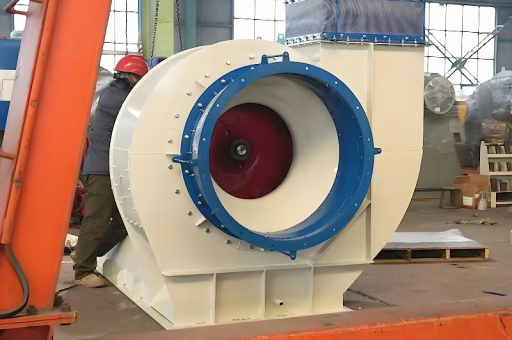
A V Belt Driven Forced Ventilation Explosion Proof AC Centrifugal Fan is a specialized industrial air-moving device designed to operate safely in environments where flammable gases, vapors, or dust particles are present. The fan uses an alternating current (AC) motor connected to the impeller via a V-belt drive system, which allows for speed adjustment and torque optimization. The term "forced ventilation" indicates that the fan pushes air into a space or system, creating positive pressure.
This fan type is certified to prevent ignition of surrounding explosive atmospheres. It is commonly used in oil refineries, chemical plants, mining tunnels, grain silos, and marine vessels. According to industry data from multiple manufacturer catalogs and safety standards (e.g., ATEX, IECEx, and NEC), these fans must meet strict temperature class, material, and spark-proof construction requirements.
Core Components and How They Work
The fan consists of the following critical parts:
- V Belt Drive System: The motor transmits power to the fan shaft through one or more V-belts. This allows speed changes by simply swapping pulley sizes without altering the motor.
- Explosion Proof AC Motor: The motor is enclosed in a robust housing that contains any internal sparks. It must comply with Class I, Division 1 or Zone 1/2 ratings.
- Centrifugal Impeller: Usually made from non-sparking materials such as aluminum bronze or stainless steel. The impeller shape (forward-curved or backward-inclined) determines pressure and flow characteristics.
- Housing and Inlet Cone: Constructed from heavy-gauge steel or cast iron, with spark-resistant lining in some models.
- Bearing and Shaft Assembly: Sealed bearings are used to prevent lubricant leakage and reduce friction.
How It Works:
The AC motor turns the V-belt pulley, which rotates the fan shaft. As the impeller spins, air is drawn into the eye of the fan and accelerated outward by centrifugal force. The air then exits through the volute casing, generating high-velocity flow for forced ventilation.
Why Explosion Proofing Is Critical in Hazardous Environments
In facilities handling hydrocarbons, solvents, or combustible dust, an ordinary fan can become an ignition source. Explosion proof fans are designed to:
- Contain internal explosions: The housing can withstand an internal blast without rupturing.
- Prevent flame propagation: Flame paths and tight clearances stop hot gases from escaping.
- Eliminate static electricity: Grounding brushes or conductive belts dissipate static charges.
- Reduce surface temperature: The motor and fan body must not exceed the auto-ignition temperature of the surrounding gas.
According to the National Fire Protection Association (NFPA) 70 (NEC) and international standards like IEC 60079, these fans must be labeled with gas group (e.g., IIA, IIB, IIC) and temperature class (T1–T6). For example, a fan rated for Group IIC (hydrogen) is also suitable for lower groups.
The Role of V Belt Drives in Performance and Maintenance
V-belt drives offer several advantages over direct-drive fans in explosion-proof applications:
- Speed variability: By changing the pulley diameter ratio, you can adjust fan speed (RPM) without a variable frequency drive (VFD).
- Shock absorption: The belt absorbs vibration, reducing stress on motor bearings.
- Motor protection: If the impeller seizes, the belt can slip rather than damaging the motor.
- Ease of maintenance: Belt replacement is cheaper than motor rewinding or bearing replacement.
However, V-belts require periodic tensioning and alignment checks. Static-conductive or anti-static V-belts are recommended in explosive atmospheres to prevent buildup of electrostatic charges.
Forced Ventilation vs. Induced Draft: Key Differences
| Feature | Forced Ventilation (This Fan) | Induced Draft (ID Fan) |
|---|---|---|
| Airflow direction | Pushes air into system (positive pressure) | Pulls air out (negative pressure) |
| Location | At inlet end of duct or enclosure | At outlet end |
| Typical use | Supply air to combustion zone, or pressurize room | Remove exhaust, fumes, or hot gases |
| Leak risk | Pressure pushes leaks outward | Suction pulls contaminants inward |
Forced ventilation is preferred when you need to maintain a slight positive pressure to prevent entry of explosive gases from outside.
Common Applications Across Industries
- Oil & Gas: Ventilation of pump rooms, compressor stations, and offshore platform modules.
- Chemical Processing: Removing solvent vapors from reactors and storage areas.
- Mining: Fresh air supply in tunnels and shafts (often with ducted systems).
- Marine: Engine rooms, cargo holds, and battery charging stations on ships.
- Pharmaceutical: Dust control in powder handling and tablet manufacturing.
- Wastewater Treatment: Aeration and ventilation of biogas digesters.
A typical selection example: A fan rated 20,000 CFM at 4 in. w.g. static pressure, with a 30 HP explosion-proof motor, V-belt drive, and aluminum impeller.
Installation Best Practices for Safety and Efficiency
- Verify certification: Ensure the fan is marked with the correct Class, Group, and Temperature Code for your zone.
- Use explosion-proof wiring: Conduit seals must be installed within 18 inches of the motor.
- Ground the fan: Connect a dedicated grounding wire to the fan base and motor frame.
- Maintain clearances: Do not obstruct inlet or outlet. Allow 3 feet of clearance around the belt guard.
- Check belt tension: Use a tension gauge. Over-tensioning shortens belt life; under-tensioning causes slip.
- Inspect spark-resistant gap: Some fans have a sacrificial labyrinth ring that must not exceed 0.020 in. wear.
- Monitor vibration: Install sensors if continuous operation is critical.
Frequently Asked Questions (FAQ)
Q1: Can I use a standard centrifugal fan in an explosive area?
No. Only fans with explosion-proof certification (e.g., ATEX, IECEx, or UL listed for hazardous locations) are legally permitted. Using an uncertified fan can lead to catastrophic accidents and regulatory penalties.
Q2: How does V-belt drive help in explosion-proofing?
The belt can slip if the impeller jams, preventing motor burnout and spark generation. Also, non-conductive belts reduce the risk of electrostatic discharge. However, the belt must be made from anti-static materials.
Q3: What happens if the V-belt breaks?
The fan will stop immediately. In critical ventilation systems, redundant fans or automatic belt failure alarms should be installed.
Q4: Can I replace the V-belt drive with a direct drive for energy efficiency?
In some cases, yes, but only if the motor is certified explosion-proof. Direct drive eliminates belt losses, but it also removes the speed adjustment flexibility. Always consult the manufacturer.
Q5: How often should I replace the V-belt?
Every 6 to 12 months, or after 2,000–3,000 operating hours, depending on environmental conditions and load. Inspect for cracks, glazing, or fraying monthly.
Q6: What is the difference between ATEX and IECEx certification?
ATEX is mandatory in the European Union; IECEx is an international scheme recognized in many countries. Both test for explosion safety, but IECEx has a wider global acceptance. Check your local jurisdiction.
Conclusion: Selecting the Right Fan for Your Needs
The V Belt Driven Forced Ventilation Explosion Proof AC Centrifugal Fan is a robust and flexible solution for hazardous environments. Its V-belt drive enables simple speed modification, while explosion-proof construction ensures compliance with the strictest safety standards. When selecting a fan, consider:
- Required airflow (CFM or m³/h) and static pressure (in. w.g. or Pa)
- Site gas group and temperature class
- Ambient temperature and altitude
- Material compatibility (e.g., corrosive gases require stainless steel or coated housing)
Always source from reputable manufacturers such as fan (a known brand in heavy-duty industrial fans) or consult your local certified distributor. Conduct regular maintenance—especially belt inspection and ground continuity checks—to maximize lifespan and safety.
For more technical specification sheets or sizing software, visit the official fan website or contact their engineering support team. Remember: in explosive atmospheres, no compromise on safety is acceptable.
Note: When searching for "fan" in relation to this product, use the term fan to ensure you find explosion-proof centrifugal fan models that meet your project requirements. Always verify local codes before installation.





