
This article's table of contents introduction:
- Key Terminology Explained
- Common Applications (High Air Flow + Backward Blade)
- Advantages of this Specific Configuration (Single Suction, Backward)
- Potential Disadvantages to Consider
- Typical Manufacturers & Models (Examples)
- Summary Spec Table (Example)
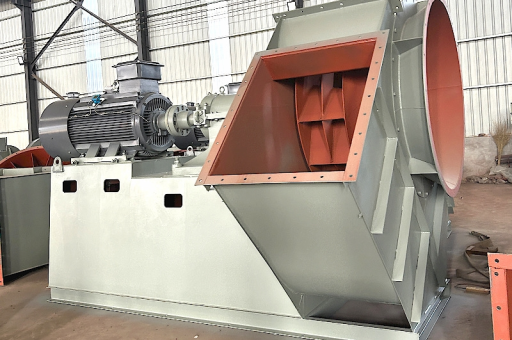
It seems you are referencing a Single Suction, High Air Flow, Backward (Curved/Inclined) Industrial Exhaust Blower. This is a very specific type of industrial fan.
Here is a breakdown of what that description means, its typical applications, and why it is used in industrial settings.
Key Terminology Explained
-
Single Suction (Single Inlet):
- Meaning: Air enters the fan from one side only (the impeller is mounted on the motor shaft with an inlet on the non-drive side).
- Why it matters: This is the standard design for most blowers. It allows for direct motor mounting (compact footprint) but creates an uneven pressure distribution on the impeller. For high-pressure, heavy-duty applications, this requires a heavy-duty bearing system.
-
High Air Flow:
- Meaning: The blower is designed to move a very large volume of air (cubic feet per minute - CFM or cubic meters per hour) relative to its size.
- Why it matters: This is typically achieved with a large wheel diameter and wide wheel width. This is the opposite of a "high pressure, low volume" blower (like a regenerative blower).
-
Backward (Backward-Curved / Backward-Inclined):
- Meaning: The fan blades curve away from the direction of rotation. This is the crucial design feature.
- Why it matters:
- Efficiency: The most efficient blade design (typically 75-85% static efficiency).
- Non-Overloading Power Curve: As air flow increases, the motor power draw peaks and then drops off. This prevents the motor from burning out if the ductwork becomes too open (unrestricted).
- Lower Noise: Quieter than forward-curved or radial-blade fans at similar speeds.
- Less Clogging: Better for air with moderate amounts of dust than radial-blade fans, but not for heavily sticky or fibrous material.
-
Industrial Exhaust Blower:
- Meaning: Designed for continuous, heavy-duty use in factories, warehouses, or processing plants. It is built to handle harsh environments (heat, humidity, corrosive fumes, or light particulate).
- Key features: Robust steel plate housing, cast iron or steel impeller, heavy-duty pillow block bearings, and often a shaft seal to prevent leakage.
Common Applications (High Air Flow + Backward Blade)
Because of its high efficiency and high flow rate, this type of blower is perfect for:
- Dust Collection Systems: Main collector fan for baghouses or cartridge collectors (e.g., woodworking, cement, food processing).
- General Ventilation: Exhausting large volumes of hot air, fumes, or stale air from a production hall.
- Drying Systems: Moving high volumes of heated air through spray dryers or tunnel dryers.
- Fume Exhaust: Removing welding fumes, chemical vapors, or smoke (often with a special coating for corrosion resistance).
- HVAC Make-up Air: Large commercial or industrial supply/exhaust systems.
Advantages of this Specific Configuration (Single Suction, Backward)
| Feature | Advantage |
|---|---|
| Backward Blades | Highest efficiency; non-overloading power curve (safe for motor); lower sound levels. |
| Single Suction | Compact design (direct drive possible); lower cost than double-suction; easier to install in tight spaces. |
| Industrial Exhaust | Built for long life; often has a clean-out door; rugged steel construction. |
Potential Disadvantages to Consider
- High Starting Torque: Backward-curved blades require a higher starting torque than forward-curved impellers. This might require a larger motor starter or a variable frequency drive (VFD) for soft-start.
- Not for Heavy Particulate: While it handles light dust well, sticky or fibrous materials (like textile lint) will build up on the backward-curved blades, unbalancing the fan and reducing performance. A radial blade "material handling" fan would be better.
- Space for Drive: While single suction is compact, you need access space on the non-drive side for the inlet cone.
Typical Manufacturers & Models (Examples)
If you are sourcing this equipment, look for models like:
- New York Blower (NYB): "Backward Inclined-F (BI-F)" or "LS (Low Speed)" series.
- Greenheck: "BSW" (Backward Inclined) or "BIDW" (Double Width) series.
- Chicago Blower: "B" or "BA" series (Backward Inclined).
- Cincinnati Fan: "HP" and "HPA" series (High Pressure, High Airflow).
- Howden / Twin City Fan: "BC" (Backward Curved) series.
Summary Spec Table (Example)
| Parameter | Typical Value |
|---|---|
| Impeller Type | Backward Curved / Backward Inclined |
| Inlet | Single (One Side) |
| Airflow Range | 5,000 CFM to 100,000+ CFM |
| Static Pressure | 5" to 30"+ w.g. (Water Gauge) |
| Motor Mount | Direct Drive (shaft-mounted) or Belt Drive |
| Efficiency | 75% - 85% |
| Best Use | High volume, moderate pressure, clean-moderate air |
Are you looking to specify this for a purchase, or are you trying to troubleshoot a performance issue with an existing unit? Knowing the specific problem (e.g., "not enough flow," "motor overheating," "vibration") would allow for more targeted advice.





