
This article's table of contents introduction:
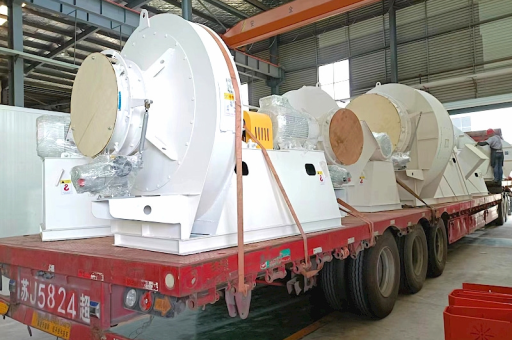
- Introduction: The Role of Heavy Duty Centrifugal Fans in Modern Industry
- Core Mechanisms: How Heat Dissipation and Dust Blowing Work
- Key Design Features of Industrial Dust Blowers
- Performance Metrics: Pressure, Airflow, and Energy Consumption
- Common Applications Across Manufacturing Sectors
- Maintenance Best Practices for Longevity
- Frequently Asked Questions (FAQ)
- Conclusion: Selecting the Right Fan for Your Facility
** Maximizing Efficiency with Heavy Duty Centrifugal Fan: Heat Dissipation and Industrial Dust Blower Solutions
Table of Contents
- Introduction: The Role of Heavy Duty Centrifugal Fans in Modern Industry
- Core Mechanisms: How Heat Dissipation and Dust Blowing Work
- Key Design Features of Industrial Dust Blowers
- Performance Metrics: Pressure, Airflow, and Energy Consumption
- Common Applications Across Manufacturing Sectors
- Maintenance Best Practices for Longevity
- Frequently Asked Questions (FAQ)
- Conclusion: Selecting the Right Fan for Your Facility
Introduction: The Role of Heavy Duty Centrifugal Fans in Modern Industry
In high-temperature manufacturing environments, a heavy duty centrifugal fan is not a luxury—it is a necessity. These fans are engineered to move large volumes of air against significant resistance, making them indispensable for heat dissipation, dust collection, and pneumatic conveying. Unlike standard axial fans, centrifugal designs generate higher static pressure, which is critical when air must pass through ducts, filters, or long pipelines.
The heavy duty centrifugal fan serves dual roles: it removes excess heat from machinery and processes, and it acts as an industrial dust blower to keep work areas clean and compliant with health regulations. According to industrial ventilation standards, poorly designed airflow can reduce equipment lifespan by 30% and increase energy costs by up to 20%. Therefore, understanding the technical nuances of these fans allows facility managers to optimize both safety and operational budgets.
Core Mechanisms: How Heat Dissipation and Dust Blowing Work
Heat Dissipation: In steel mills, foundries, or chemical plants, equipment generates immense thermal energy. A heavy duty centrifugal fan pulls hot air away from furnaces, motors, or reactors and expels it outside. This prevents thermal buildup that could warp components or cause system shutdowns. The backward-curved impeller design, common in high-efficiency models, reduces turbulence and allows for quieter operation while maintaining airflow rates above 50,000 CFM (cubic feet per minute).
Industrial Dust Blower Function: Dust particles—whether from cement, wood, or metal grinding—must be captured at the source. An industrial dust blower creates negative pressure at collection hoods, then propels particulate-laden air through cyclones or baghouse filters. The centrifugal force generated by the impeller separates heavier debris from the airstream, reducing filter clogging. This dual action ensures that fine dust (below 10 microns) is efficiently removed, protecting worker lungs and sensitive electronics.
Question & Answer:
Q: Why is a centrifugal fan better than an axial fan for dust blowing?
A: Centrifugal fans produce higher static pressure, which is essential for overcoming the resistance of ducts, elbows, and filters. Axial fans lose pressure quickly when faced with such restrictions, making them unsuitable for long-distance dust transport.
Key Design Features of Industrial Dust Blowers
When selecting an industrial dust blower, several engineering details determine performance:
- Impeller Material: For abrasive dust (e.g., sand or glass), the impeller should be made from AR400 steel or coated with a wear-resistant layer. For corrosive fumes, stainless steel (316L) is mandatory.
- Housing Construction: A heavy-duty casing with reinforced welds prevents vibration at high RPMs. Fans operating above 3,000 RPM should have dynamic balancing certified to ISO 1940 G6.3 or better.
- Drive vs. Direct Drive: Belt-driven fans allow speed adjustments via pulley changes, which is useful when dust loading varies. Direct-drive setups are more compact and require less maintenance, but may need a variable frequency drive (VFD) for speed control.
- Sealing Against Leaks: Air leaks can reduce suction efficiency. Gasketed access doors and labyrinth seals around the shaft prevent fugitive dust emissions, which is critical for compliance with OSHA or EPA regulations.
Question & Answer:
Q: What CFM range is typical for a heavy duty industrial dust blower?
A: Depending on the application, small units start at 1,000 CFM, while large central systems can exceed 100,000 CFM. The required airflow is calculated based on the volume of the work area, the number of dust generation points, and the transport velocity needed to keep particulate suspended.
Performance Metrics: Pressure, Airflow, and Energy Consumption
Proper fan selection relies on understanding the system curve—the relationship between airflow (measured in CFM) and static pressure (measured in inches of water gauge, inWG). A heavy duty centrifugal fan must match this curve to avoid overloading the motor or stalling the impeller.
- Fan Laws: When speed changes, airflow varies directly with RPM; pressure varies with RPM²; and power consumption varies with RPM³. Thus, a 10% increase in speed leads to a 33% increase in power draw.
- Specific Speed (Ns): This dimensionless number helps engineers decide between radial, backward-inclined, or airfoil blade profiles. For high-pressure dust blowing, specific speeds between 1,000 and 3,000 are typical.
- Energy Efficiency: Modern fans can achieve 80-85% static efficiency. Using a VFD to modulate fan speed based on real-time temperature or dust concentration reduces energy waste by 40% compared to damper control.
Question & Answer:
Q: How do I calculate the required pressure for a duct system?
A: Sum the friction losses from straight duct runs (use the Darcy-Weisbach equation), plus dynamic losses from elbows, tees, and filters. Most manufacturers provide online calculators or technical manuals to simplify this step.
Common Applications Across Manufacturing Sectors
- Cement Plants: Heavy-duty fans remove hot gases from rotary kilns and transport pulverized coal to burners.
- Woodworking Facilities: Automated industrial dust blower systems capture sawdust at planers, sanders, and CNC routers, preventing fire hazards.
- Pharmaceutical Processing: Clean-in-place (CIP) systems use stainless steel centrifugal fans to remove toxic powders without contaminating production batches.
- Automotive Painting Booths: Precise airflow control ensures overspray is captured and solvent vapors are diluted below explosive limits.
In each case, the same heavy duty centrifugal fan core design is adapted with different materials, coatings, or inlet configurations to meet specific process needs.
Maintenance Best Practices for Longevity
To keep a heavy duty centrifugal fan operating at peak performance:
- Inspect the Impeller Weekly: Look for wear patterns, cracks, or accumulated dust that unbalances the wheel. Imbalance causes premature bearing failure.
- Lubricate Bearings Properly: Use the recommended grease (e.g., NLGI #2 with high-temperature stability) and avoid over-greasing, which leads to overheating.
- Monitor Vibration Levels: Use a handheld vibration meter monthly. Trending data helps detect developing faults in belts, bearings, or motor alignment.
- Check Belt Tension: A slipping belt reduces airflow and wastes energy. Tension should allow approximately 1 inch of deflection per 12 inches of belt span.
- Clean or Replace Filters: Clogged filters increase static pressure, causing the fan to operate at a lower airflow point on the curve, which may overload the motor.
Question & Answer:
Q: Can I retrofit a standard fan with a VFD for energy savings?
A: Yes, but verify that the motor is inverter-duty rated and that the fan’s resonant speeds are avoided within the operating range. Retrofitting may also require upgrading the pulley system.
Frequently Asked Questions (FAQ)
Q1: What is the lifespan of a heavy duty centrifugal fan under continuous operation?
A: With proper maintenance, a well-built fan lasts 10–20 years. Critical components like bearings and belts typically need replacement every 2–5 years depending on duty cycle.
Q2: How do I reduce noise from an industrial dust blower?
A: Install sound-dampening duct liners, use a fan with lower tip speed (below 3,500 fpm), or add a commercial silencer on the inlet and outlet. Enclosing the fan in a separate room is the most effective solution.
Q3: What is the difference between a heavy duty centrifugal fan and a blower?
A: In practice, the terms are often interchangeable. However, "blower" usually implies higher pressure (above 2 inWG) and direct handling of particulate-laden air, while "fan" may refer to a broader range of airflow devices.
Q4: Can I use a standard fan for corrosive fume extraction?
A: No. Corrosive gases require a fan with a coated housing (e.g., epoxy, PVC, or fiberglass) and a spark-resistant impeller (aluminum or non-ferrous). Standard steel models will fail quickly.
Conclusion: Selecting the Right Fan for Your Facility
Choosing the correct heavy duty centrifugal fan for heat dissipation and dust blowing is a critical decision that directly impacts production uptime, worker safety, and energy costs. Start by defining your process requirements: the highest temperature, dust type, airflow distance, and acceptable power budget. Work with a reputable manufacturer who provides performance curves and allows you to test the fan under simulated load conditions.
Remember that a heavy duty centrifugal fan is an investment in your plant’s reliability. Properly sized and maintained, it will serve as the silent workhorse behind your production lines. The industrial dust blower function ensures that your facility meets environmental regulations while keeping the floor clear and the air breathable. Prioritize quality components, schedule routine inspections, and never underestimate the importance of matching the fan’s operating point to your system curve.
For more detailed guidance, consult engineering resources from fan manufacturers or accredited ventilation standards (e.g., AMCA 201 or ASHRAE 52.2). Your facility deserves nothing less than optimal air management.





