
This article's table of contents introduction:
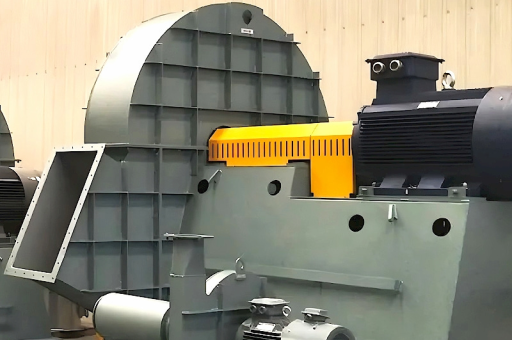
- What is it?
- Key Features of Forward Curved Fans
- Common Uses (Dust Collection)
- Critical Limitations (Dust Collector Use)
- What to verify before buying/using
- Similar Products / Alternatives
- Bottom Line
Based on the description you provided, it sounds like you are looking at a specific model of industrial dust collection fan—specifically a Single Inlet Forward Curved (SIFC) fan.
The part number or model code "4909-9817" is likely a specific manufacturer's serial number, while "M3/H" (Cubic Meters per Hour) indicates the airflow capacity range.
Here is a breakdown of what this item is and common considerations for purchasing or using it:
What is it?
- Type: Forward Curved Centrifugal Fan.
- Configuration: Single Inlet (air enters from one side of the impeller).
- Material: Aluminium Alloy (impeller/housing).
- Capacity: 4,909 to 9,817 m³/h (approx. 2,888 to 5,777 CFM).
- Application: Dust collector systems, HVAC, and material handling.
Key Features of Forward Curved Fans
- High Volume, Low Pressure: These fans move a large volume of air against relatively low static pressure (resistance).
- Compact Size: They are smaller than backward curved fans for the same airflow.
- Aluminium Alloy: This makes the fan lighter and corrosion-resistant (good for dry dust, but not for sparks or explosive dust unless specifically rated).
Common Uses (Dust Collection)
- Woodworking: Connecting to bag houses or cartridge dust collectors for sawdust and chips.
- Pharmaceutical & Food Processing: Handling light powders.
- HVAC: Exhaust systems where space is limited.
Critical Limitations (Dust Collector Use)
- NOT for heavy dust: Forward curved fans are prone to "blade loading" (dust sticking to the blades) because the blades curve in the direction of rotation. They require cleaning or they will vibrate.
- NOT for sparks: Unless it is specifically an "ATEX" or "Spark-Resistant" variant (e.g., AMCA Type B or C), an aluminium fan housing with a steel wheel can cause sparks if metal hits metal. For wood dust, this is a fire risk.
What to verify before buying/using
- Speed (RPM): What RPM is required to achieve the CFM at your duct static pressure?
- Motor HP: A 4909-9817 m3/h range typically requires a motor between 3 HP (2.2 kW) and 7.5 HP (5.5 kW) depending on pressure.
- Duty: Is this a continuous duty (industrial) fan or a light commercial unit? The part number looks like it might be from a specific distributor (e.g., Dayton, Grainger, or a Chinese OEM like Sigma or Xinxing).
- Bearings: Greaseable pillow block bearings are preferred for dust collector duty.
Similar Products / Alternatives
If you find the specific model is unavailable, look for:
- "Single Inlet Forward Curve" (SIFC)
- "Dayton 1TDU7" or "Dayton 1TDU8" (common equivalent ranges)
- "Cincinnati Fan HP-Series"
- "New York Blower" (higher quality, more expensive)
Bottom Line
This fan is suitable for moderate dust collection systems (dedicated to one machine or a small shop) where airflow is 5,000–10,000 m3/h and static pressure is under 4-5 inches w.g.
⚠️ Warning: If you are using this for wood dust or combustible dust, you must ensure the fan is spark-resistant (aluminum wheel, steel housing, or brass ring) and properly grounded.
Do you have a specific make/model number, or are you trying to find a replacement part (e.g., a wheel or housing)? If you share more context (e.g., brand, photo, motor specs), I can give a more precise recommendation.





