
This article's table of contents introduction:
- Introduction: What Is a Grey Blue Material Handling Blower?
- Key Characteristics of a Stainless Steel Centrifugal Fan
- Why Grey Blue Coating Matters in Industrial Blowers
- Material Handling Applications: From Dust Control to Pneumatic Conveying
- Stainless Steel vs. Carbon Steel: Which Is Better for Centrifugal Fans?
- Performance Metrics: Airflow, Pressure, and Efficiency
- Common Installation and Maintenance Best Practices
- FAQ Section: Expert Answers to Top Questions
- Conclusion: Choosing the Right Fan for Your Facility
** The Ultimate Guide to Grey Blue Material Handling Blower & Stainless Steel Centrifugal Fan: Performance, Durability, and Industrial Applications
Table of Contents
- Introduction: What Is a Grey Blue Material Handling Blower?
- Key Characteristics of a Stainless Steel Centrifugal Fan
- Why Grey Blue Coating Matters in Industrial Blowers
- Material Handling Applications: From Dust Control to Pneumatic Conveying
- Stainless Steel vs. Carbon Steel: Which Is Better for Centrifugal Fans?
- Performance Metrics: Airflow, Pressure, and Efficiency
- Common Installation and Maintenance Best Practices
- FAQ Section: Expert Answers to Top Questions
- Conclusion: Choosing the Right Fan for Your Facility
Introduction: What Is a Grey Blue Material Handling Blower?
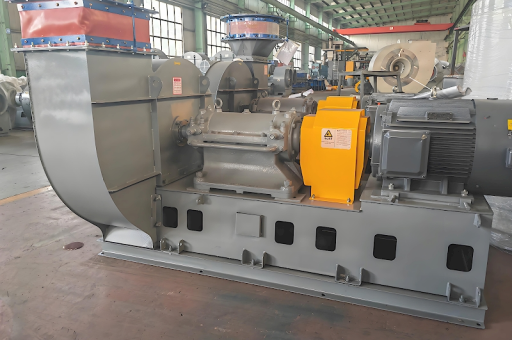
A Grey Blue Material Handling Blower refers to a heavy-duty industrial centrifugal fan that typically features a grey-blue epoxy or powder-coated finish, designed specifically for moving abrasive, particulate-laden, or high-temperature air streams. When paired with a Stainless Steel Centrifugal Fan construction, the equipment offers superior corrosion resistance, structural integrity, and longevity in demanding environments such as cement plants, woodworking facilities, chemical processing units, and food-grade material transport systems.
The grey-blue color is not merely aesthetic; it often indicates a specialized coating that protects against rust, chemical splashes, and mechanical wear. Meanwhile, the stainless steel impeller and housing ensure that the fan can handle moist, acidic, or hygienic applications without degrading over time.
Key Characteristics of a Stainless Steel Centrifugal Fan
A Stainless Steel Centrifugal Fan is defined by its impeller, housing, and sometimes shaft being fabricated from grades such as SS304, SS316, or SS316L. These materials offer:
- Corrosion Resistance: Ideal for salt-laden air, wastewater treatment, or chemical exhaust.
- Hygienic Properties: Non-porous surface prevents bacterial growth, meeting FDA or EHEDG standards.
- High-Temperature Tolerance: Certain stainless alloys can withstand continuous operation at 400°C to 800°C.
- Abrasion Resistance: When hardened, stainless steel can resist particle erosion better than painted carbon steel.
For material handling, the fan is often equipped with radial-blade or backward-curved impellers that prevent clogging and allow for self-cleaning action.
Why Grey Blue Coating Matters in Industrial Blowers
The grey-blue coating found on many material handling blowers serves multiple critical functions:
- Anti-Corrosion Primer: The epoxy or polyurethane paint creates a barrier against moisture and mild chemicals.
- Visibility & Safety: High-visibility grey-blue helps operators quickly identify the equipment in low-light industrial environments.
- Thermal Reflection: Light-colored coatings reduce heat absorption, helping maintain lower surface temperatures.
- Adhesion for Secondary Coatings: Often used as a base layer for later application of rubber lining or ceramic epoxy.
Many manufacturers apply the grey-blue coating after sandblasting the housing, ensuring excellent adhesion and extending the service life of the fan by 3–5 years compared to uncoated carbon steel units.
Material Handling Applications: From Dust Control to Pneumatic Conveying
The Grey Blue Material Handling Blower combined with a stainless steel centrifugal fan excels in:
- Pneumatic Conveying Systems: Moves cement, grains, plastic pellets, and powders through pipelines at high velocity.
- Dust Collection: Handles abrasive dust from grinding, sanding, or shot-blasting operations.
- Exhaust Ventilation: Removes fumes, steam, and volatile organic compounds (VOCs) from industrial ovens or drying rooms.
- Woodworking & Textile: Controls lint, sawdust, and fiber waste without clogging.
- Food Processing: Stainless steel ensures compliance with hygiene regulations while grey-blue coating protects external surfaces.
For example, a typical system may operate at 5,000 to 30,000 CFM with static pressures up to 40 inches w.g., driven by impellers made of 304 stainless steel to resist erosion from limestone or silica dust.
Stainless Steel vs. Carbon Steel: Which Is Better for Centrifugal Fans?
| Criteria | Stainless Steel | Carbon Steel (with Grey-Blue Coating) |
|---|---|---|
| Cost | Higher | Lower |
| Corrosion Resistance | Excellent (even without coating) | Good (requires intact coating) |
| Temperature Limit | Up to 800°C (SS310) | Up to 400°C (coating may degrade) |
| Maintenance | Low (no repainting needed) | Moderate (touch-up coating required) |
| Application | Hygienic, chemical, marine | General material handling |
Verdict: For environments with high humidity, corrosive gases, or strict hygiene, a stainless steel centrifugal fan is the clear winner. However, for dry, low-corrosion material handling, a carbon steel fan with quality grey-blue coating offers excellent cost-performance.
Performance Metrics: Airflow, Pressure, and Efficiency
When selecting a Grey Blue Material Handling Blower with Stainless Steel Centrifugal Fan, consider:
- Airflow (CFM): Determines material transport capacity. For dilute-phase conveying, 10–20 CFM per pound of material is typical.
- Static Pressure (in w.g.): Overcomes system resistance. High-pressure blowers (20–60 in w.g.) are used for dense phase conveying.
- Fan Efficiency: Backward-curved impellers achieve 75–85% efficiency, while radial-blade designs reach 60–70% but handle more abrasive material.
- Sound Level: Silencers or acoustic enclosures may be needed for units above 85 dB(A).
Always match the fan curve to the system resistance line to avoid operating in the unstable surge region.
Common Installation and Maintenance Best Practices
- Foundation: Mount on a vibration-isolated base (spring or rubber) to reduce structural stress.
- Ductwork: Ensure smooth transitions and avoid sharp bends near the fan inlet to prevent turbulence.
- Seals & Bearings: Use labyrinth seals for dusty environments; regrease bearings every 500 operating hours.
- Impeller Inspection: Check for wear or imbalance every 6 months. Stainless steel impellers can be welded-repaired if damage is minor.
- Coating Care: Inspect the grey-blue coating annually. Touch up scratches with matching epoxy paint to prevent rust.
FAQ Section: Expert Answers to Top Questions
Q1: Can I use a Grey Blue Material Handling Blower for food-grade applications?
Yes, if the impeller and housing are made from 304 or 316 stainless steel. The grey-blue coating must be verified as food-safe (FDA or NSF compliant). Many manufacturers offer a special white or grey-blue epoxy approved for dry food contact.
Q2: What is the difference between a centrifugal fan and a blower in material handling?
In industrial contexts, "blower" often refers to a high-pressure, low-volume unit, while "centrifugal fan" covers a broad range of airflow and pressure. The terms are used interchangeably by many distributors, but strict definitions vary. For this article, both refer to the same equipment.
Q3: How do I know if my material is too abrasive for a stainless steel fan?
If the material has a Mohs hardness above 5 (e.g., silica sand, aluminum oxide), consider using a fan with wear-resistant liners (ceramic or hard-faced stainless steel) and a thicker impeller (10 gauge or heavier).
Q4: What maintenance does the grey-blue coating need?
Wash down the fan external surfaces annually with mild detergent. If scratches appear, apply a two-part epoxy primer and topcoat matching the original grey-blue color. This prevents localized rust from spreading under the coating.
Q5: Are stainless steel centrifugal fans more expensive?
Yes, typically 40–70% more than comparable carbon steel units. However, the longer service life (often 15–20 years vs. 5–10 years for carbon steel) and reduced maintenance justify the cost in many applications.
Conclusion: Choosing the Right Fan for Your Facility
Selecting a Grey Blue Material Handling Blower with a Stainless Steel Centrifugal Fan is a strategic investment in long-term reliability. The combination of a corrosion-resistant stainless steel impeller and a robust grey-blue coated housing ensures that your equipment performs efficiently in dusty, humid, or chemically aggressive environments.
When making your choice, prioritize:
- Impeller material (SS316 for aggressive chemicals; SS304 for general use).
- Coating quality (epoxy powder coat with 100–200 μm thickness).
- Performance parameters that match your system’s resistance.
- Certified compliance with any food, pharmaceutical, or industrial safety standards.
With proper selection and maintenance, this fan type will provide decades of trouble-free material handling, from sawdust to cement powder, ensuring your production lines remain uninterrupted and your workplace safe.





