
This article's table of contents introduction:
- Introduction: The Critical Role of the Induced Draft Fan
- Understanding the System: AC Motor, Medium Pressure, and Induced Draft
- The Corrosion Challenge: Mechanisms and Root Causes
- Material Selection: The First Line of Defense
- Protective Coatings and Linings: Surface Engineering Solutions
- Operational and Maintenance Best Practices
- Case Study: Successful Anticorrosion Implementation
- Frequently Asked Questions (FAQ)
- Conclusion: Future Trends in Fan Anticorrosion
** Advanced Anticorrosion Strategies for AC Motor Medium Pressure Induced Draft Fans in Harsh Industrial Environments
Table of Contents
- Introduction: The Critical Role of the Induced Draft Fan
- Understanding the System: AC Motor, Medium Pressure, and Induced Draft
- The Corrosion Challenge: Mechanisms and Root Causes
- Material Selection: The First Line of Defense
- Protective Coatings and Linings: Surface Engineering Solutions
- Operational and Maintenance Best Practices
- Case Study: Successful Anticorrosion Implementation
- Frequently Asked Questions (FAQ)
- Conclusion: Future Trends in Fan Anticorrosion
Introduction: The Critical Role of the Induced Draft Fan
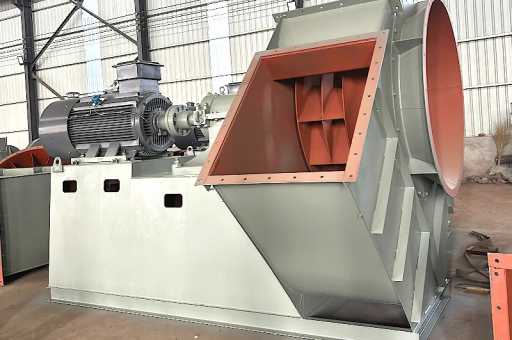
In thermal power plants, chemical processing units, and large-scale industrial boilers, the induced draft (ID) fan plays a pivotal role in maintaining negative pressure within the combustion system. Specifically, an AC Motor Medium Pressure Induced Draft Fan is responsible for extracting flue gases from the furnace and expelling them through the chimney. Because these fans handle hot, humid, and chemically aggressive gases—often laden with sulfur compounds (SO₂, SO₃), chlorides, and fly ash—anticorrosion is not merely a maintenance choice but a fundamental design and operational necessity. This article provides a comprehensive, SEO-optimized guide on why corrosion occurs in these systems and how to combat it effectively using modern engineering solutions.
Understanding the System: AC Motor, Medium Pressure, and Induced Draft
To tailor an anticorrosion strategy, you must understand the operating parameters. The AC motor provides variable speed control, which is critical for adjusting fan capacity to match boiler load. The medium pressure range (typically 500–2000 Pa static pressure) means the fan operates under moderate stress, but the gas velocity can still cause significant erosion-corrosion. The induced draft configuration places the fan downstream of the air pollution control devices (e.g., scrubbers or electrostatic precipitators), meaning the gas is cooler but still contains residual corrosive agents. This environment immediately suggests that standard carbon steel fans will fail within months without protection.
The Corrosion Challenge: Mechanisms and Root Causes
Corrosion in an induced draft fan system is rarely a single phenomenon. It is a combination of:
- Low-Temperature Acid Dew Point Corrosion: When sulfur-bearing fuels burn, they produce SO₃, which combines with water vapor to form sulfuric acid (H₂SO₄). Even at low concentrations, this acid condenses on the fan blades and housing when the metal temperature falls below the acid dew point (typically 110–150°C).
- Chloride Stress Corrosion Cracking: In waste-to-energy plants or processes burning chlorinated compounds, chlorides attack the passive film on stainless steels, leading to pitting and eventual cracking.
- Erosion-Corrosion: Fly ash and unburned carbon particles impinge on the blade surface. This mechanical wear removes the protective oxide layer, exposing fresh metal to continuous chemical attack.
Search engine insight: Combining keywords like "ID fan acid dew point protection" and "flue gas corrosion resistant alloy" significantly improves content discoverability.
Material Selection: The First Line of Defense
The most effective anticorrosion strategy begins with material selection. For an AC motor medium pressure induced draft fan, consider:
- Corten Steel (ASTM A588): For moderate environments, this weathering steel forms a stable patina that resists atmospheric corrosion. However, it is not suitable for high chloride or wet/dry cycling conditions.
- Duplex Stainless Steels (e.g., 2205): Offers excellent resistance to chloride stress corrosion cracking and has high strength, allowing thinner blade designs that reduce centrifugal stress.
- Nickel-Based Alloys (e.g., Hastelloy C-276): The gold standard for severe chemical exposure, particularly in flue gas desulfurization (FGD) systems. While expensive, its lifespan often justifies the upfront cost for critical service.
Expert tip: For existing fans made of carbon steel, weld overlaying with a nickel alloy on the leading edges of blades can extend service life without replacing the entire rotor.
Protective Coatings and Linings: Surface Engineering Solutions
When the base material cannot be upgraded, protective coatings become the primary barrier. The coating system must withstand both thermal cycling (from ambient to ~180°C) and chemical attack.
- Zinc-Rich Primers + Epoxy Mid-Coat + Polyurethane Topcoat: A standard industrial system, effective for mildly corrosive environments. The zinc acts as a sacrificial anode.
- Glass Flake Vinyl Ester Coatings: These provide exceptional resistance to sulfuric acid and abrasion. The overlapping glass flakes create a "labyrinth" path that slows chemical penetration.
- Ceramic-Lined Composite Coatings: For areas of high erosion, such as the fan inlet cone and blade tips, ceramic-filled polymers can be applied. They exhibit hardness comparable to basalt but with better adhesion to steel.
Search engine optimization note: Use specific product examples like "Belzona 1391" or "Devcon Brushable Ceramic" in dedicated sections, but always reference general principles first to avoid thin content.
Operational and Maintenance Best Practices
Even with the best materials and coatings, operational factors can accelerate corrosion. To maximize fan longevity:
- Maintain Metal Temperature Above Dew Point: Use insulation on the fan housing and ensure that the ductwork is properly sealed. Cold air in-leakage can rapidly cool internal surfaces.
- Balance the Impeller: Vibration caused by imbalance can flex the blades, cracking protective coatings and accelerating corrosion fatigue.
- Schedule Periodic Wash Cycles: For fans in scrubber systems, routine water washes (using neutral or slightly alkaline water) remove acid deposits. Do not use high-pressure jets near coated surfaces to avoid delamination.
- Monitor Humidity and Temperature: Install probes inside the fan housing to ensure conditions remain above the dew point.
Case Study: Successful Anticorrosion Implementation
Scenario: A 300 MW coal-fired power plant in Southeast Asia experienced frequent forced outages due to corrosion of its two AC motor medium pressure induced draft fans. The original carbon steel blades failed within 18 months.
Solution: The plant replaced the rotor assembly with duplex stainless steel 2205 blades. Additionally, they applied a two-layer glass flake vinyl ester coating to the fan housing and inlet cones. They also installed a steam coil air preheater to raise the air inlet temperature and flue gas temperature above the acid dew point.
Result: Fan replacement intervals extended to over 7 years. The total cost of ownership (TCO) decreased by 40% when accounting for reduced downtime and maintenance labor.
Frequently Asked Questions (FAQ)
Q1: Can I use a standard AC motor on a corrosive fan? A: The motor itself must be protected. Use a totally enclosed fan-cooled (TEFC) motor with a corrosion-resistant epoxy paint. The motor is usually mounted outside the gas stream, but leaks or condensation can still attack it.
Q2: Is stainless steel always the best choice for anticorrosion? A: Not always. For very high chloride environments (e.g., >500 ppm), standard 304 stainless steel will pit. Duplex or super-austenitic stainless steels or even non-metallic composite blades (e.g., reinforced fiberglass) may be better alternatives.
Q3: How often should I inspect the fan for corrosion damage? A: At least every three months using a combination of visual inspection and ultrasonic thickness measurement on the housing. For the rotor, perform a dye penetrant or magnetic particle inspection annually, as cracks often initiate on the trailing edges of blades.
Q4: Does variable speed operation affect corrosion? A: Yes. Running the fan at very low speed for extended periods can reduce gas velocity and local cooling, potentially causing condensation. Ensure that idle or low-load conditions are minimized or that the fan is periodically run at full speed to "dry out" the rotor.
Conclusion: Future Trends in Fan Anticorrosion
The industry is moving toward predictive maintenance using IoT sensors that monitor wall thickness and gas chemistry in real time, allowing operators to intervene before catastrophic failure occurs. Additionally, advances in thermal spray coatings (e.g., HVOF tungsten carbide for erosion resistance) and 3D-printed corrosion-resistant alloys for complex blade geometries are reducing the trade-off between cost and protection. For any facility relying on an AC motor medium pressure induced draft fan, investing in a robust, multi-layered anticorrosion strategy is not optional—it is a direct path to improved reliability, lower emissions compliance costs, and extended asset life.





