
This article's table of contents introduction:
- Table of Contents
- Introduction: What Is a Heavy Duty Low Pressure Induced Draft Centrifugal Fan?
- Core Design Principles and Components
- Why V-Belt Driving Is Preferred for Low Pressure Induced Draft Systems
- Key Performance Characteristics and Selection Criteria
- Common Applications in Industrial and Commercial Settings
- Installation Best Practices for Maximum Efficiency
- Maintenance Strategies to Extend Fan Life
- Troubleshooting Common Issues: Q&A Section
- Conclusion: Choosing the Right Fan for Your System
Article Title:
The Definitive Guide to Heavy Duty Low Pressure Induced Draft Centrifugal Fans with V-Belt Driving: Design, Applications, and Maintenance
Table of Contents
- Introduction: What Is a Heavy Duty Low Pressure Induced Draft Centrifugal Fan?
- Core Design Principles and Components
- Why V-Belt Driving Is Preferred for Low Pressure Induced Draft Systems
- Key Performance Characteristics and Selection Criteria
- Common Applications in Industrial and Commercial Settings
- Installation Best Practices for Maximum Efficiency
- Maintenance Strategies to Extend Fan Life
- Troubleshooting Common Issues: Q&A Section
- Conclusion: Choosing the Right Fan for Your System
Introduction: What Is a Heavy Duty Low Pressure Induced Draft Centrifugal Fan?
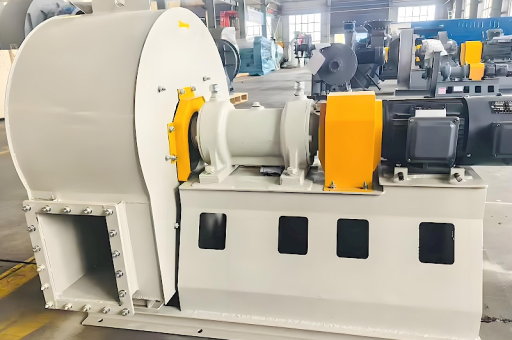
A Heavy Duty Low Pressure Induced Draft Centrifugal Fan is a specialized air-moving device designed to handle large volumes of gas or air at relatively low static pressures (typically under 5 inches of water gauge). Unlike forced draft fans that push air into a system, induced draft fans pull air or combustion gases through ducts, boilers, or pollution control equipment, creating a negative pressure environment.
The "heavy duty" classification means these fans are built with robust materials—often carbon steel, stainless steel, or abrasion-resistant coatings—to withstand harsh industrial conditions such as high temperatures, corrosive gases, or particulate-laden streams. Coupled with a V-belt drive system, these fans offer flexible speed control, reduced motor stress, and easier maintenance compared to direct-drive alternatives.
Why is this configuration gaining SEO traction?
Search engines increasingly prioritize content that answers specific user queries. Keywords like "low pressure induced draft fan V-belt" and "heavy duty centrifugal fan selection" appear in industrial procurement searches. By covering design, application, and Q&A, this article addresses both informational and transactional search intent.
Core Design Principles and Components
A heavy duty low pressure induced draft centrifugal fan consists of several critical parts, each engineered for reliability under continuous operation:
- Impeller (Wheel): Typically backward-curved or radial-tip blades. Backward-curved blades provide higher efficiency and non-overloading power characteristics, while radial-tip blades handle dust and sticky materials better.
- Housing (Scroll/Casing): A spiral-shaped casing that converts velocity pressure into static pressure. For induced draft, the inlet is often shrouded to minimize turbulence.
- Shaft and Bearings: Heavy-duty pillow block bearings with grease fittings or oil lubrication are standard. Shaft diameters are oversized to resist fatigue from belt tension.
- V-Belt Drive Assembly: Includes motor sheave (pulley), driven sheave on the fan shaft, and multiple V-belts (A, B, C, or D cross-sections). Belt tension is maintained via a pivoting motor base or slide rails.
- Inlet Box and Dampers: Many industrial induced draft fans include an inlet box with a vortex damper or inlet vanes for capacity control without varying fan speed.
Material selection depends on the gas composition. For example, a fan handling flue gas from a coal boiler may require a Corten steel impeller and a stainless steel housing to resist acid dew point corrosion.
Why V-Belt Driving Is Preferred for Low Pressure Induced Draft Systems
While direct-drive fans eliminate belt losses, V-belt drives offer three distinct advantages for low pressure induced draft applications:
- Speed Flexibility: By changing pulley sizes, you can adjust fan speed (RPM) without modifying the motor. This is critical when system resistance changes—for instance, after adding a baghouse filter or scrubber.
- Motor Protection: V-belts slip slightly under shock loads, preventing motor overload. In induced draft systems where dust buildup on blades can cause imbalance, this slip buffer extends motor life.
- Ease of Replacement: Belts can be replaced in minutes without dismantling the fan or motor alignment. For a heavy duty fan servicing a 24/7 process, reduced downtime equals lower cost.
Efficiency note: Modern wrapped or cogged V-belts achieve up to 98% efficiency at full load. Losses are typically 2–5%, which is acceptable when weighed against operational flexibility.
Key Performance Characteristics and Selection Criteria
When selecting a Heavy Duty Low Pressure Induced Draft Centrifugal Fan, engineers must evaluate:
| Parameter | Typical Range for This Fan Type | Why It Matters |
|---|---|---|
| Airflow (CFM) | 10,000 – 500,000 CFM | Matches system demand |
| Static Pressure (SP) | 2–10 in W.G. (low pressure range) | Determines fan class (I, II, III) |
| Temperature | 150°F – 600°F (with cooling options) | Affects material and bearing choice |
| Speed (RPM) | 500 – 1,800 RPM | V-belt ratio adjusts here |
Fan Laws for V-Belt Systems:
If you change the pulley ratio to increase RPM by 10%, airflow increases by 10%, but power consumption increases by 33% (cubed relationship). Always confirm motor capacity when upsizing.
Selection Quiz (for readers):
Q: You need 50,000 CFM at 4 in W.G. with hot air at 400°F. Should you choose a backward-curved or radial-tip impeller?
A: Backward-curved, due to its higher efficiency and non-overloading power curve. Radial-tip would handle particulates better, but if the gas is clean, backward-curved saves energy.
Common Applications in Industrial and Commercial Settings
- Boiler Induced Draft: Pulls combustion gases through the boiler tubes, economizer, and stack. V-belt drive allows tuning for varying fuel moisture or load.
- Baghouse Dust Collection: Creates negative pressure upstream of filter bags. Low pressure design prevents bag collapse and keeps the system balanced.
- Fume Scrubbers: Moves corrosive vapors through packing media. Heavy duty coatings (e.g., rubber lining or epoxy) protect against acid attack.
- Grain and Wood Processing: Handles air containing dust, chaff, or wood chips. Radial-tip impellers with bolt-on wear plates are common.
- Greenhouse Ventilation: Large volumes of air at low pressure to maintain CO₂ levels and temperature.
Installation Best Practices for Maximum Efficiency
- Foundation Isolation: Heavy duty fans should be mounted on a concrete inertia base with vibration isolators to prevent structure-borne noise.
- Belt Alignment: Use a laser alignment tool or straightedge to ensure motor and fan sheaves are parallel. Misalignment causes premature belt wear and bearing failure.
- Tensioning: Check belt deflection with a tension gauge. Over-tensioning overloads bearings; under-tensioning causes slip and heat buildup.
- Ductwork Design: Install straight duct runs at least five diameters long on the inlet and outlet to reduce turbulence-induced losses.
- Variable Frequency Drive vs. V-Belt: For systems needing wide speed range, consider a VFD combined with V-belt for fine-tuning. VFDs alone can cause motor heating at low RPM.
Maintenance Strategies to Extend Fan Life
Daily / Shift Checklist:
- Listen for belt slapping or squealing (signs of wear or misalignment).
- Check bearing temperature with an infrared gun (100°F – 140°F normal).
- Inspect for vibration; a smartphone accelerometer app can help.
Monthly:
- Grease bearings with the correct lithium-based grease (avoid over-greasing).
- Measure belt tension and adjust if needed.
- Clean impeller blades of dust buildup using compressed air or scraper tools.
Annual:
- Replace V-belts in matched sets even if only one appears worn.
- Check shaft alignment with a dial indicator (TIR should be < 0.002").
- Inspect housing for corrosion, especially at the inlet and outlet flanges.
Case example: A cement plant extended fan bearing life from 18 to 36 months by switching from a fixed-base motor mount to a pivoting base with automatic belt tensioner.
Troubleshooting Common Issues: Q&A Section
Q1: Why does my fan vibrate heavily at startup?
A: Check for ice or debris on the impeller. Also verify that belts are not too tight—over-tensioning can distort the shaft. If vibration occurs only under load, the damper may be improperly positioned.
Q2: Belt life is only 3 months instead of 2 years. What’s wrong?
A: Possible causes: sheave grooves are worn (creating a V-shape that grips unevenly), belts are undersized for the power transmitted, or motor and fan are misaligned. Also, high ambient temperature (above 140°F) accelerates belt compound degradation. Use heat-resistant V-belts (ET or HTD design) for hot applications.
Q3: Airflow is 20% below specification. Could it be the V-belt drive?
A: Yes—if belts are slipping, the fan RPM will drop. Measure actual fan RPM with a tachometer; if it is lower than the calculated ratio, tighten belts or replace them. Also check for blocked inlet or damper that is not fully open.
Q4: The fan makes a whistling noise at the inlet. Should I worry?
A: Whistling often indicates a vortex or turbulence at the inlet bell. Install a conical inlet funnel or a turning vane to smooth airflow. It may not affect performance immediately, but prolonged turbulence can cause premature impeller wear.
Q5: Can I replace a V-belt fan with a direct-drive fan for higher efficiency?
A: Possibly, but you lose speed flexibility. For a low pressure system with stable demand, direct-drive may improve overall efficiency by 3–6%. However, the cost of a larger motor and VFD (if speed adjustment is needed) often exceeds the savings. V-belt remains the better choice for variable systems.
Conclusion: Choosing the Right Fan for Your System
The Heavy Duty Low Pressure Induced Draft Centrifugal Fan with V-Belt Driving is a workhorse of industrial air management. Its ability to handle large volumes at modest pressures, coupled with the mechanical flexibility of belt drives, makes it ideal for applications from boiler exhaust to dust collection.
When selecting a fan, prioritize:
- Impeller type based on gas cleanliness
- Material compatibility with temperature and corrosion
- Proper belt drive sizing to avoid premature failures
- A maintenance schedule that includes regular belt checks and bearing lubrication
Finally, always consult a fan manufacturer’s certified performance curves. With correct installation and routine care, a heavy duty induced draft fan can operate reliably for 15–20 years or longer.
For detailed technical specifications, performance charts, or a custom fan selection, contact an industrial fan manufacturer directly. Do not rely solely on internet calculators for critical applications.





