
This article's table of contents introduction:
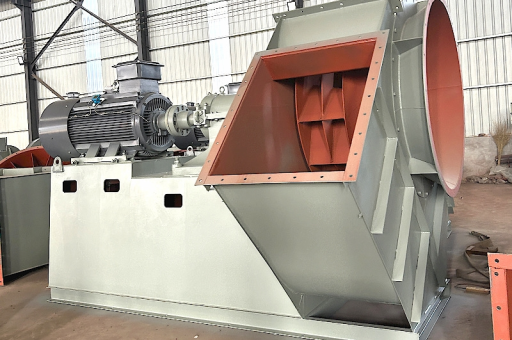
- What is a Boiler ID Fan?
- Why "High Power" and "CE Certified"?
- Key Technical Specifications to Look For
- Recommended Fan Type for This Application
- How to Find a Suitable Product / Supplier
- Summary Checklist for Your Purchase
It appears you are looking for a High Power, CE Certified Boiler ID (Induced Draft) Fan designed to enhance airflow in industrial boiler systems.
Here is a detailed breakdown of what you need, the key specifications to look for, and why this specific type of fan is critical for industrial boilers.
What is a Boiler ID Fan?
An Induced Draft (ID) Fan is located at the exit of the boiler system (between the boiler and the chimney). Its job is to pull flue gases (hot exhaust) out of the furnace and create a slight negative pressure inside the combustion chamber. This ensures efficient heat transfer and prevents dangerous gases from leaking out of the boiler.
Why "High Power" and "CE Certified"?
- High Power: Industrial boilers move massive volumes of hot, abrasive, and often corrosive gases against significant system resistance (dampers, scrubbers, ductwork). A "high power" motor (e.g., 50 kW to 500+ kW) and a robust impeller design are required to overcome this back pressure.
- CE Certified: This is mandatory for equipment sold in the European Economic Area (EEA). It indicates the fan meets rigorous EU health, safety, and environmental protection requirements regarding:
- Machine Safety (Directive 2006/42/EC): Guards, emergency stops, structural integrity.
- Electromagnetic Compatibility (EMC Directive 2014/30/EU): No radio interference.
- Low Voltage Directive (2014/35/EU): Safe electrical design.
- ATEX (Potential Explosive Atmosphere): If the fuel is coal, biomass, or heavy oil, you may also need ATEX certification (CE covers the base, ATEX is a specific add-on).
Key Technical Specifications to Look For
When sourcing this fan, ensure your supplier provides data for these critical parameters:
| Parameter | Why it matters for Industrial Boilers | Recommended Value / Type |
|---|---|---|
| Flow Rate (m³/h or CFM) | Must match the boiler's flue gas volume at full load. Under-sizing causes poor combustion. | High: 50,000 m³/h to 500,000+ m³/h |
| Static Pressure (Pa or mmH₂O) | Must overcome resistance from economizers, scrubbers, ducts, and chimney. | High: 2,000 Pa to 8,000+ Pa |
| Temperature Rating (°C) | ID fans handle hot gases. Standard is 150-250°C. For high-efficiency boilers, continuous rating at 350°C+ is needed. | Continuous: 200°C - 400°C (use high-temp steel) |
| Impeller Design | Must handle dust, fly ash, and erosion. | Backward Curved (BC) or Airfoil: Most efficient. Avoid Forward Curved. |
| Material | Resistance to corrosion (from sulfur in fuel) and erosion (from fly ash). | Housing: Corten steel or Stainless Steel 304/316. Impeller: Wear-resistant steel (Hardox or similar). |
| Motor Type | Reliability and speed control for variable boiler load. | IE4/IE5 Premium Efficiency with VFD (Variable Frequency Drive) ready. |
| CE & ATEX | Non-negotiable for EU compliance. ATEX Zone 2 or Zone 1 for explosive gases. | CE 2006/42/EC + ATEX 2014/34/EU (if needed) |
Recommended Fan Type for This Application
For high-efficiency, industrial boilers, the Backward Curved (BC) or Backward Inclined (BI) Centrifugal Fan is the industry standard.
- Why? It has a non-overloading power curve. If the boiler's gas flow increases unexpectedly, the motor will not burn out. It is also highly efficient (85%+) for continuous operation.
Avoid: Radial Blade or Paddle Wheel fans (inefficient, high noise) and Axial fans (too low pressure for industrial boilers).
How to Find a Suitable Product / Supplier
You cannot buy a generic "off-the-shelf" fan for a large industrial boiler. The fan must be sized specifically for your boiler's design.
Step 1: Gather Your Data
- Boiler Capacity: (e.g., 10 TPH, 50 MWth)
- Fuel Type: (Natural Gas, Heavy Oil, Coal, Biomass)
- Flue Gas Temperature: (Degrees C at the fan inlet)
- Ductwork Resistance: (Total pressure drop across the system)
- Altitude: (Affects air density and fan performance)
Step 2: Search for Reputable Manufacturers
List of well-known CE-certified industrial fan manufacturers:
| Manufacturer | Region | Specialty |
|---|---|---|
| FläktGroup / Woods | Global | High efficiency, wide range of industrial fans. Strong CE/ATEX compliance. |
| Systemair | Europe | Good for medium-power industrial fans. |
| Greenheck | Global (US/EU) | Reliable industrial fans with CE variants. |
| Soler & Palau (S&P) | Europe | Excellent for smaller to medium boiler ID fans. |
| Korfmann (TLT Turbo) | Germany | Heavy-duty, high-power fans for large power plants and industrial boilers. |
| Howden | Global | Specialist in high-temperature, high-pressure boiler fans for power generation. |
| Ziehl-Abegg | Germany | High-efficiency impellers and complete fan systems. |
Step 3: Use Specific Search Keywords
Search for these exact terms on Alibaba, Made-in-China, or GlobalSpec (if buying OEM) or contact European distributors directly:
“CE certified ID fan for industrial boiler”“Backward curved centrifugal fan 200C ATEX”“High temperature induced draft fan 50000 m3/h CE”
Warning: If buying from a non-EU supplier (e.g., China, India), insist on having the factory test report and a Declaration of Conformity (DoC) issued by a recognized EU Notified Body (e.g., TÜV, SGS, Dekra). Many "CE" labels from overseas are self-declared and may not pass an actual EU inspection.
Summary Checklist for Your Purchase
- Type: Backward Curved Centrifugal.
- CE Mark: Documented by a third-party (TÜV or similar).
- Temperature: Rated for continuous operation at your flue gas temperature + 20% safety margin.
- Material: Stainless steel or Corten for housing; Hardox for blades.
- Drive: Direct drive (for high speed & reliability) or heavy-duty belt drive (for speed flexibility). Coupling type: Flexible with fixed bearings.
- Accessories: Must include a proper Vibration Switch (unbalance protection) and Thermocouples (bearing temperature monitoring).
Recommendation: Hire a local mechanical engineer or boiler consultant to perform a fan selection calculation. They will provide a "spec sheet" that you can send to the manufacturers listed above to get a guaranteed CE-compliant solution.





