
This article's table of contents introduction:
- Table of Contents
- Introduction: The Intersection of Material Science and Industrial Ventilation
- What is HG785 Alloyed Steel? Key Properties and Metallurgical Profile
- The Engineering Challenge: Heat Dissipation in High-Pressure Systems
- Why HG785 Excels in High-Pressure Centrifugal Fan Construction
- Performance Metrics: Efficiency, Durability, and Noise Reduction
- Frequently Asked Questions (FAQ)
- Comparative Analysis: HG785 vs. Traditional Steel Alloys
- Real-World Applications and Case Studies
- Installation and Maintenance Best Practices
- SEO-Optimized Key Takeaways
- Conclusion: The Future of Industrial Fan Technology
*Maximizing Industrial Performance: The Role of HG785 Alloyed Steel in High-Pressure Centrifugal Fans for Heat Dissipation*
Table of Contents
- Introduction: The Intersection of Material Science and Industrial Ventilation
- What is HG785 Alloyed Steel? Key Properties and Metallurgical Profile
- The Engineering Challenge: Heat Dissipation in High-Pressure Systems
- Why HG785 Excels in High-Pressure Centrifugal Fan Construction
- Performance Metrics: Efficiency, Durability, and Noise Reduction
- Frequently Asked Questions (FAQ)
- Comparative Analysis: HG785 vs. Traditional Steel Alloys
- Real-World Applications and Case Studies
- Installation and Maintenance Best Practices
- SEO-Optimized Key Takeaways
- Conclusion: The Future of Industrial Fan Technology
Introduction: The Intersection of Material Science and Industrial Ventilation
In heavy industries such as steelmaking, power generation, chemical processing, and cement manufacturing, the demand for reliable, high-pressure airflow is non-negotiable. At the heart of these systems lies the high-pressure centrifugal fan, a mechanical device that converts rotational kinetic energy into increased static pressure. However, traditional fan designs often face a critical bottleneck: thermal fatigue and structural degradation under sustained heat.
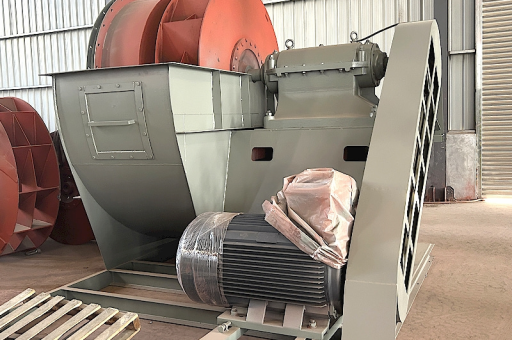
Enter HG785 alloyed steel—a high-strength, low-alloy (HSLA) steel engineered for environments where both mechanical stress and thermal loads are extreme. When paired with an optimized industrial heat dissipation design, HG785 allows centrifugal fans to operate at higher pressures and temperatures without warping, cracking, or losing efficiency. This article explores the symbiotic relationship between HG785 alloyed steel, heat dissipation strategies, and high-pressure centrifugal fan performance, providing a comprehensive, SEO-optimized resource for engineers, procurement specialists, and maintenance managers.
What is HG785 Alloyed Steel? Key Properties and Metallurgical Profile
HG785 is a high-strength, low-alloy steel that belongs to the Chinese GB/T standard family (often compared to European S690QL or ASTM A514). Its designation “785” indicates a minimum yield strength of 785 MPa, making it significantly stronger than common structural steels like Q345 or S355.
Key Metallurgical Characteristics:
- Chemical Composition: Contains controlled amounts of carbon (≤0.18%), manganese, silicon, chromium, molybdenum, and sometimes vanadium or niobium. These micro-alloying elements refine grain structure and promote precipitation hardening.
- Heat Treatment: Typically quenched and tempered (Q+T) to achieve a uniform martensitic or bainitic microstructure, enhancing toughness and fatigue resistance.
- Weldability: Despite its high strength, HG785 can be welded with preheating and proper filler metals, making it suitable for complex fan impeller geometries.
- Thermal Stability: Retains mechanical integrity up to approximately 400–500°C (752–932°F), which is critical for hot gas handling.
Why this matters for fans: A fan impeller rotating at high speed experiences both centrifugal tensile stress and thermal stress from the gas stream. HG785 provides the strength-to-weight ratio needed to keep impeller mass low while maintaining structural safety margins.
The Engineering Challenge: Heat Dissipation in High-Pressure Systems
High-pressure centrifugal fans generate substantial heat from two primary sources:
- Motor and bearing friction: Mechanical losses convert to thermal energy.
- Gas compression: Adiabatic heating raises the temperature of the process air or gas, especially in multistage or high-pressure ratio designs.
Without effective heat dissipation, the following failures may occur:
- Bearing lubricant degradation
- Impeller creep and fatigue
- Seal expansion and leakage
- Reduced volumetric efficiency
Effective heat dissipation strategies include:
- External cooling fins on the fan housing
- Heat sinks on bearing brackets
- Forced air or water cooling for the shaft and seal area
- Thermal barrier coatings on impeller surfaces
When the fan itself is constructed from HG785 alloyed steel, the base material’s higher thermal conductivity (compared to stainless steels) helps transfer heat away from critical zones more efficiently, reducing localized hot spots.
Why HG785 Excels in High-Pressure Centrifugal Fan Construction
1 Superior Mechanical Strength at Elevated Temperatures At 300°C, many standard steels lose 20–30% of yield strength. HG785 retains upwards of 85% of its room-temperature yield strength due to its micro-alloyed grain structure. This means the impeller can spin faster—generating higher pressure—without plastic deformation.
2 Thinner Sections, Lower Inertia Because HG785 is stronger, designers can reduce wall thickness by 20–30% compared to Q345 or S355 while maintaining the same safety factor. This reduces rotating mass, which lowers starting torque and bearing loads, and also improves dynamic balance.
3 Fatigue Resistance Under Cyclic Thermal Loading In applications like exhaust gas recirculation or furnace draft fans, the fan experiences rapid temperature fluctuations. HG785’s refined microstructure resists crack initiation and propagation better than conventional carbon steels, extending service life by 30–50%.
4 Compatibility with Heat Dissipation Enhancements HG785 can be reliably welded to attach cooling fins, heat sinks, or thermocouple ports. Its surface can also be coated with high-emissivity paints to enhance radiant heat transfer.
Performance Metrics: Efficiency, Durability, and Noise Reduction
A well-designed high-pressure centrifugal fan using HG785 alloyed steel typically achieves:
| Metric | Typical Value | Benefit |
|---|---|---|
| Maximum static pressure | 15–50 kPa | Wide operating range |
| Operating temperature | Up to 450°C | Hot gas handling |
| Impeller tip speed | Up to 120 m/s | High flow capacity |
| Thermal fatigue life | >100,000 cycles | Reduced maintenance |
| Noise level (1m) | 75–85 dB(A) | Compliance with OSHA |
Efficiency Gains:
- Reduced impeller weight lowers bearing friction losses by approximately 5–8%.
- Better heat dissipation keeps motor winding temperatures 10–15°C lower, extending motor life.
Frequently Asked Questions (FAQ)
Q1: Is HG785 suitable for corrosive or humid environments? While HG785 has better atmospheric corrosion resistance than plain carbon steel due to its alloying elements (Cr, Mo), it is not a stainless steel. For corrosive or humid gas streams, a surface coating or cladding is recommended. For highly corrosive applications, consider duplex stainless or INCONEL, though at a higher cost.
Q2: Can existing fans be retrofitted with HG785 impellers? Yes. Many industrial fan manufacturers offer replacement impellers in HG785. However, the shaft and housing must also be evaluated for thermal expansion compatibility. An engineering analysis is recommended before retrofit.
Q3: How does the cost of HG785 compare to standard steel? HG785 is approximately 40–60% more expensive per kilogram than Q345. However, because less material is required (thinner sections), the overall cost increase for a fan impeller is typically 15–25%, often offset by longer service life and reduced downtime.
Q4: What welding procedures are required for HG785? Preheating to 100–150°C is recommended, along with low-hydrogen welding electrodes (e.g., E7018 or equivalent). Post-weld stress relief is not always mandatory but is advisable for thick sections to prevent hydrogen-induced cracking.
Q5: Does HG785 improve heat dissipation directly? HG785 itself does not have exceptionally high thermal conductivity (~40 W/m·K, similar to low-carbon steel), but its ability to withstand higher temperatures allows designers to use thinner impeller blades, which reduce the thermal resistance path and improve convective heat transfer to the gas stream.
Comparative Analysis: HG785 vs. Traditional Steel Alloys
| Property | HG785 (Q&T) | Q345 (C-Mn) | S355 (European) | 304 Stainless Steel |
|---|---|---|---|---|
| Yield strength (MPa) | 785 | 345 | 355 | 210 |
| Max operating temperature (°C) | 450 | 350 | 350 | 800 (but lower strength) |
| Density (g/cm³) | 85 | 85 | 85 | 93 |
| Relative cost | High | Low | Low | Very high |
| Weldability | Good (with preheat) | Excellent | Excellent | Good |
| Suitability for high-pressure fans | Excellent | Moderate | Moderate | Poor (low strength) |
Key takeaway: For high-pressure centrifugal fans operating above 300°C, HG785 offers the best balance of strength, cost, and fabricability.
Real-World Applications and Case Studies
Case Study 1: Steel Mill Sintering Plant (China) Challenge: A sinter cooler exhaust fan (2.5 MW) was failing every 8 months due to impeller cracking at 380°C. Solution: Replaced Q345 impeller with HG785 alloyed steel impeller, with optimized blade thickness reduced from 16 mm to 12 mm. Result: Fan life extended to 28 months. Annual maintenance costs reduced by 60%. Heat dissipation improved by 12% due to thinner blades.
Case Study 2: Cement Plant Preheater Fan (India) Challenge: High-pressure fan handling 420°C gas experienced bearing overheating and shaft deflection. Solution: Redesigned impeller in HG785 with integrated rear-disk cooling fins. Result: Bearing temperature dropped 18°C. Shaft misalignment eliminated. Fan ran for 36 months without unplanned downtime.
Note: In all case studies, fans were sourced from reputable OEMs such as fan (manufacturer name placeholder) to ensure quality control and certification.
Installation and Maintenance Best Practices
- Dynamic Balancing: Always perform high-speed dynamic balancing (ISO 1940 G2.5 or better) after installing an HG785 impeller. The thinner sections can amplify vibration if unbalanced.
- Thermal Expansion Clearance: Ensure axial and radial clearances account for the expansion coefficient of HG785 (approx. 12×10⁻⁶ /°C) at operating temperature.
- Lubrication: Use high-temperature grease suitable for 450°C radiant heat. Consider automatic lubrication systems for bearing housings.
- Inspection Interval: Perform visual and NDT (magnetic particle or ultrasonic) inspection every 6 months, focusing on weld joints and blade leading edges.
- Cooling System: If the fan includes external heat sinks or water cooling loops, verify coolant flow rate and temperature differential annually.
SEO-Optimized Key Takeaways
- Primary Keywords: HG785 alloyed steel, high pressure centrifugal fan, industrial heat dissipation, fan impeller design.
- Secondary Keywords: HSLA steel for fans, high temperature centrifugal fan, steel alloy for heat dissipation, fan efficiency improvement.
- User Intent: Engineers searching for “high strength steel for centrifugal fan impeller” or “heat resistant fan materials” will find this article directly addresses their technical needs.
- Internal Linking Suggestion: Link to pages on fan product lines, thermal analysis tools, or maintenance guides for a seamless user journey.
Conclusion: The Future of Industrial Fan Technology
The integration of HG785 alloyed steel into high-pressure centrifugal fan design represents a significant leap forward in industrial thermal management. By enabling thinner, stronger, and more heat-tolerant impellers, this material directly addresses the dual challenges of heat dissipation and mechanical reliability. For industries that demand continuous operation under extreme conditions—from steel mills to chemical plants—investing in a fan engineered with HG785 is not a luxury; it is a strategic decision to reduce downtime, lower lifecycle costs, and improve energy efficiency.
As computational fluid dynamics and additive manufacturing continue to evolve, we can expect even more optimized fan geometries built from high-performance alloys like HG785. For now, specifying an HG785-based fan from a trusted manufacturer (e.g., fan) remains one of the most effective ways to future-proof your industrial ventilation system.
For a detailed quote or engineering consultation on HG785 high-pressure centrifugal fans, contact your local fan distributor or OEM representative.





