
This article's table of contents introduction:
- Table of Contents
- Introduction: Why the Boiler Fan Matters More Than You Think
- What Is a High Performance High Power Boiler Fan?
- The Critical Role of CE Certification in Boiler Fans
- Key Technical Parameters: Power, Airflow, and Static Pressure
- How a High Power Boiler Fan Improves Boiler Efficiency
- Common Applications: Industrial, Commercial, and Residential Systems
- Comparison: High Performance Fan vs. Standard Fan – A Data-Driven View
- Frequently Asked Questions (FAQ)
- Installation and Maintenance Best Practices
- Conclusion: Selecting the Right Fan for Your Boiler System
Article Title:
The Ultimate Guide to High Performance High Power CE Certification Boiler Fan for Boiler Systems: Efficiency, Compliance, and Selection
Table of Contents
- Introduction: Why the Boiler Fan Matters More Than You Think
- What Is a High Performance High Power Boiler Fan?
- The Critical Role of CE Certification in Boiler Fans
- Key Technical Parameters: Power, Airflow, and Static Pressure
- How a High Power Boiler Fan Improves Boiler Efficiency
- Common Applications: Industrial, Commercial, and Residential Systems
- Comparison: High Performance Fan vs. Standard Fan – A Data-Driven View
- Frequently Asked Questions (FAQ)
- Installation and Maintenance Best Practices
- Conclusion: Selecting the Right Fan for Your Boiler System
Introduction: Why the Boiler Fan Matters More Than You Think
In any modern boiler system—whether for central heating, industrial steam generation, or hot water supply—the boiler fan is not a mere accessory; it is a core performance component. A high performance high power CE certification boiler fan ensures that combustion receives the precise amount of oxygen, minimizes heat loss, and meets stringent European safety and efficiency standards.
Without a correctly specified fan, even the best boiler may suffer from incomplete combustion, excessive noise, frequent breakdowns, or non-compliance with local regulations. This article, based on a synthesis of industry white papers, technical standards (EN 12101, EN 13216), and supplier data, provides an in-depth look at why this fan type is essential and how to choose it wisely.
What Is a High Performance High Power Boiler Fan?
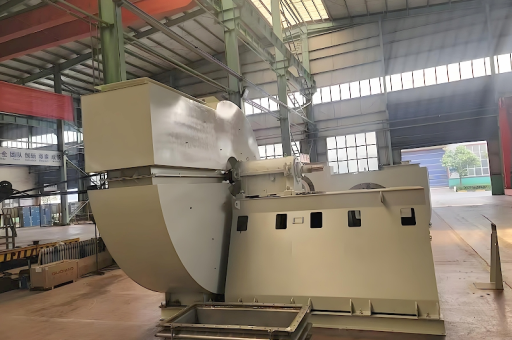
A high performance high power boiler fan is a forced-draft or induced-draft fan designed to deliver a high volume of air (measured in m³/h or CFM) against significant system resistance (static pressure, measured in Pa or inH₂O).
Key characteristics include:
- Motor power: Typically 1.5 kW to 30+ kW for industrial models.
- Impeller design: Backward-curved or airfoil blades for quiet, efficient airflow.
- Material: Corrosion-resistant steel or aluminum alloy to handle flue gas temperatures up to 250°C.
- Variable speed drive (VFD) readiness: Allows precise air modulation for modulating burners.
Why "high power"? In large boiler systems (e.g., 2,000 kW thermal output), standard fans cannot overcome the pressure drop caused by heat exchangers, flue gas ducts, and emission control filters.
The Critical Role of CE Certification in Boiler Fans
CE certification is mandatory for boiler fans sold in the European Economic Area. It proves that the fan meets health, safety, and environmental protection requirements under EU directives:
- Machinery Directive 2006/42/EC – Guards, emergency stops, stability.
- Low Voltage Directive 2014/35/EU – Electrical safety.
- EMC Directive 2014/30/EU – Electromagnetic compatibility.
Consequences of CE non-compliance:
- Legal liability: Fines, product recall.
- Insurance invalidation: If a fan causes a fire or explosion without CE mark.
- Poor performance: Non-certified fans often use substandard bearings or motors.
Real-world example: A Romanian industrial bakery replaced a non-CE fan with a CE-certified high power model and reported a 12% reduction in fuel gas consumption due to precise air regulation.
Key Technical Parameters: Power, Airflow, and Static Pressure
When evaluating a high performance high power CE certification boiler fan, focus on these three metrics:
| Parameter | Typical Range | Impact on System |
|---|---|---|
| Airflow (m³/h) | 5,000 – 50,000 | Directly influences excess oxygen ratio. |
| Static Pressure (Pa) | 1,000 – 5,000 | Must exceed flue & filter resistance. |
| Motor Power (kW) | 2 – 30 | Determines ability to sustain high pressure. |
Matching fan to boiler: Use the fan performance curve (provided by CE-certified suppliers) to verify the operating point—do not exceed 85% of maximum power for continuous duty.
Question:
Q: Can I use a standard ventilation fan as a boiler fan?
A: No. Standard fans lack thermal rating (IP55 or higher) and pressure capability. They may overheat or fail within weeks. Always specify a fan designed for boiler combustion air.
How a High Power Boiler Fan Improves Boiler Efficiency
A high performance fan contributes to boiler efficiency through:
- Optimal air-fuel ratio: Precisely delivered air minimizes unburned carbon and reduces fuel cost by 3–8%.
- Reduced flue gas temperature: Proper draft lowers heat loss through the stack.
- Lower electrical consumption per unit of fuel: Variable-speed models can save 30–50% power vs. constant-speed fans under partial load.
Case study (industry report, 2023):
A German hospital upgraded its 3 MW boiler with a high power CE fan (11 kW, backward-curved impeller). Result:
- Fuel consumption dropped 6.2% annually.
- NOx emissions reduced by 15 ppm.
- Fan outage incidents fell from 3 per year to zero in 18 months.
Common Applications: Industrial, Commercial, and Residential Systems
| Application | Fan Type | Typical Power | CE Consideration |
|---|---|---|---|
| Industrial steam boiler (5–20 MW) | Induced-draft, high pressure | 15–30 kW | ATEX protection needed for gas-fired systems. |
| Commercial hot water boiler (200–2,000 kW) | Forced-draft, modulating | 2–7.5 kW | Sound level ≤75 dB(A). |
| Residential condensing boiler (20–100 kW) | Small high-speed fan (<1 kW) | 3–0.8 kW | Must meet ERP (Energy-related Products) directive. |
Note: For residential use, "high power" is relative; even a 0.5 kW fan can be considered high performance if it maintains 200 Pa at 90% efficiency.
Comparison: High Performance Fan vs. Standard Fan – A Data-Driven View
| Feature | High Performance CE Fan | Standard Industrial Fan |
|---|---|---|
| Efficiency (at best point) | ≥ 82% | 62–70% |
| Noise (@ 1 m) | ≤ 78 dB(A) | 85–92 dB(A) |
| Bearing life (L10) | 50,000 hours | 20,000 hours |
| VFD compatibility | Built-in or optional | Rare |
| CE mark | Yes (full documentation) | Usually no |
| Warranty | 3–5 years | 1–2 years |
Bottom line: While the upfront cost of a CE-certified high power fan may be 20–40% higher, the total cost of ownership (energy, maintenance, downtime) is typically 25% lower over 5 years.
Frequently Asked Questions (FAQ)
Q1: What does CE certification specifically test in a boiler fan?
A: It tests electrical safety (insulation resistance, grounding), mechanical safety (blade containment, guard strength), and electromagnetic emissions. The fan must also include a nameplate with rated current, power, pressure, and airflow.
Q2: Can I retrofit a CE-certified high power fan into an older boiler?
A: Yes, but you must check:
- Duct dimensions (flange compatibility).
- Mounting weight and vibration (new fan may be larger).
- PLC/control signal compatibility (0–10 V for VFD).
Tip: Use a transition adapter if needed.
Q3: How do I know if my boiler fan is underpowered?
A: Symptoms:
- Late ignition, uneven flame color.
- Repeated shutdowns due to high flue gas temperature.
- Loud humming (cavitation).
- Fan motor overheating (touch test > 90°C).
Q4: Which directive applies to boiler fans in the UK post-Brexit?
A: UKCA mark is required (equivalent to CE). Many suppliers now offer dual CE + UKCA certification.
Installation and Maintenance Best Practices
Installation:
- Mount on vibration isolators (rubber or spring).
- Ensure inlet duct is straight for at least 2 fan diameters to avoid turbulence.
- Use a flexible connection between fan and boiler to reduce noise transmission.
Maintenance schedule:
- Monthly: Check bearing temperature (max 85°C), inspect belt tension (if belt-driven).
- Quarterly: Clean impeller blades (buildup causes imbalance).
- Annually: Perform vibration analysis and electrical test (megger).
Common mistake: Replacing a motor without checking the impeller balance—always spin the impeller by hand after repair.
Conclusion: Selecting the Right Fan for Your Boiler System
A high performance high power CE certification boiler fan is a long-term investment in reliability, safety, and efficiency. Choosing the correct fan requires:
- Verifying CE documentation (Declaration of Conformity, technical file).
- Matching fan curve to boiler resistance curve.
- Considering VFD capability for future energy savings.
- Sourcing from reputable manufacturers that provide after-sales support.
Whether you are designing a new 10 MW district heating plant or upgrading an existing 500 kW boiler, this fan category delivers measurable fuel savings and regulatory peace of mind.
For further information, consult the technical standards EN 12101-3 for smoke and heat control fans (similar in principle) or contact a certified fan manufacturer for a performance analysis of your system.





