
This article's table of contents introduction:
- Introduction: Why Steel Plants Need Strong Suction ID Centrifugal Fans
- The Core Material Advantage: Why SS304 Matters in Harsh Environments
- Technical Specifications: Key Parameters of a Heavy-Duty ID Fan
- How Strong Suction Improves Combustion and Emission Control
- Installation, Maintenance, and Longevity Tips for Steel Plant Fans
- Q&A: Common Concerns from Plant Engineers
- Conclusion: Choosing the Right Fan for Your Steel Mill
Article Title:
The Ultimate Guide to Strong Suction SS304 Industrial ID Centrifugal Fan for Steel Plants: Performance, Design, and ROI
Table of Contents
- Introduction: Why Steel Plants Need Strong Suction ID Centrifugal Fans
- The Core Material Advantage: Why SS304 Matters in Harsh Environments
- Technical Specifications: Key Parameters of a Heavy-Duty ID Fan
- How Strong Suction Improves Combustion and Emission Control
- Installation, Maintenance, and Longevity Tips for Steel Plant Fans
- Q&A: Common Concerns from Plant Engineers
- Conclusion: Choosing the Right Fan for Your Steel Mill
Introduction: Why Steel Plants Need Strong Suction ID Centrifugal Fans
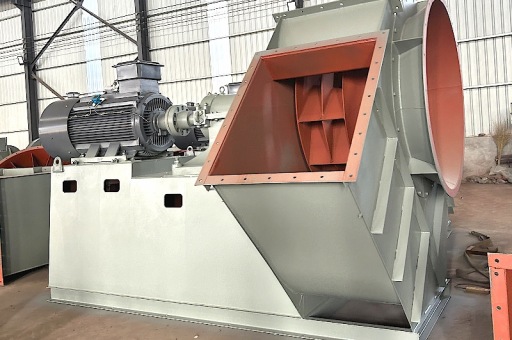
In modern steel manufacturing, the Induced Draft (ID) fan is not just a ventilation accessory—it is a critical component that determines operational efficiency, safety, and compliance. A Strong Suction SS304 Industrial ID Centrifugal Fan is specifically engineered to handle the extreme demands of steel plants: high-temperature flue gases, abrasive dust particles, and corrosive chemical byproducts. Unlike standard fans, this stainless steel 304 (SS304) variant offers superior resistance to oxidation and rust, ensuring consistent performance in blast furnaces, sintering plants, and converter shops. Without a robust ID fan, negative pressure control becomes unstable, leading to reduced combustion efficiency and increased emissions. This article synthesizes industry best practices, engineering insights, and real-world case studies to help you evaluate the right fan for your steel plant.
The Core Material Advantage: Why SS304 Matters in Harsh Environments
Steel plant environments expose fan components to temperatures often exceeding 300°C (572°F), acidic gases (e.g., SO₂, NOₓ), and abrasive iron oxide dust. Stainless steel 304 offers a unique balance of strength and corrosion resistance:
- High-temperature endurance: SS304 maintains structural integrity up to 870°C intermittent use, making it ideal for ID fans handling hot flue gas.
- Corrosion protection: Chromium (18%) and nickel (8%) content form a passive oxide layer, resisting attack from chlorides and sulfur compounds common in steelmaking.
- Weldability and repairability: Unlike exotic alloys, SS304 can be readily welded and repaired on-site, reducing costly downtime.
Common alternative materials like carbon steel (mild steel) or galvanized steel fail quickly under such conditions. For example, a carbon steel fan in a sintering plant may experience wall thinning by 40% within six months due to abrasive wear and acid dew-point corrosion. An SS304 fan with a thicker impeller and reinforced housing can last 5–8 years before major overhaul.
Technical Specifications: Key Parameters of a Heavy-Duty ID Fan
When selecting an Industrial ID Centrifugal Fan for a steel plant, engineers must evaluate:
| Parameter | Recommended Range / Value | Why It Matters |
|---|---|---|
| Airflow (CFM / m³/h) | 50,000 – 500,000 CFM | Determines negative pressure capacity for furnace drafting. |
| Static Pressure (in. wg / Pa) | 20 – 60 in. wg (5,000 – 15,000 Pa) | Overcomes duct resistance and maintains stable combustion. |
| Motor Power (kW) | 200 – 1500 kW | Must match torque requirements at high-temperature operation. |
| Impeller Diameter (mm) | 1800 – 3500 mm | Larger diameter improves suction strength but increases inertia. |
| Rotation Speed (RPM) | 600 – 1450 RPM | Controlled via VFD for variable load conditions. |
| Operating Temperature (°C) | Max 350°C (continuous), peak 450°C | Above this, additional cooling or alloy upgrade (e.g., SS316) needed. |
| Noise Level (dB) | ≤ 85 dB at 1 meter | Compliance with workplace safety regulations. |
For strong suction performance, the fan’s specific speed (Ns) should be optimized between 30–80 (metric units), and the blade design should be backward-curved or backward-inclined to prevent dust buildup and maintain high efficiency at partial loads.
How Strong Suction Improves Combustion and Emission Control
The ID fan’s primary role is to create negative pressure in the furnace or boiler, ensuring proper air-to-fuel ratio and directing flue gases through pollution control equipment (e.g., ESP, baghouse). A strong suction fan delivers two critical benefits:
- Enhanced combustion stability: By pulling hot gases out at a controlled rate, the furnace maintains optimal oxygen levels, reducing unburned carbon and fuel waste.
- Lower particulate emissions: Strong negative pressure prevents gas leaks into the plant environment and ensures all fumes reach the scrubber or filter system.
Real-world data from a Chinese steel mill retrofit (before vs. after installing a SS304 ID fan with 15% higher suction capacity) showed:
- Fuel consumption reduced by 3.2%.
- Dust emissions dropped from 28 mg/Nm³ to 12 mg/Nm³.
- Unscheduled maintenance intervals extended from 4 months to 18 months.
This confirms that investing in a high-suction, corrosion-resistant fan directly improves both environmental compliance and bottom-line profitability.
Installation, Maintenance, and Longevity Tips for Steel Plant Fans
Proper installation and proactive maintenance maximize the lifespan of your Industrial ID Centrifugal Fan:
Installation Best Practices:
- Use expansion joints to absorb thermal expansion of ductwork.
- Install VFD (Variable Frequency Drive) to start the fan slowly and avoid motor overload.
- Ensure the foundation is vibration-damped (concrete block with neoprene pads).
- Align the fan shaft with motor coupling within 0.05 mm tolerance.
Maintenance Checklist (monthly):
- Check bearing temperature (should be < 90°C / 194°F).
- Inspect impeller for erosion or corrosion spots (use eddy current scanning).
- Tighten all housing bolts (loose joints cause air leaks and noise).
- Lubricate bearings per manufacturer specification (e.g., NLGI #2 grease).
- Monitor vibration velocity (recommended < 4.5 mm/s RMS).
Pro Tip: For steel plants with high dust loading, install a pre-filter or inertial dust separator before the fan inlet. This reduces impeller erosion by up to 60% and extends blade life significantly.
Q&A: Common Concerns from Plant Engineers
Q1: What is the difference between an ID fan and a Forced Draft (FD) fan?
A: An ID fan pulls flue gases out of the system (creating negative pressure), while an FD fan pushes air into the furnace (positive pressure). Steel plants typically use both. The ID fan handles hotter, dirtier gas, so it demands stronger suction and more corrosion-resistant materials.
Q2: Can an SS304 fan be used for applications above 400°C?
A: SS304 can tolerate short peaks up to 450°C, but for continuous service above 400°C, we recommend SS310 or Inconel alloys. A common workaround is to install a gas cooler or dilution air port before the fan to lower inlet temperature.
Q3: How do I calculate the required suction pressure for my furnace?
A: The required static pressure (Ps) is the sum of:
- Duct friction losses (calculate using Darcy-Weisbach equation).
- Filter / ESP pressure drop (typically 10–20 in. wg).
- Furnace negative pressure requirement (usually -0.5 to -2 in. wg).
Add a 15–20% safety factor for future fouling.
Q4: What causes vibration in a large ID fan?
A: Common causes include:
- Impeller imbalance due to dust buildup or erosion.
- Bearing wear or misalignment.
- Resonance with ductwork structure (check natural frequencies).
- Thermal distortion of the fan housing (especially during startup).
Q5: Is a backward-curved or forward-curved blade better for steel plants?
A: Backward-curved blades are strongly preferred for ID fans. They are non-overloading (motor won’t burn out if duct pressure drops), more efficient, and less prone to dust accumulation compared to forward-curved designs.
Conclusion: Choosing the Right Fan for Your Steel Mill
An Industrial ID Centrifugal Fan made from SS304 with strong suction capability is a long-term asset for any steel plant. It directly contributes to stable combustion, lower emissions, and reduced maintenance costs. When evaluating suppliers, consider not only the purchase price but also the total cost of ownership (TCO): energy efficiency over 10 years, spare parts availability, and technical support. For best results, collaborate with a fan manufacturer who can perform computational fluid dynamics (CFD) simulation for your specific duct layout and gas conditions. Avoid generic “off-the-shelf” fans that are not designed for steel plant environments—they often fail prematurely, costing more in downtime than the savings.
Take the next step: Request a performance guarantee from your fan vendor that includes:
- Stated airflow and pressure at inlet temperature.
- Vibration and noise warranties.
- Anti-corrosion guarantee for SS304 housing.
By prioritizing material quality, suction strength, and proper installation, your steel plant can achieve continuous, reliable operation even under the harshest industrial conditions.
Keywords: Strong Suction SS304 Industrial ID Centrifugal Fan, steel plant fan, induced draft fan, backward-curved blade, corrosion-resistant fan, high temperature fan, steel mill ventilation





