
This article's table of contents introduction:
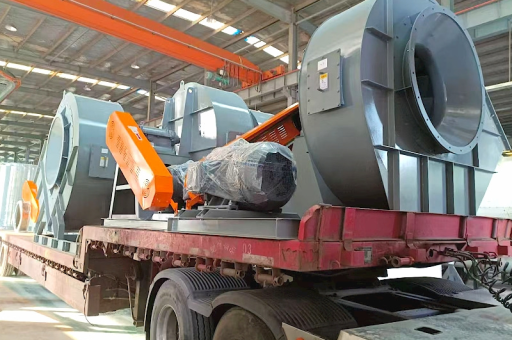
- What is an "Efficient Energy Saving Carbon Steel Customized Centrifugal Fan"?
- Key Components & Specifications to Define for Customization
- Typical Applications for This Type of Fan
- Is Carbon Steel the Right Choice?
- How to Procure or Find Suppliers
- Bottom Line for Your Request
Your request seems to be a product description or search query for a specific type of industrial fan. Based on the keywords "Efficient Energy Saving," "Carbon Steel," "Customized," and "Centrifugal Fan," here is a professional breakdown of what this typically entails, along with key considerations for procurement or specification.
What is an "Efficient Energy Saving Carbon Steel Customized Centrifugal Fan"?
This describes a centrifugal fan (also known as a blower) designed to move air or gases, specifically built for high efficiency, low operational cost, and tailored to a specific application.
- Efficient / Energy Saving: Implies the fan meets high aerodynamic efficiency standards (e.g., up to 85%+ static efficiency). Features often include backward-curved or airfoil blades, optimized volute designs, and compatibility with high-efficiency motors (IE3, IE4, or NEMA Premium).
- Carbon Steel: The primary construction material. Carbon steel is chosen for its strength, durability, and weldability. It is suitable for general industrial applications (HVAC, dust collection, fume extraction) but requires protective coating (paint, powder coating, or galvanization) for corrosion resistance.
- Customized: The fan is engineered to match specific system requirements. This can include:
- Airflow & Pressure: Based on your specific ductwork, static pressure, and volume (CFM/m³/h).
- Size: Inlet/outlet dimensions, mounting footprint.
- Configuration: Arrangement (e.g., Arrangement 1, 4, 9), drive type (direct or belt), rotation (CW/CCW), discharge position (top horizontal, down blast, etc.).
- Features: Shaft seals, access doors, drains, vibration isolation, explosion-proof modifications (ATEX/IECEx), special coatings (epoxy, zinc-rich primer).
Key Components & Specifications to Define for Customization
When ordering or designing a custom fan, you need to provide the following data:
- Operating Conditions:
- Air/Gas Type: Is it clean, dusty, corrosive, hot (temperature), or explosive?
- Temperature: Max continuous and peak temperature.
- Altitude: Affects air density and motor selection.
- Performance Requirements:
- Volume (CFM or m³/hr): Required airflow.
- Static Pressure (in. wg or Pa): Resistance the fan must overcome.
- System Effect Factors: Allowances for poor inlet/outlet duct connections.
- Physical Constraints:
- Space limitations (height, width, length).
- Inlet/outlet orientation.
- Noise limits (dB(A)).
- Electrical supply (Voltage, Phase, Frequency).
- Material & Construction:
- Thickness: Based on pressure and size.
- Wheel Type: Backward-curved (BC), backward-inclined (BI), airfoil (AF), radial tip, forward-curved (FC). (Backward-curved is typically the most efficient for energy saving).
- Coating: Paint specification (e.g., 2-coat standard industrial, heavy-duty epoxy, inorganic zinc).
- Motor Mount: Base-mounted, integral, or C-face mounted.
Typical Applications for This Type of Fan
- HVAC Systems: Large building ventilation, cleanrooms, data centers.
- Industrial Processes: Boiler forced draft (FD) and induced draft (ID), cooling systems, pneumatic conveying.
- Pollution Control: Baghouse dust collectors, scrubbers, stack exhaust.
- OEM Equipment: Packaged air handlers, oven exhaust, dryer systems.
Is Carbon Steel the Right Choice?
- Advantages: Strong, cost-effective for high-pressure applications, easily fabricated.
- Disadvantages: Susceptible to rust. Not suitable for corrosive fumes (chemical, salt spray) or high-humidity environments without a robust protective coating. For corrosive duties, you would typically need stainless steel (304/316) or FRP construction.
How to Procure or Find Suppliers
- Search Terms: Use phrases like "industrial centrifugal fan manufacturer," "custom fan blower," "high efficiency backward curved fan," "carbon steel ID fan."
- Major Manufacturers (to research): Companies like New York Blower, Greenheck, Twin City Fan, Chicago Blower, Howden, ebm-papst (for smaller efficient units), or regional custom fabricators.
- Request a Quotation: You will need to provide a fan data sheet or specification sheet with the operating points listed above. Ask for performance curves and efficiency at your operating point.
Bottom Line for Your Request
If you are looking to purchase one, you are seeking a high-performance, durable, and tailored solution for a specific air-moving challenge. Energy efficiency will be driven by selecting a backward-curved or airfoil wheel design and a premium efficiency motor. Customization ensures it fits your existing ductwork, space, and performance needs exactly.
Would you like me to elaborate on a specific aspect, such as how to calculate your required static pressure, or the differences between fan wheel types for energy savings?





