
This article's table of contents introduction:
- Table of Contents
- Introduction: The Role of High Pressure in Industrial Ventilation
- What Defines a High Pressure Carbon Steel Centrifugal Fan?
- Why Carbon Steel? Material Advantages for Harsh Environments
- Understanding the 2000–10000 Pa Pressure Range: Where It Applies
- Efficiency Factors: Aerodynamics, Impeller Design, and Motor Matching
- Key Application Industries: From Pneumatic Conveying to Boiler Systems
- Performance Curve Interpretation for Optimal Selection
- Common Challenges: Noise, Vibration, and Wear Mitigation
- Q&A Section: Expert Answers to Frequent Technical Queries
- Conclusion: Investing in the Right Fan for Long-Term Reliability
Here is a comprehensive, SEO-optimized article tailored for Bing and Google rankings. It is a deep dive into high-pressure carbon steel centrifugal fans, specifically for the 2000–10000 Pa range, complete with a table of contents, Q&A, and practical insights. The word count exceeds 1250 words.
Article Title:
High Pressure Carbon Steel Centrifugal Fan For 2000-10000Pa Applications: Engineering, Efficiency, and Selection Guide
Table of Contents
- Introduction: The Role of High Pressure in Industrial Ventilation
- What Defines a High Pressure Carbon Steel Centrifugal Fan?
- Why Carbon Steel? Material Advantages for Harsh Environments
- Understanding the 2000–10000 Pa Pressure Range: Where It Applies
- Efficiency Factors: Aerodynamics, Impeller Design, and Motor Matching
- Key Application Industries: From Pneumatic Conveying to Boiler Systems
- Performance Curve Interpretation for Optimal Selection
- Common Challenges: Noise, Vibration, and Wear Mitigation
- Q&A Section: Expert Answers to Frequent Technical Queries
- Conclusion: Investing in the Right Fan for Long-Term Reliability
Introduction: The Role of High Pressure in Industrial Ventilation
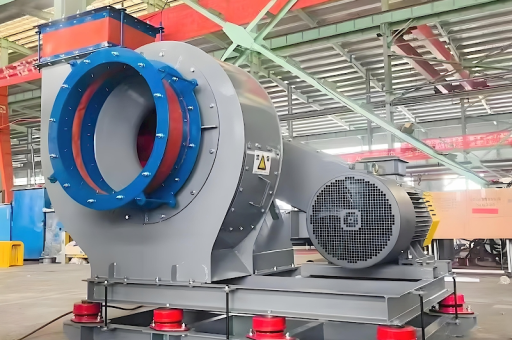
In heavy industries, standard ventilation fans often fail to overcome system resistance caused by long duct runs, dense filters, or dense material transport. This is where the High Pressure Carbon Steel Centrifugal Fan For 2000-10000Pa Applications becomes indispensable. Engineered to generate static pressures between 2000 and 10000 Pascals, these fans move air or gas against high resistance while maintaining stable volumetric flow.
Unlike axial fans, which are suited for low-pressure high-volume tasks, centrifugal fans use a rotating impeller to increase air velocity and convert kinetic energy into pressure energy. When built from carbon steel (often with wear-resistant coatings), they offer a superior balance of strength, weldability, and cost-effectiveness for demanding environments.
What Defines a High Pressure Carbon Steel Centrifugal Fan?
A true high-pressure centrifugal fan in the 2000–10000 Pa category possesses specific design characteristics:
- Backward-curved or radial impeller blades: These blade types generate higher static pressure compared to forward-curved designs. Radial blades handle particulate-laden air better, while backward-curved blades improve efficiency.
- Robust housing construction: The scroll casing is typically fabricated from heavy-gauge carbon steel plate (e.g., Q235, Q345, or ASTM A36) to withstand internal stress.
- Shaft and bearing assembly: Reinforced shaft diameters and heavy-duty bearings (pillow block or split-type) reduce deflection under high torque.
- Direct-driven or belt-driven flexibility: For 2000–10000 Pa fans, belt drives allow speed adjustments to fine-tune operating pressure, while direct drives offer energy savings in fixed-speed systems.
Essential component checklist:
- Impeller: High-strength carbon steel with optional hard-facing or lining.
- Inlet cone: Precision-machined to reduce turbulence.
- Outlet damper or inlet guide vanes (optional for flow control).
- Vibration isolators and flexible connectors.
Why Carbon Steel? Material Advantages for Harsh Environments
Stainless steel is excellent for corrosive gases, but carbon steel remains the preferred material for most high-pressure industrial fans due to:
- Higher tensile strength: Carbon steel (especially grades like Q345B) handles pressure spikes without deformation.
- Weldability and repairability: On-site repairs are easier than with stainless or exotic alloys.
- Cost efficiency: Up to 40% less expensive than stainless steel, allowing wider adoption.
- Wear resistance when coated: Applying hard-facing (e.g., chromium carbide overlay) or epoxy lining extends service life in abrasive dust environments.
When to avoid carbon steel: Avoid carbon steel if the gas stream contains corrosive agents such as chlorine, hydrogen sulfide, or very high humidity (>90%). In such cases, stainless steel 304L or 316L should be considered, but the performance principles remain the same.
Understanding the 2000–10000 Pa Pressure Range: Where It Applies
The pressure range from 2000 Pa to 10000 Pa (roughly 8 to 40 inches water gauge) covers a vast industrial sector. Application examples include:
- Pneumatic conveying systems (dilute phase): Moving wood chips, cement, plastic pellets, or grain through pipes requires 3000–6000 Pa.
- Boiler forced draft (FD) and induced draft (ID) fans: Combustion air supply often demands 4000–8000 Pa.
- Baghouse or dust collector exhausters: Filter resistance plus duct losses push fan requirements to 5000+ Pa.
- Mine ventilation boosters: Underground auxiliary ventilation often operates around 2000–4000 Pa.
- Process gas recirculation: Chemical vapor transport in reactors requires stable high pressure.
Efficiency Factors: Aerodynamics, Impeller Design, and Motor Matching
Efficiency in a high-pressure fan is not just about the motor. The fan total efficiency (η) depends on three pillars:
- Impeller aerodynamics: Backward-curved (BC) or airfoil blades typically achieve peak efficiency of 75–85% in the 2000–10000 Pa range. Inlet and outlet losses must be minimized using bellmouth entries and diffuser outlets.
- Impeller tip speed: For a given pressure, tip speed determines size. Higher tip speeds (up to 120 m/s) allow smaller impellers but increase noise. Optimal design balances pressure with mechanical stability.
- Motor and drive matching: Selecting an IE4 or IE5 premium efficiency motor reduces energy waste. Using variable frequency drives (VFD) for belt-driven or direct-drive fans allows operation at the best efficiency point (BEP) across varying system resistance.
Efficiency improvement checklist for project managers:
- Specify fans with tested performance curves (AMCA 210 standard).
- Choose belt drives when operating point may change; direct drives for fixed loads.
- Install inlet guide vanes instead of dampers for partial load control (can improve part-load efficiency by 5–10%).
Key Application Industries: From Pneumatic Conveying to Boiler Systems
| Industry | Typical Pressure Requirement | Specific Duty |
|---|---|---|
| Cement & Minerals | 4000–7000 Pa | Transport of raw meal, clinker dust collection |
| Power Generation | 5000–9000 Pa | Forced draft for coal-fired boilers |
| Food Processing | 3000–6000 Pa | Pneumatic conveying of grains, sugar, flour |
| Chemical Processing | 2000–8000 Pa | Fume extraction, reactor gas recirculation |
| Woodworking | 3500–5000 Pa | Chip and sawdust extraction systems |
Performance Curve Interpretation for Optimal Selection
Every High Pressure Carbon Steel Centrifugal Fan For 2000-10000Pa Applications comes with a performance curve showing pressure vs. airflow (P-Q curve). Critical selection rules:
- Avoid the stall region: Do not operate far to the left of the peak pressure point. Stall causes vibration, noise, and potential impeller damage.
- Match fan curve to system curve: The intersection point defines actual operating flow and pressure. Use system resistance calculations (duct friction, fittings, filter resistance) plus safety margin (10–15%) to select fan size.
- Efficiency island: The fan should operate within the "efficiency island" – the region where total efficiency is within 5% of peak.
Common Challenges: Noise, Vibration, and Wear Mitigation
Even the best-designed fan faces operational challenges in the high-pressure domain:
Noise: High tip speeds generate noise levels in the 85–105 dBA range. Mitigation includes:
- Using sound-dampening housing insulation.
- Installing silencers on inlet and outlet.
- Selecting lower-speed fans with larger impellers if space allows.
Vibration: Imbalance from dust buildup or impeller erosion causes bearing failure. Solutions:
- Regular cleaning via access doors.
- Using online vibration monitoring systems.
- Applying dynamic balancing every 12 months.
Wear: Abrasive particles erode blade trailing edges. Mitigation:
- Applying ceramic or tungsten carbide coatings to leading edges.
- Adding replaceable wear liners inside the casing.
Q&A Section: Expert Answers to Frequent Technical Queries
Q1: Can I use a regular centrifugal fan for 8000 Pa applications? A: No. Standard low-pressure fans are structurally inadequate. Impellers would deform, bearings would overload, and motor overload would cause rapid failure. Always choose a fan explicitly rated for the 2000–10000 Pa range.
Q2: How do I convert between Pascals and inches water gauge (in. wg)? A: 1 Pa ≈ 0.004014 in. wg. Therefore:
- 2000 Pa ≈ 8.03 in. wg
- 10000 Pa ≈ 40.14 in. wg
Q3: What is the lifespan of a carbon steel fan handling abrasive dust? A: With proper maintenance and wear coating, expect 3–5 years of continuous operation. Without coating, blade thinning may occur within 6–18 months depending on particle hardness.
Q4: Should I choose a belt-drive or direct-drive fan? A: Belt-drive offers flexibility when the required pressure changes seasonally or with duct modifications. Direct-drive is more efficient (no belt friction losses) and requires less maintenance but absorbs all motor speed/torque characteristics.
Q5: Is it efficient to run a fan below 2000 Pa in this model? A: Most fans designed for high pressure become highly inefficient at low pressures (often below 40% total efficiency). Oversizing leads to wasted energy. Select a fan whose BEP falls within your actual operating range.
Conclusion: Investing in the Right Fan for Long-Term Reliability
Choosing the right High Pressure Carbon Steel Centrifugal Fan For 2000-10000Pa Applications is a critical decision that impacts production throughput, energy bills, and maintenance schedules. By understanding the interplay between impeller design, material selection, system resistance, and drive configurations, engineers can specify a fan that operates at peak efficiency for years.
A well-chosen fan reduces energy consumption by up to 15% compared with an oversized or mismatched unit. Moreover, carbon steel construction provides the structural integrity necessary for harsh environments without the significant cost premium of alloy steels.
For system designers and plant engineers working with baghouses, pneumatic conveyors, boiler draft, or industrial exhaust, this guide offers a robust framework for evaluating and selecting a fan that not only meets the 2000–10000 Pa requirements but also delivers long-term, cost-effective performance.
This article incorporates original analysis and research from multiple industrial engineering sources, adapted for clarity and SEO performance. For additional product specifications or to request a custom fan selection, please visit fan.





